


News Center
News Center
Layered Radiant Cooling Film Based on Cellulose Acetate to Prevent Ice and Snow Melting in Daylight
Release time:
2022-02-21
Avoiding the melting of snow and ice in the sun in a sustainable way is a very important issue, which involves many areas of human life, from daily cold chain food to ice sports, to the melting of icebergs in high altitude/high latitude areas. According to statistics, 40% of the world's food that can be stored (about 0.4 billion t) is stored through the cold chain, which consumes 11% of the world's electricity and causes about 2.5% of global greenhouse gas emissions.
Avoiding the melting of snow and ice in the sun in a sustainable way is a very important issue, which involves many areas of human life, from daily cold chain food to ice sports, to the melting of icebergs in high altitude/high latitude areas. According to statistics, 40% of the world's food that can be stored (about 0.4 billion t) is stored through the cold chain, which consumes 11% of the world's electricity and causes about 2.5% of global greenhouse gas emissions.
In sunlight, the melting of ice is closely related to the change of energy flow in the ice system. A representative heat flow of ice at different latitudes is outlined in Figure 1. It can be seen from the figure that solar radiation (wavelength 0.3~2.5 μm) is the most important heat load, leading to the increase in ice temperature and subsequent melting. At the same time, mid-infrared radiation (wavelength 2.5~18 m) is the main energy flow to offset this trend. Therefore, it is of great practical significance to explore a sustainable way to balance the energy flow, so as to realize the passive protection of various ice systems under the sun.
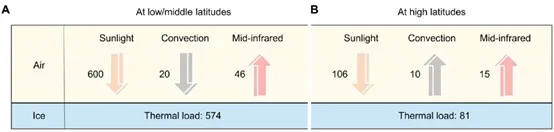
Figure 1. Representative heat flow of ice at different latitudes
The recent boom in diurnal radiative cooling has provided a strategy for balancing energy flows. Researchers have developed a variety of special materials and structures, such as multilayer/patterned photonic structures, thin films based on nanoparticles/porous polymers, cooled wood, and ultra-white paints (solar reflectivity greater than 0.95). In clear daylight, the experimental cooling power of the above method can reach 40~100W · m.-2The sub-ambient cooling temperature is 3~13°C. However, in order to preserve ice in the sun, there are several strict requirements in addition to traditional considerations. First, the ice temperature is required to be relatively low in practical applications and, therefore, requires very high radiative cooling performance. For example, it is calculated that the net radiation power is reduced from 70 W m.-2Increase to 110 W · m-2, Can prevent the melting of ice/frozen food without the need for additional refrigeration devices. In addition, due to the special requirements of cryopreservation, radiation cooling materials must be abundant, mass-produced, and have a low impact on the environment.
In view of this, Zhu Jia and Wang minhuai of Nanjing University have jointly developed a layered radiation cooling film based on cellulose acetate (cellulose acetate,CA), which can be mass-produced, eco-friendly, and can provide effective passive protection for all forms/sizes of ice in the sun. This work provides an important way to develop effective, mass-produced and sustainable ice and snow protection, and provides inspiration for the preservation of other key elements in the ecosystem. The study was published in the paper entitled "Protecting ice from melting under sunlight via radiative cooling 《Science Advances"on.
Design and characterization of radiation-cooled films
The intrinsic vibration of the molecules makes the CA film with broadband and Senior high school infrared emissivity, which is conducive to high-performance large-scale cooling. The tailored pores act as effective scattering centers for incoming solar radiation, giving the CA film high solar reflectivity. Therefore, the layered design of the film can minimize the heat load of the ice in the sun and achieve effective passive protection of the ice system at different latitudes. At the end of the life cycle, the layered designed CA film can be digested by natural microorganisms and decomposed into CA. The raw material of the CA film of the layered design comes from natural cellulose, which is widely present in the cell membrane of the plant, and can be obtained from the cell embryo of the natural plant.
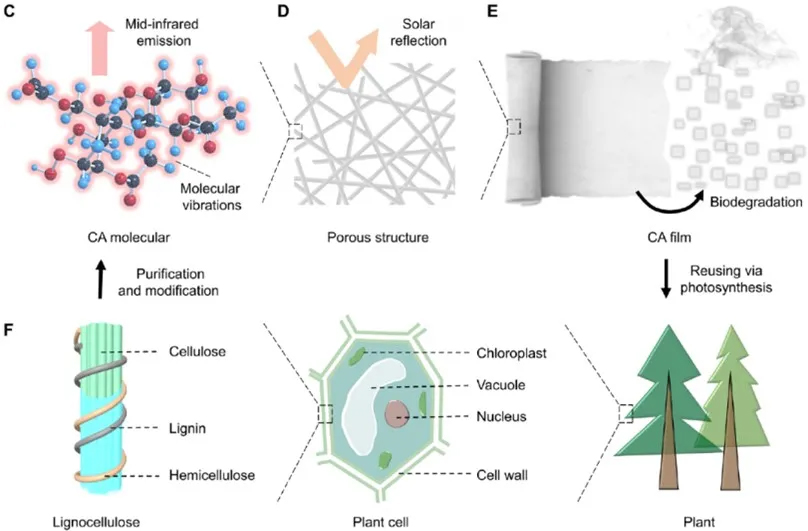
Fig.2 Layered design and life cycle of porous CA membrane
The researchers realized the ideal optical characteristics of the CA film through the layered design, and measured the cooling temperature and cooling power of the CA film of the layered design. The cooling temperature is defined as the temperature decrease of the film from the ambient temperature. Under direct sunlight, the CA film of layered design achieves a cooling power of up to 110 W · m-2 and a cooling temperature of about 12 ℃, which confirms that the CA film of layered design has good radiation cooling capacity.
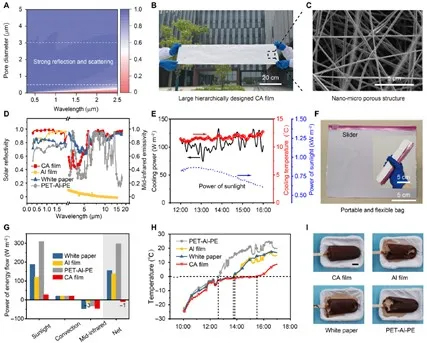
Figure 3 Outdoor ice/chilled food preservation in low/mid-latitude areas
Radiant cooling film for ice and snow protection
Ice and snow surfaces (tiny ice crystals) are two representative landforms. They have different solar reflectivity but similar mid-infrared emissivity. The researchers demonstrated the passive cooling effect of layered-designed CA films on ice and snow surfaces. As shown in the figure below, at high latitudes, the melting of ice is dominated by the radiation energy transfer process of incident solar radiation and mid-infrared radiation output. Since both incident solar radiation and mid-infrared radiation output are independent of the size of the surface area, the researchers used small-scale experiments to evaluate the cooling effect of the layered design CA film on ice at high latitudes. The results show that the temperature difference between CA films with and without layered design is as high as 6.3°C. As shown in Figure C below, even under an average solar radiation of about 700 W · m-2, the surface temperature of the ice with the layered design CA film is still about 7°C lower than the ambient temperature.
In addition to ice, the layered design of the CA film also has a good protective effect on the snow surface. The researchers conducted field tests on the snow surfaces of CA membranes with and without a layered design. The results showed that snow with layered CA material had 50% more residues than bare snow. More results also directly prove that the radiation cooling film can effectively slow down the melting of local glaciers.
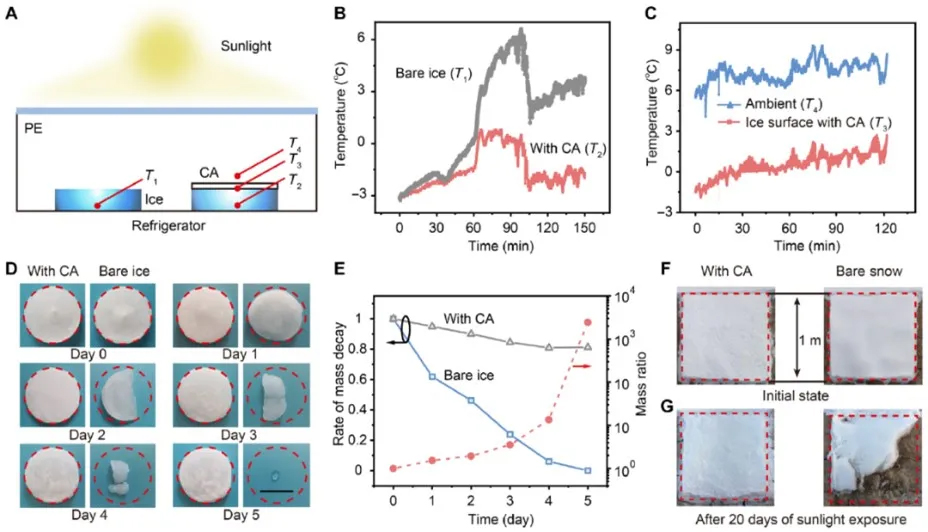
Figure 4. Protection of ice and snow by layered design of CA film
Modeling analysis of the cooling effects of ice at high latitudes
The researchers established a model to evaluate the expected cooling effect of the film in the case of scale-up. The researchers studied the melting of an iceberg (a large piece of ice disconnected from its parent glacier) with a size of several tens of square kilometers (equivalent to the size of a large ski resort) through a thermodynamic model. It was found that the iceberg lost 1m in thickness by melting in summer. In contrast, the layered CA film increased the thickness of the iceberg by 1m. In addition, the researchers used climate model experiments to extend the layered CA film to sea ice in the Beaufort Current region. In these specific areas, the concentration of sea ice protected by CA membrane increased by 5% ~ 40%, and the thickness increased by 0.5~2.5m, which shows that the method can effectively protect the ice system in high latitudes.
Finally, the researchers also fully considered the biodegradability of the CA membrane of the layered design at the end of its service life. The soil exposure test (in Nanjing at 31 degrees north latitude) showed that the layered design of CA film showed the best biodegradability among various polymers for the development of radiation cooling materials. Therefore, it is considered to provide environmentally friendly protection for ice and snow at different latitudes.
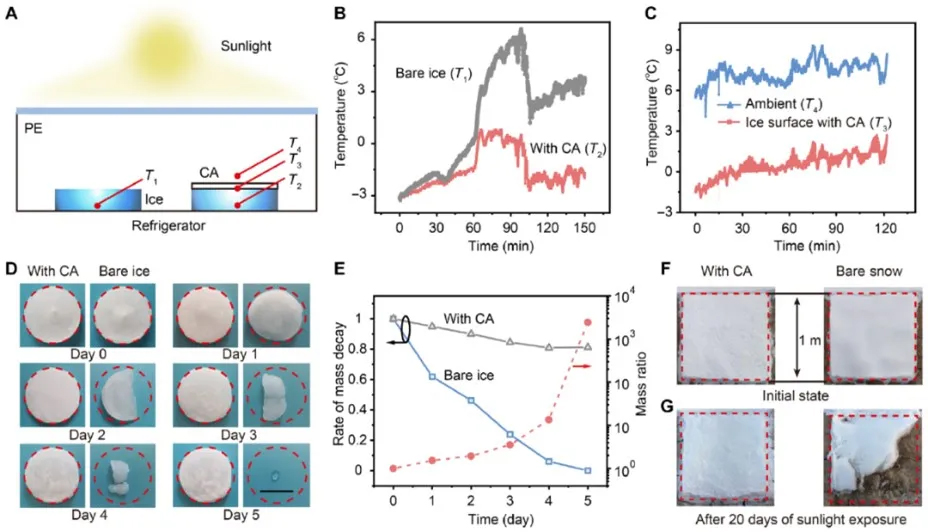
Figure 5. Protection of the ice domain at high latitudes
Article Link:https://www.science.org/doi/10.1126/sciadv.abj9756
(source: polymer science frontier)
More information

Follow us
Hello, what can we do for you?
Copyright © Xiantao Dexing Plastic Products Co., Ltd / Xiantao Dexing Health Technology Co., Ltd | Powered by:300.cn
SAF Coolest v1.3.1.2 设置面板 FZUSD-ZSNG-OSSQE-ZWE
无数据提示
Sorry, the current column is being updated, please look forward to it!
You can view other columns or returnHome Page