


News Center
News Center
The standing pole treatment makes the performance of the meltblown cloth more powerful
Release time:
2021-07-15
From 2020 to 2021, the new crown epidemic is still raging around the world, the epidemic prevention and control can not be relaxed. Among the many preventive measures, going out to wear masks has become the consensus and habit of people. Over the past year or so, through publicity and science popularization through different channels, more and more consumers have become more aware of the key material for masks to protect against viruses-meltblown cloth.
From 2020 to 2021, the new crown epidemic is still raging around the world, the epidemic prevention and control can not be relaxed. Among the many preventive measures, going out to wear masks has become the consensus and habit of people. Over the past year or so, through publicity and science popularization through different channels, more and more consumers have become more aware of the key material for masks to protect against viruses-meltblown cloth.
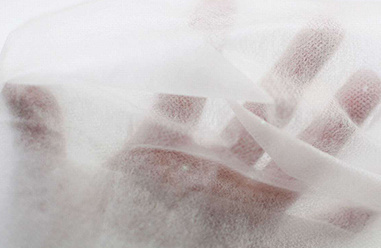
The meltblown cloth, known as the "heart" of the mask, is made of polypropylene, with a fiber diameter of 1 to 5 microns, many voids, fluffy structure and good anti-fold ability. Among them, the ultra-fine fiber with unique structure can effectively increase the number and surface area of the fiber per unit area, so that the meltblown cloth has better filtration, shielding and oil absorption.

Many people may have questions: even if the gap of the meltblown cloth is small, but the diameter of the virus is smaller, how can the filtration efficiency be controlled at 95% or even above 99%?
Ordinary fiber filter materials mainly rely on Brown diffusion, interception, inertial collision, gravity sedimentation and other mechanical blocking effects to filter particles in the air, so the particle size of less than 1μm particle filtration effect is not ideal. Most bacterial and viral microorganisms are micron and submicron in size, for example, SARS coronavirus is only about 100nm. Only when the filter material fibers are very fine and dense can these tiny particles be efficiently captured, which leads to an increase in the air resistance of the filter material, which in turn increases the energy consumption and cost of the air filter operation; if it is applied to respiratory protection, it increases the respiratory burden.
The electret fiber usually has a voltage of several hundred to one thousand volts, and the gap of the fiber is very small, so that numerous passive electrodes are formed, the electric field between the electrodes is tens of MV/m or even higher, and the equivalent surface charge density is as high as 90nC/cm2. Therefore, in addition to the original mechanical blocking effect, the electret air filter material also relies on electrostatic force to directly attract the charged particles in the air and capture them, or induce the neutral particles in the air to generate polarity and then capture them, so as to more effectively filter the submicron particles in the air, so as to significantly improve the filtration efficiency without increasing the air resistance.
The mechanism of electret antibacterial is that the strong electrostatic field and micro-electronic flow generated by electret stimulate bacteria, make its protein and nucleic acid mutation damage, destroy the surface structure of bacteria and lead to the death of bacterial viruses, thus inhibiting bacterial cells to play an antibacterial role.
In the process of electrostatic storage and charge retention, the addition of the standing master plays a vital role. Its magic lies in that only a small amount of standing masterbatch is added, which can increase the density and depth of the charge trapping energy trap in the meltblown non-woven fabric, effectively release negative ions and store charge to improve the comprehensive filtration efficiency and thermal attenuation resistance of the meltblown non-woven fabric. In the case of the same fiber fineness and gram weight, it reduces the resistance of non-woven products and improves the filtration efficiency of non-woven products. The biggest role of the polar masterbatch is to help the meltblown cloth that meets the N95 standard store charge and extend its validity period. The meltblown cloth is subjected to the standing electrode treatment, which is equivalent to charging the meltblown cloth and storing more charge, so that the filtration efficiency of the meltblown cloth is ≥ 95%.
The ZJ-1500 electrostatic electret masterbatch of Guangdong Dongqin New Material Technology Co., Ltd. is a type of electret masterbatch developed for electrostatic electret technology. The product does not block the spinneret die, does not affect the time of changing the net, has high fluidity and spinnability, and does not affect the spinning; it can increase the long-term storage of charge and extend the effective storage life of the mask. The electret treatment of meltblown cloth with the masterbatch can improve the filtration efficiency, and the filtration effect can reach more than 99.95% (the addition ratio is about 0.5%).

The SZJ-1500 flush resident masterbatch is a resident masterbatch developed for the water resident process; compared to the traditional electrostatic resident, the water resident can produce a more saturated amount of static electricity after the hydroentanglement process, that is, after the melt-blown cloth is rubbed with specially prepared ultra-pure water, and the filtration effect is better. After the addition of water standing master particles, the filtration effect is more durable and better than that of electrostatic standing. It can reach the European P3 standard, and can still reach the 99 level of filtration efficiency under the condition of oily loading test.
In addition, Dongqin also provides more special products for the industry:
Water filter element cooling masterbatch
Plastic cooling masterbatch is a functional plastic additive developed to solve some problems in the processing and manufacturing of plastic products, which can reduce the viscosity of the product resin and prevent the product resin from destroying its product resin performance and other resin characteristics during processing at higher temperatures.
Adding a certain proportion of plastic cooling masterbatch in the product processing and manufacturing process can effectively improve the product molding process conditions, and at the same time can significantly reduce power consumption and improve production efficiency; it can also greatly improve the integrity of product molding, greatly reduce the product The missing generated in the molding process can effectively make up for the reduction of the strength and toughness of the product caused by high temperature.
Compliant masterbatch
High-performance soft masterbatch and ordinary eisai products can be organically combined, while maintaining the basic functions of ordinary eisai products, it has the characteristics of softness, close-fitting and comfort. Compared with traditional eisai products, soft eisai products have significantly improved mechanical properties and human body structure properties, which can bring a comfortable sense of use for all kinds of people.
As a special soft masterbatch for polypropylene non-woven fabrics, adding a soft masterbatch during polypropylene spinning can make the non-woven fabrics soft and smooth, thereby increasing the comfort of non-woven fabrics and human skin contact, and No toxic and side effects on human skin.
Polypropylene Meltblown Raw Materials
Meltblown cloth is the core material of masks, and polypropylene meltblown raw materials are the main raw materials for the production of meltblown cloth. The fiber diameter of the meltblown non-woven fabric prepared by the meltblown material can reach 1 to 5 microns. Many voids, fluffy structure, good anti-wrinkle ability, with a unique capillary structure of ultra-fine fibers to increase the number of fibers per unit area and surface area, so that the meltblown cloth has good filterability, shielding, insulation and oil absorption. Can be used for air, liquid filter materials, isolation materials, absorbing materials, mask materials, warm materials, oil absorption materials and wiping cloth and other fields.
Source: Jung-International Nonwovens Industry
More information

Follow us
Hello, what can we do for you?
Copyright © Xiantao Dexing Plastic Products Co., Ltd / Xiantao Dexing Health Technology Co., Ltd | Powered by:300.cn
SAF Coolest v1.3.1.2 设置面板 FZUSD-ZSNG-OSSQE-ZWE
无数据提示
Sorry, the current column is being updated, please look forward to it!
You can view other columns or returnHome Page