

News Center
News Center
Export enterprises alert! Demonstrations in five South American countries, foreign exchange controls, payment delays!
Release time:
2019-12-03
In South America, which has been relatively calm in recent years, in just a few months this year, many countries have successively experienced major social problems, such as Chile entering a state of emergency, unrest in Ecuador, nationwide disturbances in Bolivia and the resignation of President Morales, and a general strike in Colombia. Wait.
In South America, which has been relatively calm in recent years, in just a few months this year, many countries have successively experienced major social problems, such as Chile entering a state of emergency, unrest in Ecuador, nationwide disturbances in Bolivia and the resignation of President Morales, and a general strike in Colombia. Wait.
Foreign trade export enterprises must pay attention to the market and foreign exchange risk!
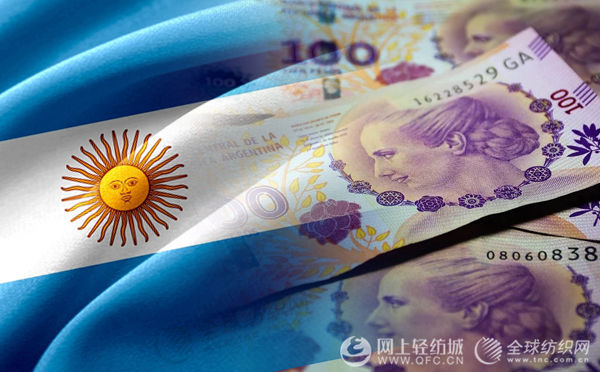
On August 12, due to Macri's unexpected defeat in the early stages of the presidential election, Argentina staged a "three kills" in equity and debt exchange ". At one point, the Argentine peso fell about 36 percent to 61.99 pesos against the dollar, a record intraday low. The yuan rose to 7.3885 pesos against the Argentine peso, a 35 per cent appreciation over the year.
The market is worried that if Fernandez is elected, the budget of the Argentine government may expand again, thus endangering the (IMF) of the International Monetary Fund's (IMF) economic assistance to Argentina. Traders worry that this election is a signal that the country may consider returning to policies such as currency and capital controls.
At present, Argentina's domestic economic and financial situation is still in a state of crisis, and the situation of high unemployment rate, high inflation and high foreign debt has not changed significantly. Data show that as of the first quarter of this year, the domestic unemployment rate in Argentina exceeded 10%; in July this year, the domestic CPI in Argentina rose as high as 55.8 year-on-year.
On October 27, opposition candidate Fernandez won the presidential election.
On October 28, Argentina's central bank announced that it would significantly adjust the limit on individual dollar purchases to $200 per month until December.
Previously, in order to prevent the peso exchange rate from falling, the bank announced in early September that the US dollar purchase limit was 10000 US dollars, and other exchange rate control policies were also introduced.
Argentina must repay $5 billion by the end of 2019, but its resources are very limited.
Although the country's total foreign exchange reserves still look considerable, amounting to $43 billion billion, this figure is significantly reduced once some impractical assets are deducted, such as the daily dollar deposits of Argentines and the credit line granted by China. Analysts surveyed by Bloomberg News estimated that the amount of money that policymakers actually have at their disposal is no more than $12.5 billion. AmherstPierpontSecurities analyst SiobhanMorden put the figure at just $6.5 billion.
Bond investors have largely prepared for a default, and the price of some overseas bonds issued by the Argentine government has fallen to less than 40 per cent of face value. But the dire state of the country's foreign exchange reserves suggests a default could come sooner than some expect, perhaps soon after President-elect Fernandez takes office in December.
1. Exchange rate effects
The central bank limited dollar purchases to 200 dollars a month from the 10,000-dollar limit imposed in September in an effort to stabilize the peso and stem the flow of the bank's foreign reserves. After the central bank's announcement on October 28, the peso rose more than 3 percent and traded at 63 to the dollar on the exchange.
2. Agricultural export taxes may increase
For Argentina, the economic crisis has further deepened, and strengthening the export of agricultural products is not ruled out as one of the important means to solve the foreign debt. However, at present, Argentina's foreign exchange reserves are tight, and the new government's ability to "generate money" will be tested. It seems that this is the only way to raise funds to repay Argentina's due loans in the IMF.
3. Delayed payment by the buyer
At present, Argentina's foreign exchange control is relatively strict. Enterprises with goods exported to Argentina need to pay attention to the situation of foreign exchange collection. The transfer of goods to foreign countries will be greatly restricted, and the amount and timeliness will be seriously affected. Cooperation with Argentine buyers must not lower the bottom line of payment methods.
4. Serious anti-dumping
Since the beginning of this year, Argentina has launched nine anti-dumping investigations against China, and has imposed high anti-dumping duties on microwave ovens, cotton cloth, wheels, spring shock absorbers, sunglasses, spectacle frames and corrective glasses, thermos bottles and hand tongs. It is recommended that foreign traders exporting to Argentina must do a good job of market research in advance to ensure that their products are not included in anti-dumping and countervailing.
Introduction of Argentina
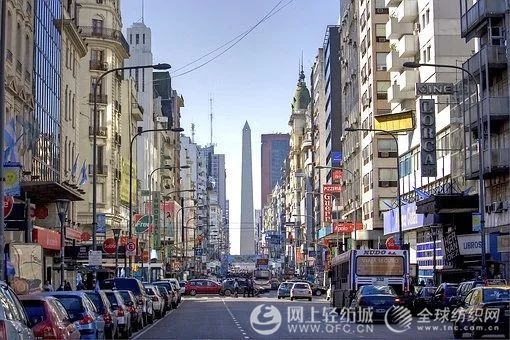
The Argentine Republic (English: theRepublicofArgentina,Repú blicaArgentina, Spanish: Repú blicaArgentina), referred to as Argentina, is a presidential federal republic consisting of 23 provinces and the federal capital (Buenos Aires). Located in the southeast of South America, it borders the Atlantic Ocean to the east, Antarctica to the south across the sea, Chile to the west, Bolivia and Paraguay to the north, and Uruguay and Brazil to the northeast.
Population: By the end of 2013, the national population was about 41.45 million, ranking 31st in the world. The proportion of women is 51.06 per cent and that of men is 48.93 per cent. The population density is low, about 15 persons per square kilometre.
Capital: Buenos Aires.
Language: Spanish.
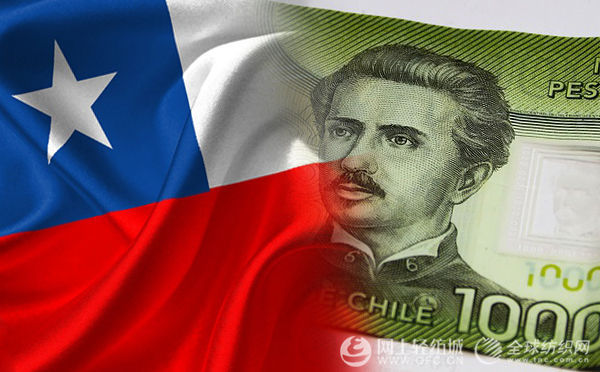
On October 6, the Chilean government stated that as world oil prices rise, the country's public transportation will be affected, and the morning and evening peak fares will rise from 800 pesos to 830 pesos (equivalent to an increase of 30 cents). After that, some people began to take to the streets to protest, dissatisfied with the heavy burden of life, and demanded that the government reform the labor law, pension and tax system.
On October 18, extreme demonstrators took to the streets to set fire, clashed with the police, and set fire to the landmark building in Santiago, the capital of Chile.
In the early morning of October 19, Chilean President Pinera made a speech on television, saying that the government had activated the "National Security Act" and declared a state of emergency in Santiago Province, including Santiago.
On the night of October 22, Chilean President Pinera delivered a national television address apologizing to the Chilean people.
On October 30, Pinera made a televised speech at the presidential palace, saying that due to a series of recent demonstrations in the country, the Chilean government would give up hosting the informal (APEC) leaders' meeting and the United Nations Climate change Conference to be held in Santiago, the capital, in November and December.
On October 26, Pinera said in a televised speech that he would change the members of the Chilean government. Pinera also said that the government will take measures within the legal framework to rebuild social order and ensure the safety of citizens, and will take measures to improve people's livelihood.
On the evening of 26 October, the military announced the lifting of the curfew. From midnight on October 28, the state of emergency was lifted nationwide.
On November 10, the government of Chilean President Pinera stated that it would reform the constitution formulated during the dictatorship of Augusto Pinochet and replace it with a constitution that provides a new social contract to quell the protests that lasted for nearly a month. activity. Interior Minister Blumel said the constitution would be drafted by "a constitutional congress" and then approved by referendum, without providing further details.
1. General strike in 20 ports in Chile
Twenty ports in Chile, including San Antonio and Valparaiso, went on strike in solidarity with protesters across the country. The strike will seriously affect the normal export of the country's main commodities, and even affect the relevant foreign trade enterprises calling at the country's ports and importing into the country. Please pay attention to the collection and shipping risks of enterprises that have recently shipped to Chile.
2. A large number of Chinese businessmen suffered serious damage
During the riots, Chinese businessmen were not spared, and overseas Chinese from Qingtian in Lishui, Zhejiang suffered the most. According to statistics from the Lishui Qingtian Association of Chile, on the 19th, a total of 8 Lishui Qingtian compatriots engaged in department store retail across the country were robbed to varying degrees, and all overseas Chinese in the Chinese business wholesale zone in the Chilean capital were closed.
3. Aviation, air transport and logistics are greatly affected
EduardoGoycoolea, executive director of New Sea Line, said, "Due to the unrest, the air transportation of our products has been delayed. Chile's logistics system has been greatly affected, including roadblocks, airport problems, class delays and even cancellations, and we hope that the traffic situation will resume as soon as possible in the next few days."
4. Salmon industry affected
Due to delays in the operation of Santiago Airport, the arrival of chilled salmon from various countries has decreased. If the unrest in Chile continues, the spot price of chilled salmon is bound to be affected. Some Chinese importers said the unrest affected the issuance of Chilean salmon export certificates.
5. The sharp devaluation of the Chilean peso
On November 11, the Chilean peso fell to a record low of about 760 pesos to the dollar, and the Santiago stock market fell 1.5 percent.
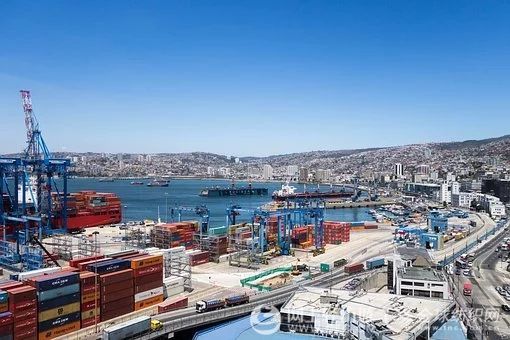
Introduction to Chile
The Republic of Chile (Spanish: Repú blicadeChile), referred to as Chile. Located in southwestern South America, at the western foot of the Andes. It is bordered by Argentina to the east, Peru and Bolivia to the north, the Pacific Ocean to the west, and Antarctica to the south. It is the country with the narrowest terrain in the world, with a land area of 756715 square kilometers.
Population: Chile's total population is 17.57 million, of which 86.9 per cent are urban. White and mixed Indo-European people account for about 89%, and Indians about 11%. The Indians of the southern Araucanía region are relatively concentrated.
Capital: Santiago.
Language: Spanish.
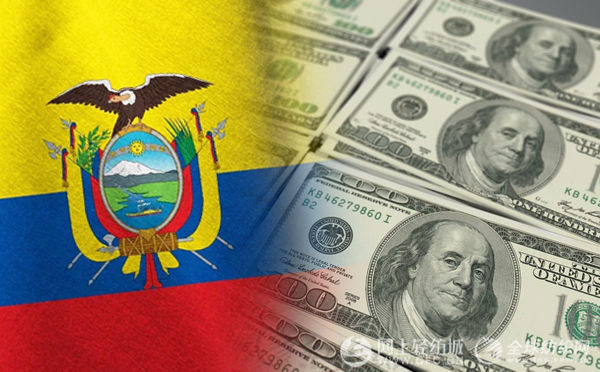
At the beginning of 2019, Ecuador reached a $4.2 billion loan agreement with the International Monetary Fund, which will carry out tax reform and reduce fuel subsidies (about $1.3 billion) to reduce public expenditure.
On October 2, Ecuadorian President Moreno announced a series of reforms, including tax increases, relaxation of labor laws, cuts in public spending, and cuts in fuel subsidies that have been in place for decades. It sparked nationwide protests.
The Ecuadorian government subsidizes fuel every year, but this subsidy will actually cause the government to lose 1.3 billion US dollars (about 1 billion pounds), so the government decided to stop the subsidy, but as a result, the price of fuel may double, making the transportation department and the general public dissatisfied.
On October 3, many protests broke out in Ecuador. Indigenous people throughout the country, who suffer from poverty and inadequate public services, are thoroughly enraged. Hundreds of thousands of indigenous people have poured into the capital. Streets and rural highways were completely blocked by protesters, who occupied government buildings, oil fields, water treatment facilities and hydropower stations. The President of Ecuador subsequently announced the relocation of the capital to Guayaquil and entered a 60-day state of emergency in the country.
On October 8, the situation escalated. In addition to the protests, the angry masses also experienced some massive destruction. Due to the protest march and destruction, the traffic around Guayaquil was paralyzed, and the local protestors occupied the main roads and bridges.
On October 13, the Ecuadorian government held a dialogue with representatives of indigenous Indians and reached an agreement on the government's earlier cancellation of fuel price subsidies. Leaders of indigenous Indian groups agreed to end the national strike and halt demonstrations.
According to the agreement, Eritrean President Moreno agreed to revoke Presidential Decree 883. The Eritrean government will immediately set up a committee with representatives of the indigenous Indian population to jointly draft a more complete new decree. Moreno said it was a solution for Ecuador to restore peace as soon as possible.
1. Transportation is seriously affected
In the days when unrest broke out in Ecuador, its main roads were blocked, urban traffic was completely paralyzed, and even flights and ships could not operate normally.
2. The aquaculture industry is greatly affected
The riot occurred at the time of the white shrimp fishing period in Ecuador, and the transportation obstruction greatly affected the overall shipment of white shrimp. In addition to the transportation obstruction, the future shipment situation is a more sensitive and most concerned issue for the overall Ecuadorian white shrimp exporters, because in addition to China's strict investigation and ban and other measures and the time of the riot, the situation is very unstable, the EU market and the US market will also be affected by the riot,
3. Crude oil production affected
On October 12, a source from the Ecuadorian Ministry of Energy stated that the unrest in Ecuador has reduced crude oil production by 877678 barrels, including 140885 barrels by private companies.
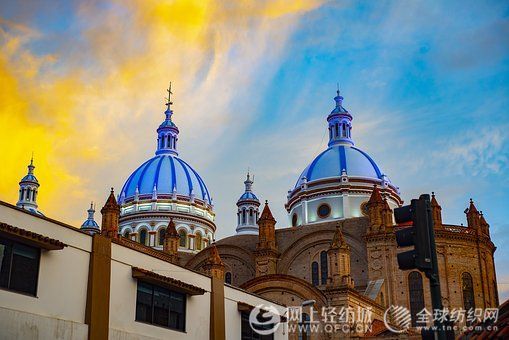
Introduction of Ecuador
The Republic of Ecuador (Spanish: Repú blicadelEcuador), referred to as Ecuador. A country located in the northwest of South America, bordering Colombia in the north, Peru in the south, and the Western Pacific Ocean in the west. It is a country in South America that is not adjacent to Brazil with Chile. It also has jurisdiction over the Galapagos Islands, 1,000 kilometers away from Ecuador.
Population: 15,789,330 of the total population of Ecuador (2013). Of these, 77.42 per cent are Indo-European, 6.83 per cent Indian, 10.46 per cent Caucasian, 2.74 per cent mulatto and 2.55 per cent black and other.
Capital: Quito.
Language: Spanish.
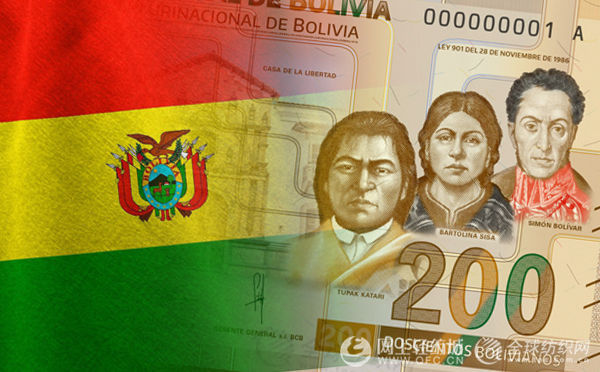
since the presidential election was held on 20 October this year, bolivia has been plunged into a serious political crisis.
On October 21, the results of the general election showed that the then President Morales won, but the opposition was dissatisfied with this, believed that he cheated, and continued to protest.
On October 23, the Bolivian opposition launched an indefinite general strike to protest the election results. Bolivian security forces have clashed with demonstrators in the capital, La Paz, and elsewhere. Protesters set fire to election offices in eight districts and police fired tear gas at demonstrators. Bolivian police found on the 23rd that 400 people planned to carry explosives to the Supreme Electoral Court.
On November 10, Morales was forced to resign and went to Mexico to seek political asylum. Subsequently, the country's Vice President and the President of the Senate also announced that they would resign.
Immediately, opposition lawmaker Janina Añez was sworn in as interim president and took drastic measures to quell demonstrations by Morales supporters, raising the total death toll to 23 as of November 15, with at least nine demonstrators dead.
On November 24, Bolivian interim President Agnes signed and promulgated a new election bill to hold "clean, fair and transparent elections" as soon as possible ".
1. The national strike has a serious impact on transportation.
As of November 5, anti-government demonstrators continued to set up roadblocks in many parts of the country during the indefinite nationwide strike, obstructing transportation. Among them, the city of Santa Cruz is the most affected. Since October 23, most of the main roads in the city center have been blocked, a large number of local businesses have closed or opened for a limited time, and some markets in the city have also experienced supply shortages.
2. Taxis can't run without fuel, and people buy meat to go to the black market.
According to a report by Agence France-Presse on November 17, among the frequent protests, the local people are the most affected. Almost every gas station in the capital, La Paz, has run out of gasoline. Protesters also blocked the main road from La Paz to the neighboring city of El Alto and the oil refinery in El Alto, causing the disruption of gasoline and gas supplies throughout the La Paz region. Agricultural supply routes around La Paz have also been blocked by protesters. This has also led to another result-the people of La Paz are going to be unable to afford food.
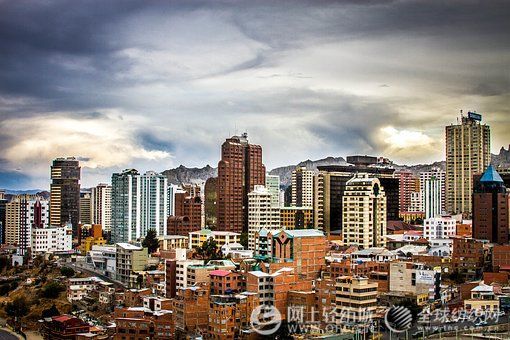
Introduction to Bolivia
The Plurinational State of Bolivia (Spanish: EstadoPlurinacionaldeBolivia), referred to as Bolivia, is a landlocked country in central South America, surrounded by Brazil, Peru, Chile, Argentina and Paraguay. The country is dominated by plateau terrain, with an average altitude of more than 3000 meters, which is the country with the highest average altitude in the world.
Population: Total population 10.624 million. The urban population is 6.574 million, accounting for 65 per cent of the total population, and the rural population is 3.454 million, accounting for 35 per cent of the total population. Bolivia is a multi-ethnic country, mainly composed of indigenous peoples, including Indians of various ethnic groups; Mestizo people: mixed descendants of European and African immigrants and indigenous people (about 30% of Bolivia's population) and European and African immigrants (about 15% of the total population).
Capital: The legal capital is Sucre and the actual government is La Paz.
Language: Spanish, Quechua and other 36 kinds of Indian national languages.
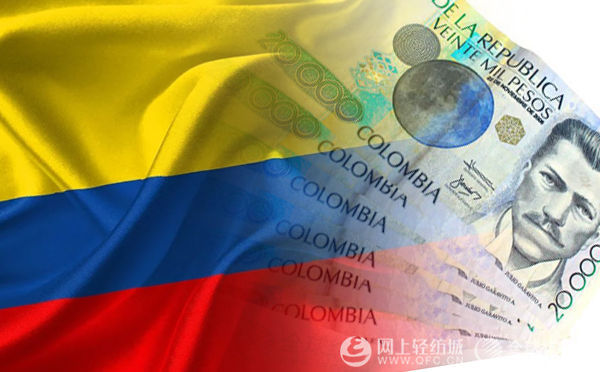
On November 21, more than 200000 people across Colombia took to the streets. Demonstrators occupied all walks of life in Colombia, including students, teachers, and trade union organizers, to carry out large-scale protests and demonstrations. They demanded that the government maintain the rights of young people to minimum salaries and pensions, and opposed President Duke's new national development plan.
Although the government has not officially announced the implementation of this reform measure, it has become the "fuse" of public dissatisfaction with President Duke ". Since Duke took office in August 2018, his approval rating has fallen to 26%.
Many foreign media reported that this was one of the largest protests in the country in recent years. The protests were largely peaceful, but turned violent in the evening.
In Bogota, Colombia, protesters smashed windows, destroyed bus stops, set up roadblocks and threw stones at police. Riot police deployed armored vehicles and fired tear gas into a Bogota square in response to the protesters' violence.
The police said that about 207000 people participated in the demonstrations across the country, at least 36 violent elements were arrested, 37 military police and 42 civilians were injured, and the possibility of a further increase in the number of casualties cannot be ruled out. The Colombian government temporarily closed its borders with neighboring Venezuela and Ecuador that day.
On November 22, Colombian President Ivan Duque ordered a curfew in Bogota from 9 p.m. that night. Duke announced on the same day that the government will launch a "national dialogue" next week to find medium-and long-term solutions to social injustice and corruption. Duke believes that there is "room" for dialogue, which will help "narrow the social gap, fight corruption more effectively" and build a peaceful and rule-of-law society."
1. Violent marches seriously affect public travel and business activities
In Bogota, the capital, subway and bus rapid transit are the main means of public transport for local people's daily travel. In this parade, many violent elements deliberately sabotaged nearly 100 bus stations, causing varying degrees of damage to the local people's travel, causing great trouble.
In the past few days, there have also been robberies against shops in the parade. Although many shops have taken protective measures, their business has been greatly affected.
2. The border is closed and freight is greatly restricted.
In response to this national demonstration, the Colombian government closed all land borders with neighboring countries, and all land and sea access to Colombia from neighboring countries Guador, Peru, Brazil and Venezuela will be restricted. Due to the uncertainty of this incident, the export of goods to Colombia may be delayed to varying degrees.
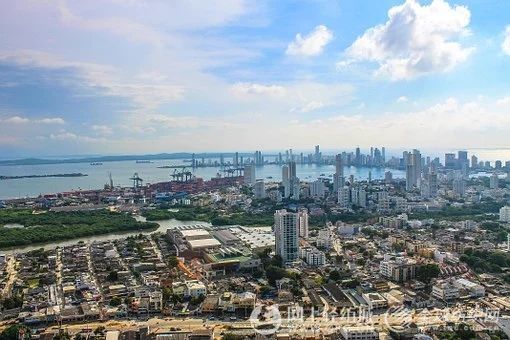
Introduction to Colombia
The Republic of Colombia (Spanish: Repú blicadeColombia), referred to as Colombia. Colombia is located in the northwest of South America, with Venezuela and Brazil to the east, Ecuador and Peru to the south, Panama to the northwest, the Caribbean Sea to the north and the Pacific Ocean to the west.
Population: Colombia has a total population of 46.4 million in 2014, making it the second most populous country in South America. The five cities of Bogotá, Medellín, Cali, Barranquilla and Cartagena are the main concentrations of the Colombian population. The Colombian race is the result of a mixture of local indigenous Indians, Spanish colonists and African slaves.
Capital: Bogota.
Official language: Spanish.

Shipping advice:
1. For those who have not arrived in Hong Kong but have settled the payment, there is no need to worry, but you can keep in touch with the customer to help the customer tide over the difficulties.
2, for has been shipped but not settled the balance, to the customer in a timely manner to collect the payment, the letter of credit payment method should be timely delivery of documents to urge the negotiating bank to negotiate payment.
3. For those to be shipped, try to settle the balance before shipment, communicate with customers, and determine whether to ship according to the actual situation. We can adhere to the principle of "no payment, no delivery" to avoid risks.
(SourceExternal market, external cross-research center, integrated by the global textile network.)
More information


Follow us
Hello, what can we do for you?
Copyright © Xiantao Dexing Plastic Products Co., Ltd / Xiantao Dexing Health Technology Co., Ltd | Powered by:300.cn
SAF Coolest v1.3.1.2 设置面板 FZUSD-ZSNG-OSSQE-ZWE
无数据提示
Sorry, the current column is being updated, please look forward to it!
You can view other columns or returnHome Page