


News Center
News Center
Nonwovens in food packaging
Release time:
2021-12-07
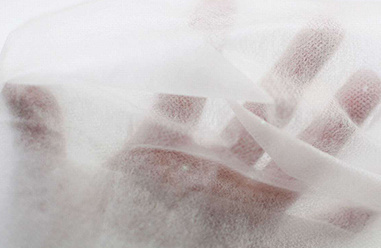
In food mats, the predominant nonwovens used are air-laid nonwovens using a very high proportion of natural fibers, but spunbond/SAP/spunbond laminates are also available on the market. Food mats made of nonwovens can absorb liquids from perishable foods such as meat and fruits to keep them fresh and extend shelf life, while reducing food waste.
In food mats, the predominant nonwovens used are air-laid nonwovens using a very high proportion of natural fibers, but spunbond/SAP/spunbond laminates are also available on the market. Food mats made of nonwovens can absorb liquids from perishable foods such as meat and fruits to keep them fresh and extend shelf life, while reducing food waste.
Phil Mango, a consultant to the nonwovens industry, expects the total percentage of airlaid nonwovens used in food mats to be about 7% worldwide. "From a nonwovens point of view, the European food mat business is much larger than North America," he said. "Novipax are by far the largest food mat producer in North America. They use some nonwovens, but the proportion is very small."

He explained that there are some contradictions that limit the development of airnetting in North America. First, converting most existing equipment into food mats made of non-woven fabrics requires power to overcome inertia. "Why would they change it? In some cases, that means capital investment."
Second, North America's airlaid capacity has been limited. Mango estimates current airlaid capacity utilization at 95%. On the other hand, there are many small and medium-sized food mat producers in Europe, unlike the large food mat producers in North America. "Europe may have the most excess supply of airlaid networks, even if they are older production lines, and capacity utilization rates may be in the mid-1980s." He added.
According to the American Nonwovens Industry Association INDA, airlaid nonwovens are ideal for food mats because they have the same requirements as the absorbent core of sanitary products: fast absorption rate, no/low rewet rate. "Controlling moisture in food packaging helps to extend shelf life and reduce waste," says Brad Kalil, INDA Director of Market Information and Economic Insights. "Using nonwovens as a packaging breathability component can manage the respiration and shelf life of certain foods, such as fruits."
The Glatfelter focuses on the European and North American markets in the food mat sector, and the company maintains close relationships with major food mat producers in these regions. Its food pad products offer different levels of absorption and processing options, can be used with or without superabsorbents, and are easy to laminate.

According to the company's executives, the demand for food mats in the market has increased over the years, and more plastic packaging has been replaced by innovative and sustainable airlaid products. Airlaid materials Glatfelter for food mats are more environmentally friendly than competitors' products made of petroleum-based plastics.
Technical Absorbents, a manufacturer of superabsorbent fibers (SAF), also sees growth opportunities for nonwovens in the food mat segment. "SAF fiber sales in the sector continued to be strong during the new crown epidemic, especially in Europe, where the epidemic led to a reduction in eating out and a surge in supermarket demand." Technical Absorbents technical director Paul Bradley said.
Technical Absorbents has been applying its SAF technology to food packaging for many years, primarily in fiber form to processors. SAF fibers are listed by EFSA and FDA as absorbent materials that can be used in food mat applications.
"The SAF fibers are mixed and entangled with other fibers," explains Bradley, "producing a food mat with uniform absorbency that does not require edge sealing or bagging to hold the fibers in place and can simply be cut directly from the roll. SAF fiber is blended with other fiber materials to produce a pad that is not only absorbent, but also as an integral part of pre-packaged food, which can make the appearance of the food more attractive."
Like many manufacturers, Technical Absorbents are working to improve the sustainability of their products by improving efficiency. "The biggest environmental impact of food mats is to help reduce food waste," Bradley said. "The use of absorbent mats can improve the appearance and taste of food, which can help extend the shelf life of the product. The management of exudate is key, and SAF is very effective in absorbing and retaining moisture."
Do not use airlaid
One of the main products of the UK-based Elliott Absorbent Products is Dryline-a food mat made of airlaid cellulose nonwovens. The Dryline Meat Pads series is available in either single-or double-sided coating options, both pad and roll. However, its more recent innovation is to no longer use airlaid nonwovens in food mats.
The UniDry series is a series of ultra-thin, super-absorbent sealed-edge food mats for fresh meat and fish. The company claims that its products have the lowest carbon footprint of any high-absorption food mat on the market. Matt Hankins, managing director of Elliott Absorbent Products, said that although the food mat does not contain air-laid materials, it contains a hydrophilic non-woven polypropylene material that allows moisture to enter, but does not let moisture and super-absorbents out.
The company says that UniDry, which they have developed for many years, uses a patented "Infinity Core" that can provide a huge absorption capacity of 7.5 to 26 liters per square meter.
Tests showed that UniDry uses half of the cellulose and plastic needed to make traditional food mats, and because its ultra-thin structure is easier to transport and store, compared with traditional airlaid food mats, the emissions of transportation miles are reduced by 66%.
"UniDry is a major innovation, and we are doing more with less and providing customers with a product that improves absorbency and shelf life and improves their sustainability performance," Hankins said. "Existing airlaid food mats are bulky and dusty with low production volumes. The UniDry series will replace airlaid and SAF absorbent mats, providing 7500 ml to 25,000 ml of absorbent capacity."
Hankins pointed out that food mats are a mature market, but the reason for their growth is that they have successfully created food mats without airlaid materials to distinguish them from traditional food mats. UniDry is already used by three major UK supermarkets.
Build delicious
In the field of beverage filtration, wet-laid is the primary nonwoven technology for products such as tea bag and coffee filtration. Wet-laid nonwovens are ideal here. The production process of this material is similar to papermaking, and many wet-laid nonwovens are made from wood pulp or other natural fibers mixed with synthetic fibers. Another advantage of wet-laid is the ease of bonding materials to make bags, pouches and filters.
According to INDA, in 2019, filtration terminals for liquid food and beverage processing consumed 1/3 of the nonwovens used for liquid filtration (by area), while transportation accounted for the largest proportion by tonnage, accounting for a little more than 1/3 of the total tonnage.
In terms of tonnage, the liquid food and beverage processing market is expected to grow by 3.4 per cent annually between 2014 and 2019. Looking ahead, the sector is expected to grow by 2.8 per cent annually from 2020 to 2021.
Glatfelter produces a variety of beverage filters and filter papers for tea and coffee, including non-heat-sealable paper and industrial compostable heat-sealable paper. This high-quality filter paper is made of wood and abaca fiber mixed with a small amount of wet strength agent. These plant-based tea and coffee filters are known as Dynagreen solutions.
The company says abaca fiber is a key ingredient in Glatfelter beverage filtration, and its long fiber ensures excellent particle retention properties, as well as excellent brewing properties that are important for tea lovers.
Glatfelter single-cup tea bag and coffee solutions are more efficient in terms of resource use and perform better than reusable solutions in waste treatment. Considering the performance of the final product, it is more sustainable to use Dynagreen coffee pods instead of aluminum capsules.
Aluminium capsules are usually thrown into residual bins for incineration. However, Dynagreen coffee pods can be thrown into bio-bins and then biodegraded under controlled conditions. This is important for the quality of the final compost in which coffee is available as a soil amendment ingredient.
Over the past decade, the food and beverage industry has been increasingly driven by convenience and mobile lifestyles. More recently, Glatfelter have seen sustainability become a meaningful driver for the industry. When making a purchase decision, consumers no longer only consider the convenience of the product, but also the impact of the product on the environment. According to Glatfelter, consumers demand not only producers but also the entire supply chain to be more transparent and committed to sustainability. The company says sustainable products are no longer a niche demand, and consumers are now looking forward to them.
One Earth, a manufacturer of tea and coffee filter materials, also believes that the demand for more sustainable, environmentally friendly and biodegradable products is the biggest factor driving the growth of the beverage filter market.
The One Earth product line includes One Earth Nonwovens Filter Material and One Earth Nonwovens Rapid Brew Filter Material. Erin Heryford, managing director of One Earth, said the materials are mainly used in tea, coffee, food and beverages, but are also used in food packaging, beauty products and health supplements. In addition to filter media, the product range also includes strings, labels and envelopes. The entire product line is derived from non-GMO sugar cane raw materials and is certified, including compostable in 21 days or less, non-GMO, USDA 100 percent bio-based and plastic-free.
Stephen Foss, president of the Nonwoven Network, said: "Unlike the competition, One Earth is manufactured using a dry process and there is no waste or dirty water back into the environment. In addition, we recycle all unused One Earth material for the production of new materials. And One Earth's patented fiber structure is inherently hydrophilic, allowing water to flow through quickly."
This article is from Nonwovens Industry Journal
Source: Jung-International Nonwovens Industry
More information

Follow us
Hello, what can we do for you?
Copyright © Xiantao Dexing Plastic Products Co., Ltd / Xiantao Dexing Health Technology Co., Ltd | Powered by:300.cn
SAF Coolest v1.3.1.2 设置面板 FZUSD-ZSNG-OSSQE-ZWE
无数据提示
Sorry, the current column is being updated, please look forward to it!
You can view other columns or returnHome Page