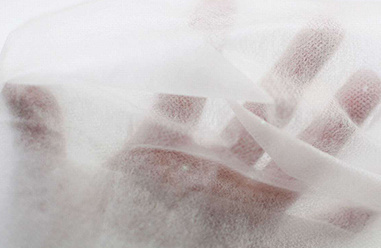
The rising demand for cleaner air and water in the global market has not only led to an increase in the demand for non-woven media filters, but also for media that can separate finer particles from the air we breathe and the water we drink. These dual factors make filtration one of the fastest growing markets for nonwovens. According to the Smithers company's report, filtration is the second largest end-use market for durable nonwovens and the third largest market for nonwovens overall. Filter media accounted for 9.9 percent of global nonwovens sales last year, and this market continues to grow in the mid to high single digits.
"We see the filtration market continue to grow," said ScottTennison, director of innovation at KimberlyClarkFiltration (Kimberly-Clark Filtration). "A lot of it has to do with educating consumers about the importance of air quality in their homes. As consumers become more health-conscious and understand how viruses and bacteria spread, they will want the air to be as clean as possible."
For filter media manufacturers, the challenge is to develop a product that can remove a greater number of particles from the air without compromising mechanical efficiency, which can increase the cost of heating and cooling the house. Tennison added: "It is very important to maintain balance. We can make the MERV rating ridiculously high, and we can filter the smallest substances out of the air, but this will cause trouble for the equipment."
In order to achieve this goal, Kimberly-Clark continuously conducts tests to understand how the equipment works independently and cooperates with many equipment manufacturers. Tennison added: "We look at the innovation of pleated filters and try to understand how to make it work better."
Some of Kimberly's ways of achieving this goal are to combine multiple layers of material in the media or change the height or width of the folds to see how the media collects particles from the air.
Continue to invest
For many years, Ahlstrom-Munksjö has been one of the major global players in the filtration market, and the company continues to maintain this position by continuously expanding its production capacity. Because it sees filtration-related applications growing, Oslon-Minsk continues to strengthen its platform. Over the past few years, the company has made several investments around the world, most recently confirming a significant expansion of its second phase of glass fiber production capacity, which will support its expansion plans in industrial, automotive and energy storage applications.
Recently, Oslon-Minsk said it has completed the initial analysis and design phase of its ongoing project to enhance its manufacturing platform for high-performance filtration and energy storage applications. In response to growing customer demand, the company has now decided to proceed with the second phase of the project, which includes a significant expansion of its fiberglass media capacity and a further increase in industrial filtration capacity. The second phase of the plan includes expanding industrial filtration capacity in Melmedy, Belgium; increasing glass fiber media capacity at the Fabriano plant in Italy; establishing a new production line in Turin, Italy, dedicated to the production of glass fiber media; and machine modification in Binzhou, China, which will increase its capacity to expand its product range to the Asian industrial and transportation filtration markets.
"These investments support Oslon-Minsk's strategic ambition to maintain our leading position in certain segments of the global fiber solutions market that have positive growth prospects and are supported by sustainable market drivers." "Over the past few years, our company has gradually expanded its filtration capacity worldwide through several new and expansionary investments to meet growing customer demand," said DanieleBorlatto, executive vice president of filtration and high performance business."
The investment was announced in June 2018 for a total investment of approximately € 28 million million, and the entire project is expected to be completed in the second half of 2021. Oslon-Minsk's filtration business develops and produces filtration materials for engine oil, fuel and air, as well as air filtration materials for vehicles or industrial use, and is further developing filtration solutions for hybrid and all-electric vehicles. Nearly 20% of the company's sales are from industrial applications, and about 80% of its sales are from transportation applications, including passenger cars and heavy vehicle applications, such as trucks and heavy machinery. In transportation applications, sales are primarily from the aftermarket.
NooraBlasi, the company's marketing and communications manager, said Oslon-Minsk sees further growth opportunities in the industrial filtration market. She said: "The increasing demand for pure, non-polluting air and liquids in the industrial sector is a key growth factor. Specific segments supported by sustainable market drivers are our target markets."
Oslon-Minsk launched Extia in November 2018, a breakthrough, highly durable filter media designed to extend the filter life of equipment in air pollution control applications, purify the air more effectively and protect the environment. Extia extends filter life by more than 40%, thereby helping customers extend the operating time before filter replacement.
In September 2019, Oslon-Minsk announced the launch of Extia's expanded product portfolio, which includes several new products to cover the full range of medium efficiency, as well as flame retardant, surface conductive and food certified versions. This product range is designed to meet the safety requirements of specific industrial air pollution control applications.
The expanded product portfolio also includes high efficiency grades up to H13(EN1822), designed for applications involving very fine particles and high dust. In addition, it turns out that Extia is easier to achieve high-speed processing on both blade and drum pleats.
Focus on sustainable development
In October 2019, Welspun introduced a WelPleat product based on its mixed media technology to the European market, which was well received for its versatility and innovation, as well as its ability to meet the challenges faced by conventional pleatable filter media. It has physical and performance indicators beyond the general range, which helps to improve the filtration efficiency in general.
In addition, Welspun have also introduced WelStrat to address the problems faced by conventional filter media in filtration environments with higher moisture content in the temperature range of 170-180°C.
"From the beginning, Welspun Group's core principle has been to make a positive impact on people's lives," said Mr. CherianThomas, CEO of Welspun Advanced Fabrics. "In each market segment, we strive to provide the best products, thereby contributing to the improvement of life and the sustainable development of the world."
Since filtration is a vital tool to improve people's lives and the environment, Welspun have been equipped with a variety of technical capabilities to provide the best products. As a global enterprise, the company has been committed to making a positive impact on the filtration industry and people's lives.
Especially in India, the sharp rise in urbanization and industrialization, coupled with the focus on emission regulations, these factors are driving the strong growth of the filtration market. Thermal power plants, cement, chemical plants, high-end residential and commercial complexes will become the largest role in the industry.
Thomas predicts a surge in the residential filtration market. High pollution levels in urban areas have led to increased demand for urban household filtration systems. Another major area of growth is the electric vehicle filtration market, and Welspun is already developing products to meet the needs of this market.
Thomas added that sustainability is the core value of the filtration market. He said: "Welspun produced media have a longer service life, thereby reducing the number of replacements. The water needs of our factory can be fully met through the internal sewage treatment plant, and will not consume fresh water dedicated to residential households. We continue to carry out practices that can affect the sustainability of the entire industry, and we are also directing filtration materials to more areas where they can be reused. At the same time, we are also considering increasing the share of recyclable packaging materials."
DuPont Acquisition Penetration Specialist
DuPont has signed an agreement to acquire a closed-circuit reverse osmosis (CCRO) company Desalitech and is awaiting regulatory approval. Financial terms of the agreement were not disclosed.
"As a global leader in innovative water solutions, we are committed to providing solutions to the world's water challenges. This acquisition in the high-growth water purification segment reinforces our strategic intent to provide a robust technology portfolio to help our customers meet current and future challenges, while strengthening our commitment to sustainability," said RoseLee, president of DuPont's Safety and Buildings business."
DuPont is a leader in water purification and separation technologies, including ultrafiltration, reverse osmosis and ion exchange resins. FilmTec brand is renowned worldwide and is known for its stable and reliable performance. Each of the company's recently announced acquisitions, including Desalitech, has allowed it to acquire new manufacturing capabilities, plants and technologies to support its growth and innovation strategy.
Desalitech is a company that provides closed-circuit reverse osmosis (CCRO) solutions. The closed-circuit reverse osmosis (CCRO) solution is Desalitech's patented technology. Compared with traditional RO solutions, it uses unique process technology and professional software to recycle water, reducing maintenance costs and improving energy efficiency while increasing wastewater recovery. The solution meets the needs of high-growth market segments such as food and beverage, microelectronics, and pharmaceuticals for improved water recovery, water-saving and easy-to-operate, efficient and sustainable operation through its ReFlex software. Over the past seven years, Desalitech have proven the value of these systems and helped more than 200 premium customers achieve water recycling rates of 90-98%.
"Water scarcity is a global challenge that all stakeholders must address to purify, protect and reuse this valuable resource. We look forward to working with OEMs, end users and value chain partners around the world to increase the use of this technology using business models such as technology licensing, system sales and production partnerships," said HPNanda."
Bondex focuses on industrial filtration
Nonwovens manufacturer Bondex, located in South Carolina, USA, is a subsidiary of AndrewIndustries, UK, focusing on the filtration, electrical insulation, medical and home care markets.
Bondex President BrianLittle believes that with the changing global demand, innovative technologies in the filtration industry are gradually maturing. "For a long time, industrial filtration was limited to limited material solutions, but with the latest technological developments such as hydraulic entanglement filter felt, we see that customers are rethinking the way to solve filtration needs." He said.
Bondex's solution is a Hydrolox technology introduced two years ago. The company's proprietary process combines traditional needle punching with high-pressure hydraulic entanglement to strengthen the material. This produces very fine fibers in the felt, giving the material properties comparable to ePTFE laminated felt, but without sacrificing breathability. Bondex can produce filter felts of almost all fiber types for industrial air and liquid filtration applications. According to Little, fibers such as aramid, polyester, PPS, polypropylene, acrylic homopolymer and polyimide are the most common. "The material produced by this technology is more effective than needle punching and has high strength."
Hydrolox opportunities may be in the asphalt industry, where its lightweight nature can be used to replace heavy aramid needled felts. Little said that where the cement industry needs higher efficiency, homopolymer acrylic Hydrolox can provide users with new options without using film-coated needle-punched felt.
In terms of product development, Bondex has added a variety of fiber types and chemically treated filter mats over the past few months. Little said they are actively considering future investments to meet various customer needs in different markets.
Mann Hummel Grows Through Acquisitions
Mann Hummel bought Hardy Filtration, a Canadian air-filtration company.
Founded in 1941, Mann Hummel is a supplier of automotive components, producing a range of filter systems, such as systems and components for automotive original equipment, products for the automotive aftermarket, industrial filters and water filters. The company has taken steps to expand into the car market, which it has achieved through a number of acquisitions in recent years.
In 2018, the German company acquired US air filtration company Tri-Dim. Tri-Dim is the largest privately held air filtration company in North America and is a provider of a full range of HVAC filtration products and services, including air and liquid filtration, heating/air conditioning supply, cleanroom filtration, air purification equipment, gas phase filtration and air test remediation.
"The acquisition Tri-Dim is a testament to Mann Hummel's commitment to the growth of the Life Sciences & Environment (LS & E) segment of our business, which is focused on smart air and water filtration solutions," said Hå kanEkberg, Vice President of Mann Hummel LS & E, "The Tri-Dim product portfolio, experienced workforce, geographic reach and amazing customer relationships make them the ideal partner to further expand our air and water filtration solution strategy."
With the acquisition of Tri-Dim, Mann-Hummel has better access to the US/Canadian air filtration market and offers a wide range of growth opportunities. Both companies have deep historical roots and a strong commitment to technical leadership and customer service.
In August 2019, Mann Hummel acquired Canadian air filtration company HardyFiltration. Founded in 1993, Hardy develops, manufactures and markets a range of filtration products for a variety of applications, such as air filters, spray booth filters and dust bags.
Shengde Continues to Expand Filtration Business
Sandler has more than four decades of experience in the filtration market and is one of the major players in today's filtration industry. Sandler product range includes fiber-based nonwovens and melt-blown filter media, suitable for G1-E11/MERV1-16 filters, and meets all ISO16890 efficiency ranges. It uses different combinations of materials and production technologies to adapt to the relationship between nonwoven properties and specific applications. Its multi-layer construction provides depth filtration properties, and the filter media can be used in HVAC applications, the transportation industry, vacuum cleaner bags, special filters customized for liquid filtration, and medical and hygiene applications.
Sandler recent developments include filter media for activated carbon filters. "Using these products, the function of activated carbon and the best particle filtration function provided by non-woven media can be combined into durable filtration products, such as automotive air filtration." Müller of Sandler said.
Sandler is also expanding its product range of filter media for liquid filtration. "The new electric vehicle concept requires the filtration of specific liquids to protect the engine. The latest development of the Sandler provides non-woven solutions for these professional applications." Müller added.
From a Sandler point of view, the filtration industry continues to have great potential and a need for innovation, and product development continues.
"Given the new legislation and environmental concerns, the importance of this sector is likely to continue to grow," says Müller, "There is great potential for growth in major trends such as electric vehicles, as well as new players from Asian countries, and new challenges arise. It is the responsibility of filter media manufacturers to develop innovative product solutions to meet changing customer and regulatory requirements. All in all, this undoubtedly makes the filtration industry an important market for the development of nonwovens business."
This article is from Nonwovens Industry Journal
作者:Karen McIntyre