


News Center
News Center
Vietnam's new labor law: 8 hours to work! Also raise wages!
Release time:
2019-12-07
The new version of the "Labor Law" stipulates that the daily working hours shall not exceed eight hours, and the overtime hours shall not exceed 300 hours within a year.
The new version of the Labor Law provides that:The daily working hours shall not exceed 8 hours and the overtime hours shall not exceed 300 hours in a year.
The Eighth Session of the 14th National Assembly adopted the Labor Law (Amendment) on November 20, with a 90.06 per cent approval rate.
the labor law (amendment) includes 220 articles in 17 chapters, which clearly stipulate labor standards;The rights, obligations and responsibilities of workers, employees, organizations representing workers and organizations representing employees;State management of labor, etc.
According to the Labor Law (Amendment) just passed by the Congress, the statutory holidays of a year include five days of Spring Festival, one day of New Year's Day, one day of King's Day, one day of Southern Liberation Day on April 30, one day of International Labor Day on May 1, and two days of National Day.
With regard to the retirement age, the new version of the Labor Code provides that:The retirement age for male and female workers under normal working conditions was raised to 62 years and 60 years, respectively.
The specific roadmap is that for male workers, the retirement age under normal working conditions is 60 years and 3 months in 2021, with an increase of 3 months per year between 2021 and 2028.For female workers, the retirement age under normal working conditions is 55 years and 4 months in 2021, increasing by 4 months per year in 2021-2035.
With regard to normal working hours, the new version of the Labor Code provides that:
The daily working hours shall not exceed eight hours and the average weekly working hours shall not exceed forty-eight hours.The State recommends that employers implement a working hour system in which workers work an average of 40 hours a week.
The government issued document No. 561 on November 6, 2019, in which it recommended that the normal working hours stipulated in the current law be maintained at present, and a road map for reducing working hours will be drawn up in due course.The Standing Committee of the National Assembly accepted the Government's proposal and instructed the Government to propose to reduce the working week to less than 48 hours in the light of economic and social developments.
With regard to the expansion of the framework of the maximum overtime agreement, employees may request overtime with the consent of the workers. The daily overtime hours shall not exceed 50% of the normal working hours of a day, 40 hours a month and 200 hours a year.
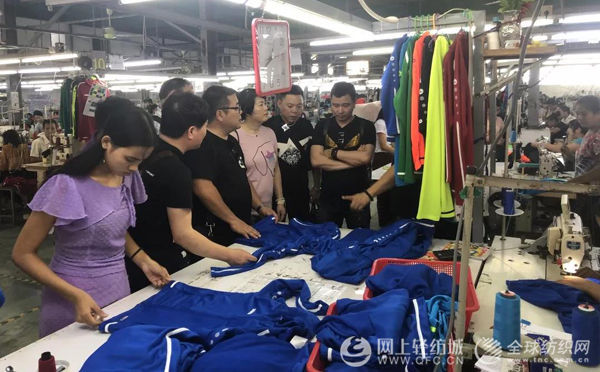
In addition, workers in the fields of textiles and clothing, leather and footwear, electric power, electronic products, production and processing of agricultural and forestry products, salt industry, and aquatic products cannot work more than 300 hours of overtime in a year.
As of January 1, 2020:
-
In the first category, the minimum wage will be increased by 240000 dong, from 4.18 million dong to 4.42 million dong;
-
The minimum wage in the second category will be increased by 210000 dong, from 3.71 million dong to 3.92 million dong;
-
The minimum wage in the three types of areas will be increased by 180000 rupiah, from 3.25 million rupiah to 3.43 million rupiah;
-
The minimum wage in the four categories of areas increased by 150000 dong, from 2.92 million dong to 3.07 million dong.
Yin Maoye, deputy minister of the Ministry of Labor, Invalids and Society of Vietnam and chairman of the National Wage Council, said that the current minimum wage has met more than 95% of the living security needs of workers themselves and their families.
After Vietnam's minimum wage is raised by 5.5 in 2020, the wages of workers will basically meet the minimum living security needs of employees.
According to the inspection results of the Vietnam Federation of Labor, the minimum wage will be raised by 5.3 in 2019, and the living conditions of workers will be improved day by day. The increase in the minimum wage will continue to meet the basic needs of the people.
I didn't expect it!Those Chinese factories that left are back from Vietnam!
Zhou Ping has been running a factory in Dongguan, China's manufacturing hub in Guangdong province.In May 2017, Zhou and another factory owner rented a 1200-square-meter factory in Vietnam's Binh Duong province to produce accessories for an American brand.
He said:"At that time, we thought it was a very good idea, because on the surface, Vietnam's factories and labor were lower than Dongguan, and we also saw more and more European and American customers placing orders in Vietnam.A lot of upstream factories moved there, so we built four production lines (in Vietnam) and employed 110 locals.”
However, by October 2018, Zhou had to stop losses due to rising costs and "cultural issues.Zhou said:"The biggest problem is the efficiency gap between Chinese and Vietnamese workers.Vietnamese workers do not work overtime at all and most of them are unskilled, resulting in inefficient production and delays in delivery.In my opinion, to train skilled workers in Vietnam, the time and capital costs are beyond the reach of small enterprises like ours.”
Another Dongguan factory owner, John Wang, invested 7 million yuan in a factory in Vietnam in 2015.Two years later he stopped production and sublet the factory.Wang said that as far as he knows, the other six Dongguan factory owners regretted moving to Vietnam and now plan to "give up".
An executive at a Taiwanese equipment maker said the company moved much of its production from Guangdong to Ho Chi Minh City and found it difficult to recruit and retain employees."Now, it is difficult to stabilize the workforce, the job market is very hot, and Vietnamese workers change jobs at every turn.As more companies enter Vietnam, the situation will become more severe.
More information


Follow us
Hello, what can we do for you?
Copyright © Xiantao Dexing Plastic Products Co., Ltd / Xiantao Dexing Health Technology Co., Ltd | Powered by:300.cn
SAF Coolest v1.3.1.2 设置面板 FZUSD-ZSNG-OSSQE-ZWE
无数据提示
Sorry, the current column is being updated, please look forward to it!
You can view other columns or returnHome Page