


News Center
News Center
Can change color, can emit light-intelligent textiles with dual thermal response function to understand
Release time:
2019-11-22
Compared with electricity, pH value and chemical stimulation, thermal stimulation is easier to realize in daily life. Therefore, thermal response materials have been widely concerned in many fields such as intelligent textiles, anti-counterfeiting and sensing. Thermal response materials refer to materials that change their physical properties with the change of external environment temperature, among which thermochromic materials are the most studied materials in the field of intelligent textiles.
Compared with electricity, pH value and chemical stimulation, thermal stimulation is easier to realize in daily life. Therefore, thermal response materials have been widely concerned in many fields such as intelligent textiles, anti-counterfeiting and sensing. Thermal response materials refer to materials that change their physical properties with the change of external environment temperature, among which thermochromic materials are the most studied materials in the field of intelligent textiles.

However, thermochromic materials have certain limitations in the use environment, for example, it is not easy to observe the color change of the material in the dark environment, resulting in its practical application is greatly limited. Therefore, it is urgent to develop a material with both thermochromic and thermofluorescent properties to further expand its application range.
Recently, Jiangnan University cooperated with Texas A & M University to develop a thermal responsive material with dual functions of thermochromic and thermofluorescent. The material is a composite nanoparticle dye, which is obtained by the condensation polymerization of tetraethyl orthosilicate, and then the bis-indoloquinacridone (IQA) organic dye molecules and fatty alcohols are encapsulated in silica gel nanoparticles. Purple powder dye.
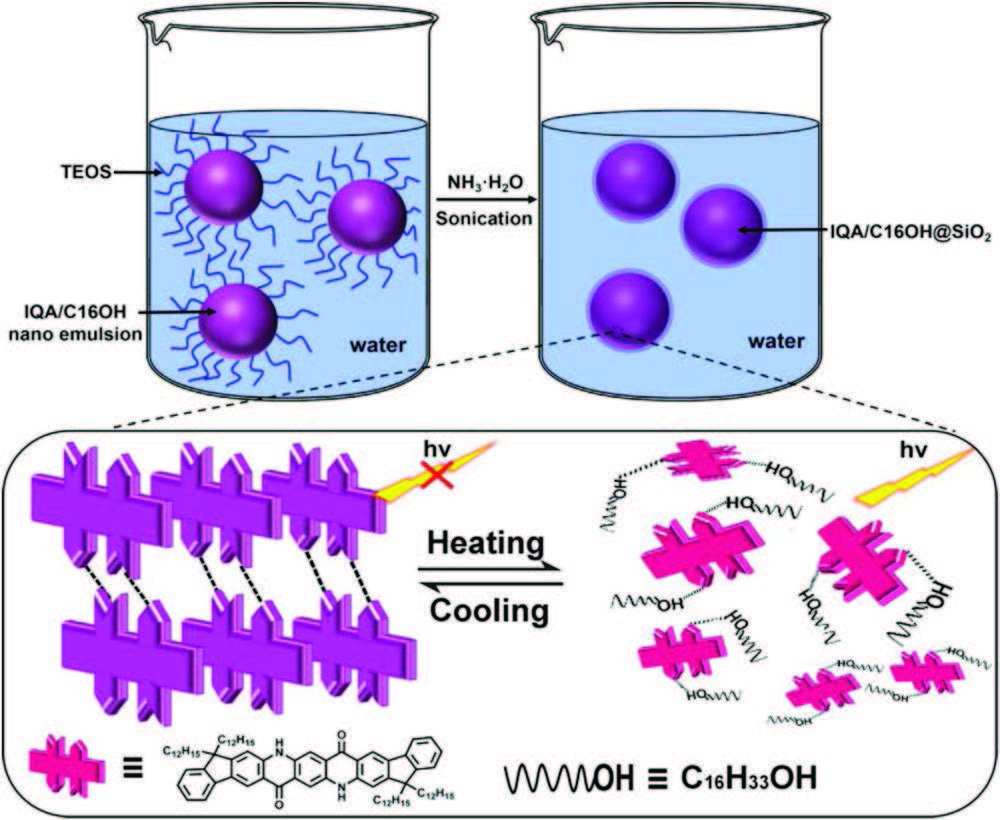
The dye can be dyed on polyester fabric by conventional dyeing method, and the dyed polyester fabric retains the performance of the original nano-composite material, and can realize the double change of color and fluorescence performance with the change of external environment temperature.
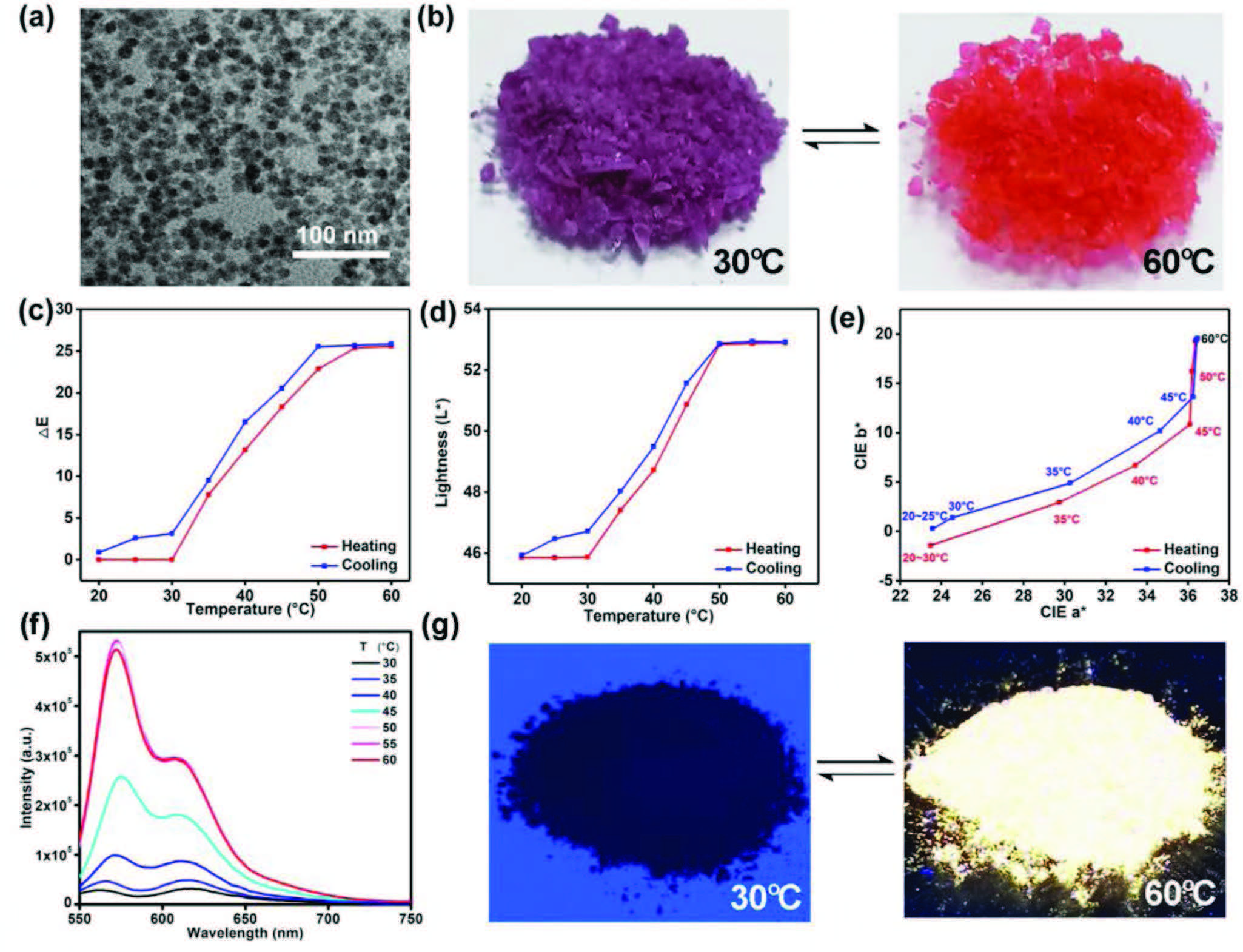
Properties of Composite Nanoparticles
The experimental results show that the fabrics dyed with nanocomposite particles show clear color changes and high contrast fluorescence state changes in a real-time and highly reversible manner. After heating, under visible light, the color of the fabric changed from dark purple to orange red; under ultraviolet light (365 nm), the fabric changed from a dull non-fluorescent state to emit strong golden yellow fluorescence.
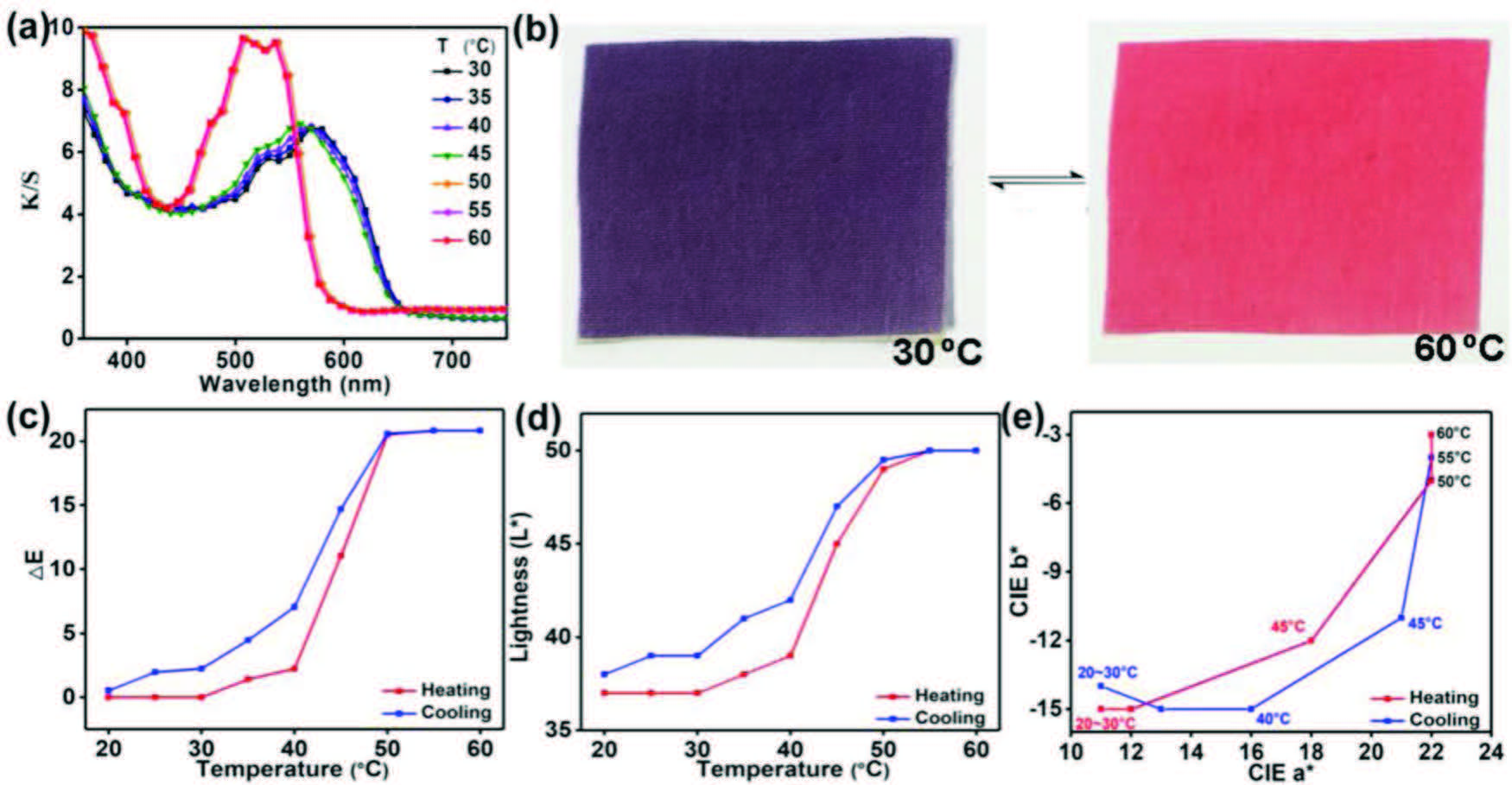
Color change of dyed fabric at different temperatures
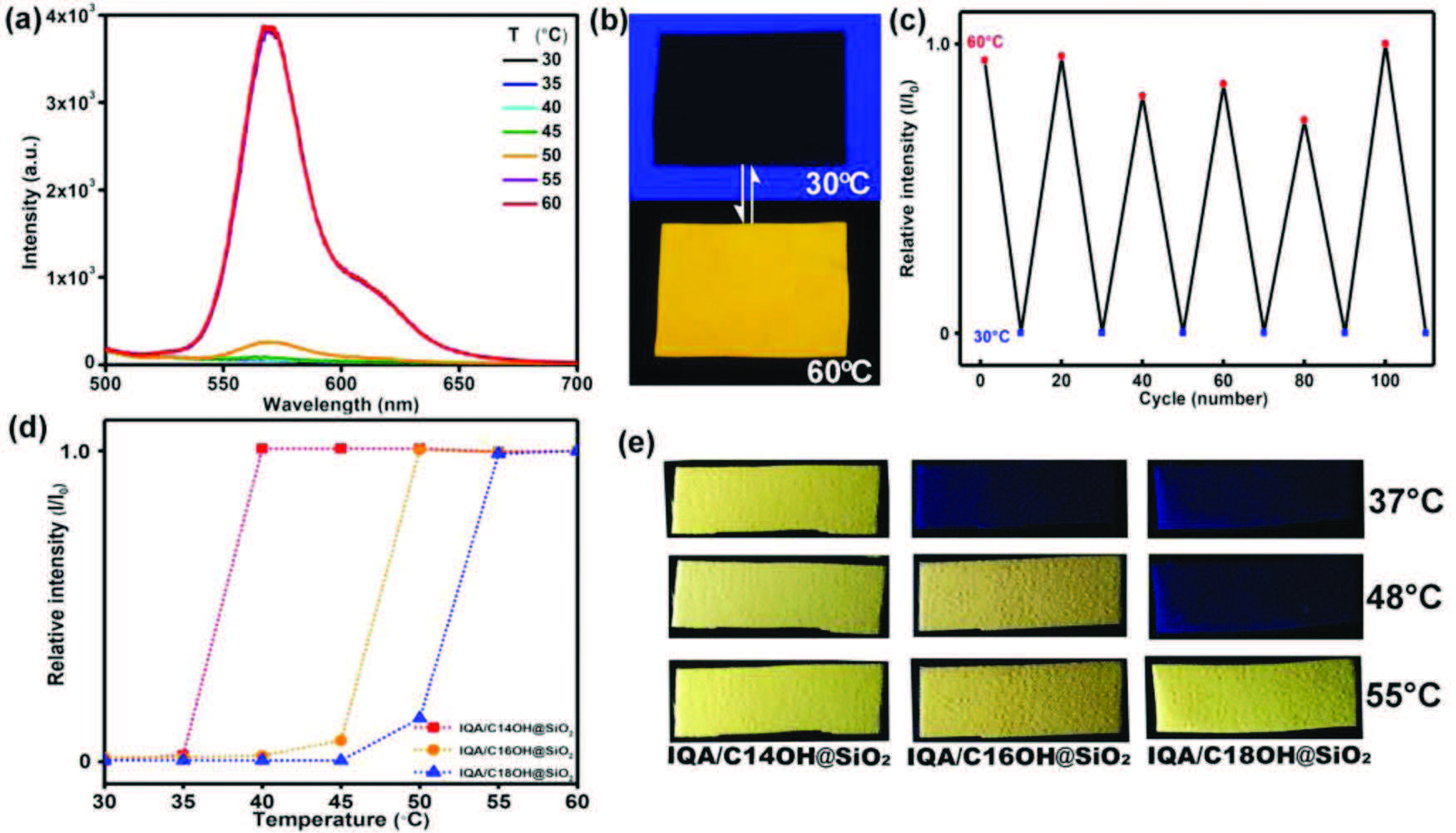
Fluorescence changes of dyed fabrics at different temperatures
The thermochromic mechanism of this material is the adjustable dissociation or aggregation mechanism of IQA molecules in aliphatic alcohol solvent. Since the dissociation and aggregation states of the IQA molecules are directly dependent on the melting and solidification of the solvent. Therefore, by changing the solvent composition, the color change temperature can be controlled.
This study provides a new idea for the design of multi-functional thermal response smart textiles. The relevant research results were published in Advanced Functional Materials under the title of "High-Performance Thermoresponsive Dual-Output Dye System for Smart Textile Application.
(textile guide official micro)
More information


Follow us
Hello, what can we do for you?
Copyright © Xiantao Dexing Plastic Products Co., Ltd / Xiantao Dexing Health Technology Co., Ltd | Powered by:300.cn
SAF Coolest v1.3.1.2 设置面板 FZUSD-ZSNG-OSSQE-ZWE
无数据提示
Sorry, the current column is being updated, please look forward to it!
You can view other columns or returnHome Page