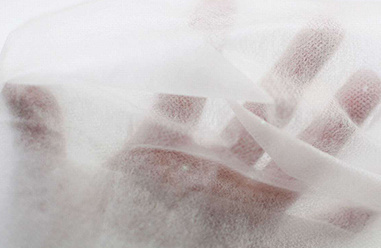
Although many people often equate the spunlace nonwoven market with wipes, in fact, the technology also has a variety of applications in the fields of sanitary products, medical and industrial use. Spunlace nonwovens manufacturers are still mainly dependent on the huge demand in the wipes market, while many are looking for new opportunities and higher returns on investment.
Although market opportunities still exist, investment in new spunlaced nonwovens production lines in developed regions such as North America and Europe has slowed in recent years, with JacobHolm in the United States, Suominen in the United States, Europe and Brazil, Spuntech in the United States, and Mogul in the United States.
"This market has been growing steadily over the past few years and will continue to do so globally," said CarolinWeber, director of Sandler Health and Hygiene Products. "The competitive landscape is constantly changing as new players enter the market. In particular, Asian producers have formed a huge influence, and they have made a lot of investment and expansion, which will affect the supply-demand ratio. It goes without saying that nonwovens manufacturers must pay close attention to these changes."
In fact, Asia is the region with the highest proportion of investment in spunlace technology, and Nanliu enterprises are among the pioneers. The company has production sites in India, China and Taiwan to meet the needs of the disposable hygiene, medical and nursing markets. In recent years, the company has invested about US $0.1 billion in Taiwan, mainly to expand its spunlaced nonwovens production capacity, and is building a new factory in India.
At the same time, its new factory in Yanchao recently started production of pure cotton spunlace nonwovens and high-speed spunlace material production lines, and added biofinishing technology to its products.
"Due to the growing demand in the Chinese market, Nanliu's spunlaced nonwovens production line is now at full capacity and production capacity is tight," said BernardKerstens, commercial director of overseas operations, "which is why Nanliu continues to invest in new spunlaced production lines. In addition, the upgrading and renovation of the existing old spunlaced production line will also allow Nanliu to produce high value-added products and avoid being caught up in price competition."
Next, the next step of Nanliu will focus on India, where the company is currently in the construction stage of its production base. According to Kerstens, the investment is due to the fact that South Six's clients have already established a successful business in India. "In this market with a population of more than 1.3 billion, the demand for nonwovens products will continue to grow due to increasing national income. We are optimistic about the future market demand and development prospects in India," Kerstens said. "Driven by the continued economic growth and population growth in Asia as a whole, we believe that the Asian nonwovens market will further develop, especially in China, Southeast Asia and India."
At the same time, Dalian Ruikuang Group's new neXline wet process production line has successfully achieved full capacity production of 15,000 tons per year. The highly flexible Andritz wet technology combines wet forming and hydroentangling, and is particularly suitable for producing dispersible, 100-percent biodegradable, flushable wipes that do not contain any chemical binders. Their products meet the highest environmental standards of the final product, and the quality of their products has been certified by the latest EDANA/INDA guidelines for flushable wipes.
Not just wipes
As one of the largest markets for nonwovens, wipes remain the largest application area for spunlace nonwovens, a technology valued for its excellent fluid handling, softness, fabric feel and absorbency. As new products and uses continue to emerge in the wipes segment, new demand will continue to drive the growth of the spunlaced nonwovens market.
"From baby care to personal care, from car interior cleaning to furniture wiping to computer screen cleaning, wipes can be used for almost every purpose in daily life," Weber said. "They are always available even when traveling. In our fast-paced society, this is an important convenience factor and a driving force for further growth in demand.
"But in the wipes market, there are supply chain challenges. For many applications, supply is sufficient to meet demand, but new suppliers are entering the market. Growth and further development can only be achieved through differentiation. The visual difference is achieved, for example, by various printing or embossing patterns. A variety of enhanced features, innovative product structures, or a combination of different attributes can also make a product stand out from the competition.
As a result, spunlace nonwoven manufacturers like Suominen continue to seek growth opportunities outside of the wipes market. The market where spunlaced nonwovens can play a role also includes technical applications, and the automotive market is one area that benefits from these materials.
"Our broad product portfolio and expertise in different manufacturing technologies make it easier to use spunlace technology for applications other than wipes," said LyndaKelly, senior vice president of Suominen Care. "Because we are actively involved in various markets and understand the needs, trends and customer needs of these market segments, we can determine whether spunlace materials can be a suitable or better alternative to specific applications. The different technologies we have also allow us to combine material properties to further enhance its functionality. To this end, we also work with our customers and partners to promote the advancement of our products, both theirs and ours."
As the world's largest producer of spunlace nonwovens, Suominen has been investing in new technologies over the past few years to drive expansion in new markets, while also benefiting the wipes business. Recently, they upgraded their production line in GreenBay, Wisconsin, further strengthening their focus on high value-added products, with an investment of 6 million euros for the installation of new carding machines on the existing production line, thereby expanding the variety of products produced.
The upgrade allows Suominen to provide high value-added nonwovens for a range of technologies, including baby wipes, with greater efficiency.
Other investments included a production line upgrade in Paolínia, Brazil, which allowed Suominen to introduce FibrellaWrap products to the South American market. This is a high-performance material for wound care. This soft and skin-friendly material can be filled to protect bones and any areas that need cushioning in wound care applications. It is an elastic non-woven material that can conform to body curves, making patients feel more comfortable when wearing plaster. The investment Alicante in Spain has expanded the plant's product range and increased its capacity to supply high value-added products.
In medical, with its unique thermal bonding series-Novonette nonwovens, Suominen continues to develop rapidly in the niche medical market. This technology provides unparalleled liquid retention and release capabilities for many niche medical applications.
At the same time, the company's 100% cotton non-woven fabric series Webril can meet the strict requirements of the medical pad and medical market.
For Sandler, their experience in various markets has helped propel them into the new Spunlace segment. "We have a broad product portfolio and expertise in different manufacturing technologies, which makes it easier for us to apply spunlace technology to applications other than wipes." "To drive innovation in these new applications and the wipes market, we work closely with our customers and partners along the supply chain," Weber said."
New opportunities
For FibertexNonwovens, which is also a producer of needle-punched nonwovens, its foundation in many technology markets has helped them expand their spunlace applications into new areas. "We have sold spunlaced nonwovens in various industrial fields, including automotive interiors, engine compartments, backings, composite materials, filtration and sound insulation." said MichelVincent-Dospital, chief content officer for the automotive and wipes business.
Fibertex has proved its strength in the spunlace sector with recent acquisitions in the United States and Brazil. "We had a deep understanding of the market and observed the growth of the spunlace market, as well as our expertise in the specialty wipes market in Europe and the Americas, which led to the decision to make these acquisitions." Vincent-Dospital said.
Earlier this year, Fibertex acquired Mogul's spunlace plant in GreyCourt, South Carolina, North America, to better supply North American customers. The acquisition adds 14,000 tons of spunlaced nonwovens capacity to the Fibertex and 20 acres of land, providing ample room for future expansion.
"We will take advantage of FibertexNonwovens production sites now located in Europe, Africa, South America and North America, which are the most important markets," said FibertexNonwovens CEO Jø rgenBechMadsen. "We will also take full advantage of our global product development capabilities, which will enable the latest technological breakthroughs."
The acquisition will complement Fibertex's other North American facility in Chicago, Illinois, which Fibertex acquired from NonWovenSolutions in 2014. FibertexNonwovens also has extensive experience in spunlace technology and production facilities around the world.
"Mogul wanted to focus on their Madaline products and new innovative nonwovens, so they sold GreyCourt spunlace production line to us," Madsen said. "The production line is based on the most advanced production technology and is already running stably and reliably. By acquiring these production lines, we have saved time and money and will better serve the North American market, which is now growing fast."
Mogul's Madaline product was launched in 2017. This two-component microfilament spunlace nonwoven fabric is suitable for artificial leather, anti-mite home textiles, outdoor/sportswear, facial masks, wipes, precision product packaging, car roof/sound insulation and other applications. At the same time, in the field of wipes or cleaning towels, Mogul has set up a subsidiary called Asterion to promote this material, and they will challenge this reusable microfiber wipe market, which has traditionally consisted of woven fabrics and now brings new opportunities for nonwovens.
When used in cleaning applications, Mogul's microwire technology has excellent dust and dirt removal capabilities in industrial, light and heavy manufacturing, as well as professional cleaning applications. Asterion wipes are characterized by microfilaments that are 100 times thinner than human hair. They are an economical, convenient and portable tool that can be used to clean and wipe irregularly shaped surfaces.
"The industry is basically divided into two main different application types, one is disposable cleaning products and the other is washable products," said AsterionGlobal President EnverKayali. "Disposables are mostly paper-based multi-purpose wipes and man-made fibers (spunlace) and other materials. In the washable field, the products are mainly textile materials, microfibers, etc. The nonwovens industry usually supplies disposable products with few washable products."
Mogul has developed Madaline through investments in unique microfilament technology and high-volume production lines, making it one of only two nonwovens producers worldwide with such high-capacity and patented production lines.
While Mogul is not a leader in spunlace production capacity, the company's commercial director SerkanGogus believes that their Madaline and diversified technologies such as Durell crossover technology play an important role in bringing more innovative options to areas such as artificial leather, home décor, medical and automotive.
"Hydroentanglement brings unique properties to polymer-based non-woven fabrics, so this is definitely a future growth area. In addition, new technologies of wet-laid and hydroentanglement combined also bring new opportunities." He said.
Suominen get smarter.
Last year, Suominen, one of the largest suppliers of substrates in the global wipe market, took a specific step in its "Changemaker" strategy and introduced the Suominen smart nonwoven concept to the market. As a first in the field of nonwovens, the concept can embed digital features into Suominen nonwovens, taking product traceability and safety to a whole new level. It also provides Suominen customers with a new and mature marketing tool.
The concept stems from Suominen research and development projects, which preceded the launch of the HighDefinitionDesign series, which provides revolutionary pattern options for nonwovens. The Suominen Smart Nonwovens concept uses unique technical capabilities to combine artificial intelligence with extremely high-definition patterns to embed various digital features into the substrate without affecting the other functions or aesthetics of the nonwoven.
According to the company, the Suominen launched the smart nonwovens concept, initially based on the traceability and counterfeiting problems they observed in the market and wanted to try to solve.
In claims cases around the world, consumers usually don't call information such as customer service numbers. Instead, they take photos of the products and spread the complaints to the world through social media. These situations can cause huge damage to the brand, and previously nonwoven suppliers had only very limited tools to help their customers solve such problems.
Suominen have 21 different patterns for customers to use. It can also design customer or brand-specific patterns, which can include Suominen smart non-woven functions.
This customization has been at the heart of Suominen's technology strategy over the past few years. Three or four years ago, the company began to study the pattern of its wipes very deeply. In particular, they want to understand the correlation between customer perceptions and their patterns, as well as the correlation with actual laboratory data. Suominen studied the softness and cleanliness of different patterns and compared them with the actual cleaning data of the laboratory. Through this progressive development process, Suominen can design the softest and best cleaning patterns in the industry.
Through this work, the company was able to improve its technical capabilities, and the patterns are better now than they were five years ago. Suominen note that, thanks to the very good contrast, this pattern is easily recognized by the camera of an ordinary smartphone. The Suominen relies on artificial intelligence (AI) technology to guide what the camera should look for in the pattern. Even better, the system learns from each pattern scan and continues to improve.