


News Center
News Center
Science popularization | do you know that textiles can actually be used to "build houses"
Release time:
2019-07-04
With the progress of science and technology, the application of textiles is also increasingly extensive, in addition to meet the ordinary human clothing function, in the soil, agriculture, construction, medical and health and other fields also began to penetrate. In 1980, the Atlanta airport for the first time used modified polyacrylonitrile fiber nonwoven material to cover the wall, with more excellent characteristics than other materials. Since then, some Western countries and Japan began to study and use construction textiles.
With the progress of science and technology, the application of textiles is also increasingly extensive, in addition to meet the ordinary human clothing function, in the soil, agriculture, construction, medical and health and other fields also began to penetrate. In 1980, the Atlanta airport for the first time used modified polyacrylonitrile fiber nonwoven material to cover the wall, with more excellent characteristics than other materials. Since then, some Western countries and Japan began to study and use construction textiles.
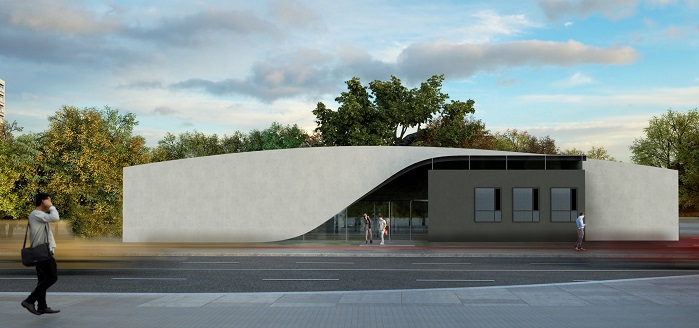
Classification of building textiles
Building textiles refer to textiles used as special building materials in the construction field, mainly including fiber reinforced concrete materials, waterproof materials, membrane structure materials and sound insulation materials.
fiber reinforced concrete material
Fiber reinforced concrete material is a composite material composed of short fiber and cement base material with a certain aspect ratio, which is mainly used in residential buildings, swimming pools, warehouses and walls. The main varieties of fiber concrete are steel fiber concrete, glass fiber concrete, polypropylene fiber concrete, plant fiber concrete and high elastic modulus synthetic fiber concrete.

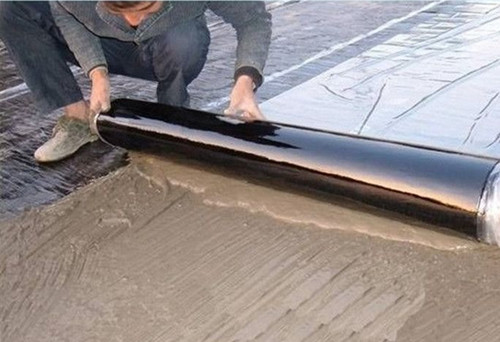
waterproof material
Waterproof materials in the form of diversification, there is no unified definition, in general, to prevent rainwater, groundwater, industrial and civil water supply and drainage, corrosive liquids and air moisture, steam and other materials into the building are collectively referred to as waterproof materials, mainly used in the roof of the building, exterior walls and so on.
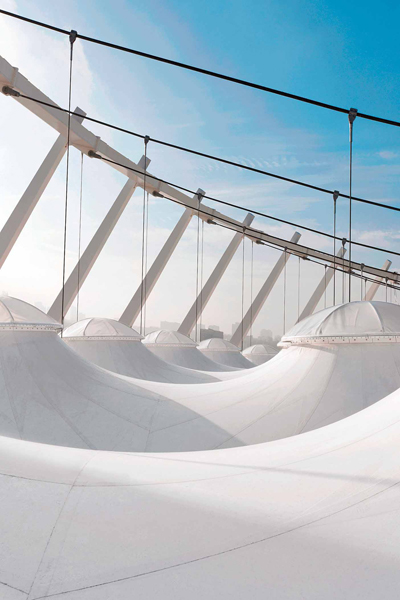
membrane structure material
The membrane structure material is made of a fabric with excellent performance, and the surface is tightened by inflating the membrane or using a flexible steel cable and a rigid support structure to form a structural system with a certain stiffness and capable of covering a large span of space. At present, most of the membrane structures used in construction are coated fabrics. The inner layer is generally made of woven fabrics as the substrate, and the outer layer is coated. It is widely used in large-area buildings such as stadiums, conference centers, exhibition halls and shopping malls.
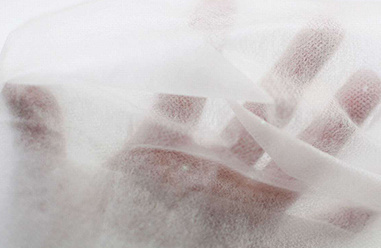
Sound insulation and heat insulation materials
Sound insulation materials are generally used in the interior of buildings, sound insulation materials can improve the audibility, maintain the authenticity of the sound in the local environment, used in decorative curtains, textile wall coverings and so on. For example, the curtain of a cinema, which is common in life, has a good sound absorption effect. The insulation material is used to wrap around the house, blocking the external moist air from entering to achieve the insulation effect. There is a big gap between China and developed countries in the use and research and development of sound insulation materials for buildings. It is still necessary to increase development efforts and solve technical problems, so that the developed sound insulation materials are suitable for widespread promotion and use in China.

Advantages of using textiles in architecture
(1) can greatly shorten the construction cycle, significantly save building materials, reduce construction costs;
(2) can greatly reduce the quality of the structure, the quality of the fabric shell is only brick, cement and other conventional building shell quality 1/30;
(3) It can build large-span buildings, which are required for large public places, gymnasiums, exhibition halls, etc;
(4) can better withstand the earthquake and other serious destructive force, not susceptible to mechanical damage, once damaged repair is also relatively easy;
(5) The appearance of various shapes can be designed at will, and the installation and disassembly are flexible.
More information

Follow us
Hello, what can we do for you?
Copyright © Xiantao Dexing Plastic Products Co., Ltd / Xiantao Dexing Health Technology Co., Ltd | Powered by:300.cn
SAF Coolest v1.3.1.2 设置面板 FZUSD-ZSNG-OSSQE-ZWE
无数据提示
Sorry, the current column is being updated, please look forward to it!
You can view other columns or returnHome Page