

News Center
News Center
The G20 summit opened today, and the textile and garment industry expects that the Sino-US trade friction can be greatly "cooled"
Release time:
2019-06-28
President Xi Jinping arrived in Osaka by special plane on the 27th. At the invitation of Japanese Prime Minister Shinzo Abe, he attended the 14th G20 Summit that opened today.
President Xi Jinping arrived in Osaka by special plane on the 27th. At the invitation of Japanese Prime Minister Shinzo Abe, he attended the 14th G20 Summit that opened today.
This is the seventh consecutive time that President Xi Jinping has attended or presided over the G20 summit. Experts here said that under the current international situation, President Xi Jinping's attendance at the G20 Osaka Summit is highly anticipated by all parties and will inject strong positive energy into the world economy facing difficulties.
"I especially look forward to President Xi Jinping's attendance at the summit," said Masahiko Fujiwara, a former official of Japan's Ministry of Economy, Trade and Industry and a special researcher at the think tank Daiwa General Research Institute. "I look forward to China continuing to play a leading role at the summit and pushing all parties to reach an agreement on the resolution of some global issues."
What is your busy schedule?
President Xi Jinping has a busy schedule to attend the G20 Osaka Summit.
The first is to attend the four-stage plenary meeting of the summit. It is understood that President Xi Jinping will participate in discussions on the world economy and trade, digital economy, inclusive and sustainable development, infrastructure, climate, energy, environment and other topics, expound in depth his views and propositions on the world economic situation, and is committed to the current existence. Find the root cause of the problem, get the right pulse, and make a good solution.
"The world today is facing major changes unseen in a century, and it is at a crossroads of development. In the future, whether all parties will be in the same boat or fall apart, everyone is very concerned." Zhang Yansheng, chief researcher of the China Center for International Economic Exchange, said that all parties expect China, as the world's second largest economy, to clear the fog for the world economy.
The second is to attend three multilateral "meetings". In addition to the summit itself, President Xi Jinping will also attend the informal meeting of the leaders of the BRICS countries, the informal meeting of the leaders of China, Russia and India, and the small meeting of the leaders of China and Africa. Strengthen communication and coordination on major issues such as deepening cooperation between emerging markets and developing countries and implementing the United Nations 2030 Agenda for Sustainable Development, and promote practical cooperation.
Experts said that these "meetings" demonstrate China's firm support for multilateralism, help to further consolidate the consensus of emerging markets and developing countries around major issues, and promote the G20 Osaka Summit to achieve positive results.
Third, a number of bilateral meetings were held. During the summit, President Xi Jinping will hold bilateral meetings with leaders of many countries, committed to deepening cooperation with relevant countries and promoting the development of bilateral relations.
Among them, the meeting between the heads of state of China and the United States has attracted worldwide attention.
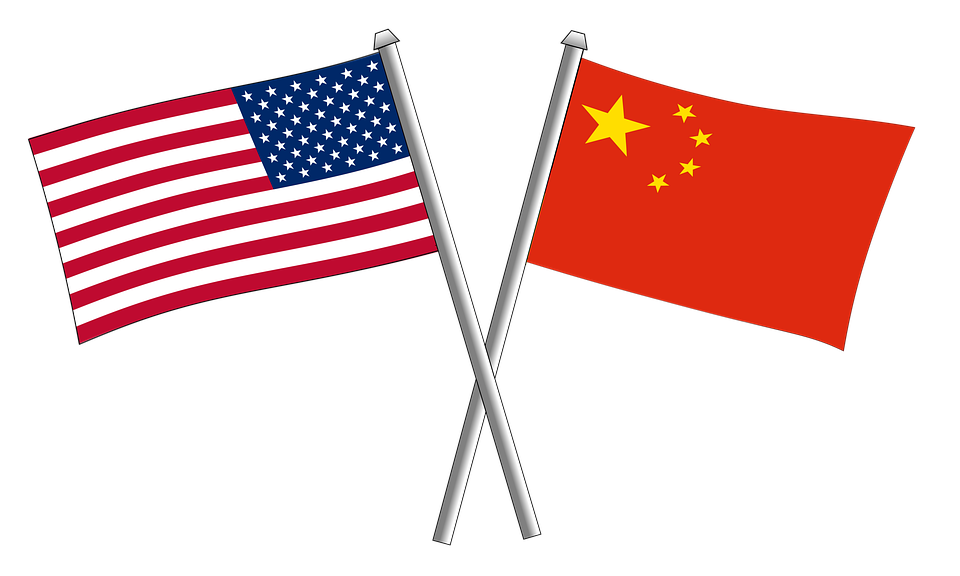
Chen Fengying, a researcher at the China Institute of Modern International Relations, said that the United States should realize that dialogue and consultation on the basis of mutual respect, equality and mutual benefit is the only way to resolve trade differences. This is not only in the interests of China and the United States, but also the common aspiration of the international community.
What are the important claims?
On the eve of the summit, both the International Monetary Fund and the World Trade Organization issued reports expressing concern about the current world economic outlook, believing that the restrictive measures introduced by G20 members and the trade tensions between them have exacerbated the uncertainty of world economic growth, and called on G20 members to work together to deal with it.
In this regard, the interviewed experts generally believe that the current uncertainty and instability of the world economy mainly comes from trade tensions, and trade tensions are mainly caused by unilateralism, protectionism and bullying.
Zhang Yuyan, director of the Institute of World Economics and Politics of the Chinese Academy of Social Sciences, said that the primary challenge facing the global economy is trade protectionism. "Aggressive trade protectionism has had a serious negative impact on the world economy. China's insistence on building an open world economy and its opposition to protectionism has injected positive energy into a gloomy world economy."
Experts said that China has always upheld the rules-based multilateral trading system and has always stood on the front line of opposing unilateralism, protectionism and bullying. During the Osaka Summit, China will continue to work with all parties to make a just voice in support of multilateralism, openness and inclusiveness, and win-win cooperation.
The G20 members cover a wide range of areas and are highly representative, and their composition takes into account the balance of interests between developed and developing countries as well as different regions. They play an important role in the global economy in terms of size and influence.
"Under the current situation, the G20 should especially show its due responsibility as the main forum for international economic cooperation, promote unity and cooperation, form a policy synergy, and become a stabilizer of world economic growth." Chen Fengying said.
What signal to the world?
"Development" will be one of the important topics of the Osaka Summit. Experts said that the Osaka Summit inherited and continued the consensus and results of the Hangzhou Summit, especially the importance and investment in development issues, demonstrating China's leading role in promoting global economic governance.
In addition, the G20 Finance Ministers and Central Bank Governors meeting held in early June approved the G20 Principles for High-Quality Infrastructure Investment. Industry insiders said that this outcome document is based on development and supports development, and reflects the important concepts of "extensive consultation, joint contribution and sharing" and "interconnection" that China has always advocated.
"The joint construction of the'Belt and Road' will help promote cooperation between China and the vast number of countries along the route in infrastructure and interconnection, drive investment and employment in relevant countries, and promote local economic development. It is also a great benefit to the world economy." Zhang Yuyan said.
Before the summit, China frequently released positive messages on a number of issues of general concern to the international community--
In response to individual countries' wanton suppression of enterprises of other countries, China said that it is willing to work with all parties to adhere to the open policy orientation and build a free, fair, non-discriminatory, transparent, predictable and stable trade and investment environment for enterprises and investors of all countries.
In response to the "anti-globalization" trend of thought, China advocates promoting the deep integration of trade and investment and the digital economy, so that new technologies and new knowledge can benefit more countries and people, and promote economic globalization to be more open, inclusive, inclusive, balanced and win-win.
Many experts said that as the world's second largest economy, China is not afraid of wind and rain, unswervingly deepening reforms and expanding opening up, and has increasingly become a source of confidence in the world economy.
"The Osaka Summit will once again allow the world to see China's open and cooperative attitude of embracing the world and sharing development opportunities with other countries. This is a clear positive signal to the world economy, especially investor confidence." Chen Fengying said.
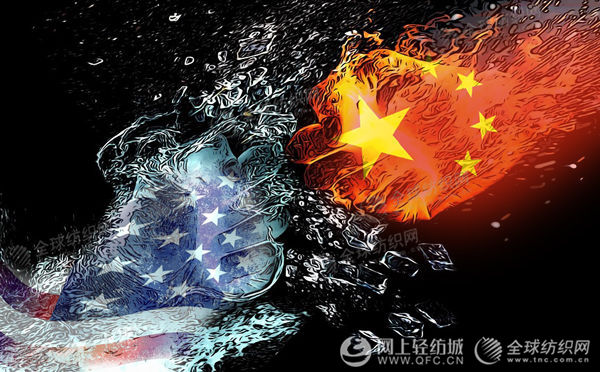
With the G20 summit, the textile and garment industry expects the Sino-US trade friction to "cool down"
On the evening of June 18, national leaders had a telephone conversation with US President Trump at an appointment, confirming that the two sides would meet during the G20 Osaka Summit and exchange views on "fundamental issues related to the development of Sino-US relations". This is an extremely important crossroads for the ongoing stalemate in the Sino-US trade war! The textile and garment industry is looking forward to today's arrival, hoping that the Sino-US trade friction can be greatly "cooled"!
It is reported that after the leaders of China and the United States exchanged phone calls last week, the market pessimism gradually repaired, the futures market and chemical fiber market should rise sharply, and the rebound in futures prices injected a boost into the market.
In addition, the imported cotton market also has signs of recovery, the early part of the port business enterprises to stop selling wait-and-see. With the recent minor trimming of the industry's mentality, the enthusiasm of cotton merchants to operate has picked up. Although the industry generally believes that the Sino-US trade dispute is difficult to resolve in a short period of time, some cotton merchants hope to seize the recent macro news to push forward and cash out their inventory as soon as possible to defend against risky shocks. According to the survey of Qingdao Port and Zhangjiagang, the current spot prices in the ports are mainly Brazilian cotton and Indian cotton. The mainstream quotations are 14500 yuan/ton and 14200 yuan/ton, which are lower than the low-end quotations last week, and the center of gravity has moved up by 100-200 yuan/ton.
Earlier, according to a Bloomberg report, people familiar with the matter revealed that the United States is willing to suspend tariffs on the next round of US $300 billion of Chinese goods, while Beijing and Washington are preparing for the resumption of trade negotiations. The two sides discussed how to show their respective countries that the resumption of trade negotiations is a victory. People familiar with the matter also revealed that the United States temporarily postponed the imposition of new tariffs, otherwise Beijing would not agree to the meeting.
At present, China and the United States will hold a meeting in accordance with the previous arrangements, which will break the deadlock in the previous Sino-US trade negotiations, or push forward the signing of the Sino-US trade agreement. Of course, we should not only seize the favorable atmosphere of this meeting, but also guard against the recurrence of contradictions and conflicts.
300 billion whether tariffs on goods exported to the United States will be imposed, the answer will emerge this week! (article part of the source: daily economic news, China cotton network)
More information


Follow us
Hello, what can we do for you?
Copyright © Xiantao Dexing Plastic Products Co., Ltd / Xiantao Dexing Health Technology Co., Ltd | Powered by:300.cn
SAF Coolest v1.3.1.2 设置面板 FZUSD-ZSNG-OSSQE-ZWE
无数据提示
Sorry, the current column is being updated, please look forward to it!
You can view other columns or returnHome Page