

News Center
News Center
Can't afford another round of tax increases! 520 enterprises and 141 trade associations jointly sent a letter......
Release time:
2019-06-27
The first day of a seven-day series of hearings held by the US government to impose tariffs on $300 billion billion of Chinese goods exported to the United States. Dozens of industry associations and company representatives came from all over the United States to "express their feelings". In their speeches, most of them called on the US government not to impose a new round of tariffs on Chinese goods, saying that "we cannot do without China's supply chain and cannot afford a new round of tax increases". The tariff increase ultimately hurts American enterprises and consumers.
Tariffs of 25% are a blow to us!"
"If we can move out of China, we can do it, but we really can't."
"There is no other country producing it outside of China."
"We really have nothing to gain from moving to other countries except to reduce product quality and increase prices."
New York's cashmere clothing manufacturers are coming, California's baby products manufacturers are coming, Massachusetts's sneaker manufacturing companies are coming......The U.S. International Trade Commission building, located south of Washington, D. C., is bustling with people.
The day was the first day of a seven-day series of hearings held by the US government to impose tariffs on $300 billion billion of Chinese goods exported to the United States. Dozens of industry associations and company representatives came from all over the United States to "make representations". In their speeches, the vast majority of them called on the US government not to impose a new round of tariffs on Chinese goods, saying"We can't afford a new round of tax increases without China's supply chain."Tariffs ultimately hurt American businesses and consumers.
Direct impact on American consumers
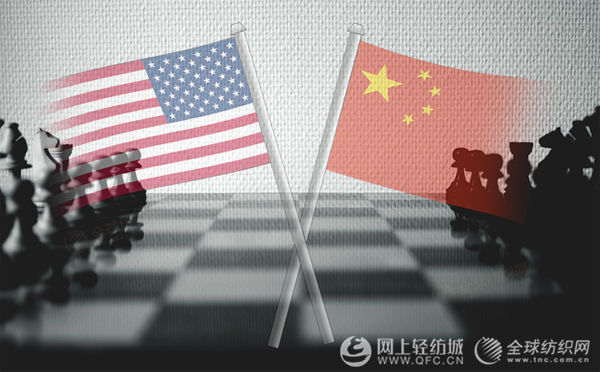
Unlike previous rounds of U.S. tariffs on China, which focused on intermediate and industrial products,Most of the list of the new round of tariffs that the United States intends to impose on China are the most familiar end consumer goods for ordinary people, including mobile phones, laptops,clothing,Footwear, toys, game equipment, etc.Once these tariffs are implemented, American consumers will be directly affected.
Brent Cleveland, executive director of the American Fashion Jewelry and Accessories Trade Association, was the first to speak at the hearing. Cleveland says,Importing these daily consumer goods will not endanger the safety of the United States, but the imposition of tariffs will harm the interests of American small and medium-sized enterprises and consumers.
Mark Schneider, CEO of the American shoe, hat, and luggage company Keniscol, also said,Tariffs on imports from China will force the company to share losses with retailers and consumers.
Lisa Troff, executive director of the American Youth Product Manufacturers Association, said that if tariffs are imposed on infant products imported from China, many American families will not be able to afford safe infant products, which will endanger the safety of infants and young children.
Representatives of American electronics retailers Best Buy, New Bailun Sports Shoes Manufacturing Company, American Clothing, Shoes and Hosiery Federation, Toy Association and other companies and industry associations also warned at the hearing that imposing tariffs on China would increase U.S. consumer costs., Disrupting business production and harming American employment.
Prior to the hearing, the Office of the United States Trade Representative had received more than 1600 written opinions submitted by representatives of various industries, most of which opposed the US government's imposition of tariffs on Chinese goods. The "Washington Post" believes that the large number of objections reflects the increasing concerns of the US business community about tariff policies and the exhaustion of patience with the president's trade policies.
The US lobbying organization "Tariffs Hurt the US Hinterland" recently cited the results of a study that said,If tariffs are imposed on an additional $300 billion of Chinese goods exported to the United States, coupled with the tariff increases already in effect, it will result in the loss of 2 million jobs in the United States and a 1% reduction in GDP.
Supply chain without China
At the hearing, the most asked by US government officials was still whether companies could shift their supply chains away from China. Entrepreneurs and industry representatives have repeatedly and patiently explained:China's supply chain system is mature and complete, and it is no easy task to move the supply chain away from China; it is even completely impossible for some industries, because China is the only source of imports for many products.
Joan Koroff, CEO of Quinn Apparel in New York, said that the company's imported cashmere garments must use high-quality cashmere from Alashan sheep in Inner Mongolia, China, and at the same timeChina's high level of textile technology and quality assurance make it impossible to shift the product supply chain away from China.
Schneider, who is in the shoe, hat and luggage business, also said, "We have established an efficient and stable supply chain in China over the years. If the supply chain is transferred to other countries, the product quality, capacity and price/performance ratio will not be maintained, and it will not be feasible to move back to the United States for production, because there are no supporting facilities to support the development of related industries."
Rick Hellfenbein, president of the American Federation of Clothing, Shoes and Hosiery, admitted that theyThere have been attempts to move the supply chain away from China, but the Chinese clothing and footwear industry has always done better than other places.He said,Although China's labor costs have risen rapidly in the past few years, China has successfully maintained its competitiveness by increasing labor productivity.
The World Bank's China Economic Bulletin released in May pointed out that when investors decide whether to relocate, they will not only consider the wage differences between countries, but also take into account other relevant factors. China's complete supplier ecosystem, good labor skills and Business culture is valued by investors. Nicholas Lardy, a senior researcher at the Peterson Institute for International Economics, told Xinhua that foreign direct investment flowing into China is still at a high level and is still rising.
Sino-US economic and trade cooperation benefits both sides
The speeches made by the delegates at this hearing once again demonstrated the mutually beneficial and win-win nature of Sino-US economic and trade relations.
Schneider, who has been doing business with China for 35 years, said that he has always enjoyed working with Chinese business partners. China is a good supply base, and the trade relationship with China has benefited American consumers. He stressed that imposing tariffs on products such as shoes, hats, bags and bags will not solve the concerns of the US government.
Recently, the U. S.520 companies and 141 trade associations have sent a letter to President Trump,The US government is urged not to impose tariffs on goods imported from China, but to return to the negotiating table to reach a solution with China.
At the "Choose America" 2019 Investment Summit that ended last week, US local government economic and trade officials also expressed their desire to end trade disputes as soon as possible and strengthen economic and trade cooperation with China. Laura Johnson, who is in charge of marketing at the Idaho Department of Agriculture, told reporters that although there are negative voices at the federal government level, the position of local governments and enterprises on friendly exchanges with China has not changed.
At the hearing,"Made in China" is widely praised by the American industry, and "good product quality" and "mature manufacturing process" are common words in the speeches of the delegates.
The recognition of the status of "Made in China" products and supply chains by American consumers and the industry reflects the complementarity and dependence of the Chinese and American economies.
"Can the products you need be produced in other countries?"
"No, only China has a complete production chain."
"Can you reduce your dependence on 'Made in China?"
"No, China has our key suppliers."
"Are there any other substitutes for this Chinese product you imported?"
"No, consumers like this Chinese product."
On the first day of the $300 billion tariff hearing, U.S. service companies shouted: We can't do without China's supply chain.
Previous article
Mexico takes lead in ratifying U. S.-Mexico-Canada agreement
Previous article
Vietnam already has one of the largest trade surpluses with the US
More information


Follow us
Hello, what can we do for you?
Copyright © Xiantao Dexing Plastic Products Co., Ltd / Xiantao Dexing Health Technology Co., Ltd | Powered by:300.cn
SAF Coolest v1.3.1.2 设置面板 FZUSD-ZSNG-OSSQE-ZWE
无数据提示
Sorry, the current column is being updated, please look forward to it!
You can view other columns or returnHome Page