


News Center
News Center
Brief Analysis of Chemical Fiber Industry Operation in the First Three Quarters of 2021
Release time:
2021-11-19
Since the beginning of this year, the industry is facing complex domestic and foreign challenges, especially in the second half of the domestic epidemic, energy consumption double control continued to increase, the industry's main operating indicators of the recovery of the magnitude of the impact is obvious. The stability of the domestic demand market and the increase in international demand are still good for the economic operation of the industry. The continuous rise of international oil prices has provided strong support for the chemical fiber market, but it has also increased the production costs of enterprises. Looking forward to the whole year, the operation of the chemical fiber industry will still face many tests, but the industry has good development toughness and risk resistance, and will still achieve stable development.
Since the beginning of this year, the industry is facing complex domestic and foreign challenges, especially in the second half of the domestic epidemic, energy consumption double control continued to increase, the industry's main operating indicators of the recovery of the magnitude of the impact is obvious. The stability of the domestic demand market and the increase in international demand are still good for the economic operation of the industry. The continuous rise of international oil prices has provided strong support for the chemical fiber market, but it has also increased the production costs of enterprises. Looking forward to the whole year, the operation of the chemical fiber industry will still face many tests, but the industry has good development toughness and risk resistance, and will still achieve stable development.
01 Production growth slows
In the first three quarters, the overall operating load of the chemical fiber industry remained high, but in September, affected by the dual-control power limit of energy consumption, the operating load dropped rapidly. Take direct spinning polyester filament as an example, the starting load was about 85% at the beginning of September and dropped to about 75% at the end of September. Although there was a slight rebound in October, the overall operation was still at low load, with the average monthly starting load of about 77%, a new low in the year (Figure 1). According to the National Bureau of Statistics, from January to September, chemical fiber production was 50.37 million tons, an increase of 13.54 percent year-on-year, and with January-September 2019 as the base period, the two-year average growth rate of chemical fiber production was 6.75 percent.

Fig.1 Load variation of direct spinning polyester filament yarn from 2019 to 2021
(Source: Huarui Information)
On a monthly basis, affected by the change in the base of chemical fiber production last year, the year-on-year growth rate of chemical fiber production this year has fallen month by month (Figure 2). Coupled with the impact of energy consumption dual-control power rationing, chemical fiber production in a single month in September decreased by 2.0 year-on-year. The growth rate of chemical fiber production dropped to 13.5 in September, 3.6 percentage points lower than the growth rate in the first half of the year. Judging from the average growth rate in the past two years, the average growth rate in the first three quarters remained stable and declined, and the growth rate slowed down.
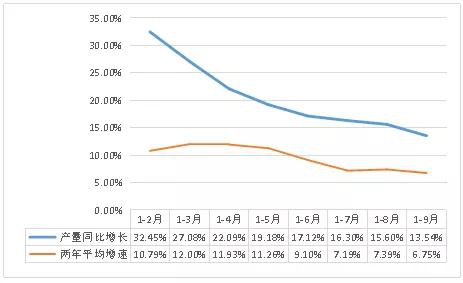
Figure 2 Changes in chemical fiber production growth in 2021
(Source: National Bureau of Statistics)
02 Price center of gravity moves up
From the cost side, international oil prices continued to rise, with WTI and Brent crude oil prices rising from $48/barrel and $51/barrel at the beginning of the year to $75/barrel and $78/barrel at the end of September, both up more than 50%. In October, WTI and Brent crude oil prices both broke through the $80 mark (Figure 3), and international oil prices have far exceeded their pre-epidemic price heights.
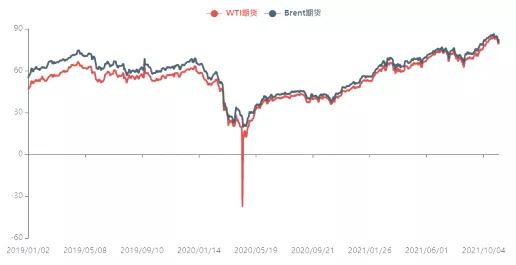
Figure 3 International oil price trends from 2019 to November 2021
(Source: Huarui Information)
Affected by the rising price of crude oil, the cost of chemical fiber has been rising, which has promoted the price of chemical fiber market, but the increase is not as high as that of raw materials. In polyester, for example, at the end of September compared to the beginning of the year, raw materials PTA and MEG rose 36% and 43%, respectively (Figure 4), polyester filament (POY) and polyester staple fiber rose 30% and 24%, respectively (Figure 5). It can be seen that the price increase of fiber products is lower than that of raw materials.
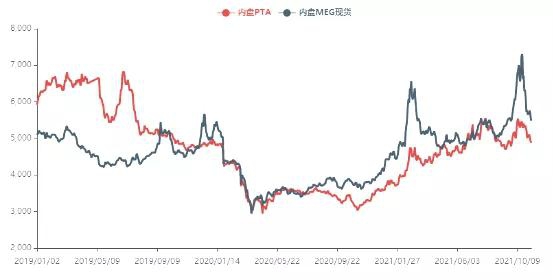
Figure 4 Price trend of polyester raw materials from 2019 to November 2021
(Source: Huarui Information)
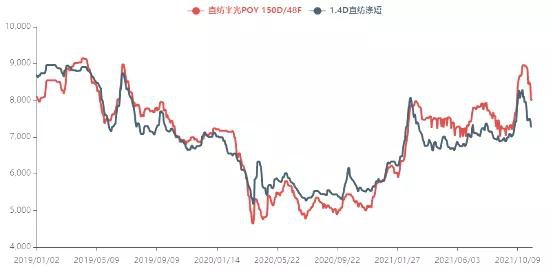
Figure 5 Price trend of polyester from 2019 to November 2021
(Source: Huarui Information)
03 exports to maintain growth
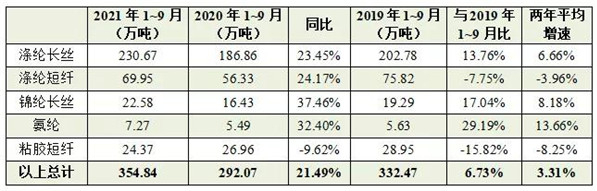
According to statistics from China Customs, from January to September, the export of major chemical fiber varieties was 3.5484 million tons, an increase of 21.49 year-on-year, and the growth rate dropped sharply by 21.03 percentage points from the first half of the year. On the one hand, it was due to the increase in the base number in the same period last year, and on the other hand, it was due to the third quarter. Production supply decreased. Overall, chemical fiber exports still maintain growth, although the growth rate has fallen, but the scale of exports still exceeds the pre-epidemic level, the two-year average growth rate of 3.31 (Table 1).
Table 1 Statistics on export volume of main chemical fiber products
(Source: China Customs)
04 The end market remains good
Since the beginning of this year, China's textile and clothing domestic demand market has withstood the impact of local epidemics and floods, and the recovery has been consolidated. According to data from the National Bureau of Statistics, from January to September, the total retail sales of clothing, shoes, hats, and knitwear products above the national quota increased by 20.6 year-on-year, and the growth rate rebounded by 33 percentage points from the same period last year, with an average growth rate of 2.8 in two years. Online consumption continued to play a role in stimulating the domestic demand market. From January to September, the retail sales of online wear goods nationwide increased by 15.6 year-on-year, and the growth rate increased by 12.3 percentage points over the same period last year, with an average growth rate of 9.3 in two years.
In terms of exports, due to the recovery of international market demand and the return of some overseas orders, China's textile and clothing exports have maintained a good growth. China Customs Express data show that from January to September, China's textile and clothing exports totaled 227.59 billion billion US dollars, an increase of 5.6 percent over the same period last year, and the growth rate slowed by 6.5 percentage points compared with the first half of the year, with an average growth of 6.2 percent in two years. The situation of clothing export has improved significantly. From January to September, the export volume of clothing reached 122.41 billion billion US dollars, an increase of 25.3 percent over the same period last year, the highest growth rate since 2010, with an average growth rate of 4.2 percent in two years. Affected by the decline in demand for international epidemic prevention materials, from January to September, textile exports were 105.18 billion billion US dollars, down 10.7 percent year-on-year, but the two-year average growth rate still reached 8.6 percent.
05 Profitability continues to be stable
According to the data of the National Bureau of Statistics, the overall economic benefits of the chemical fiber industry have increased significantly compared with the same period in 2020. From January to September, the chemical fiber industry achieved operating income of 744.183 billion billion yuan, an increase of 33.28 percent over the same period last year, with a two-year average growth rate of 7.85 percent; total profits of 47.138 billion billion yuan, an increase of 317.99 percent over the same period last year, with a two-year average growth rate of 52.70 percent; operating income profit margin of 6.33 percent, an increase of 4.31 percentage points over the same period last year, and an increase of 3.17 percentage points over the same period last year, it narrowed by 3.86 percentage points from the same period in 2019; loss-making enterprises lost $3.952 billion billion, down 54.17 percent year-on-year and 12.89 percent on average over two years.
The profitability of the chemical fiber industry ranks first in the entire textile industry chain, with the polyester and spandex industries contributing 40% and 23% of the total profits respectively. Supply-side structural reform is the fundamental reason for the chemical fiber industry to achieve significant growth in efficiency, the industry supply and demand pattern improvement, industrial chain profits from raw materials to fiber transfer. In addition, the inventory premium of raw materials and products in the rising price channel also contributes a larger profit to the enterprise.
06 The growth rate of fixed asset investment is obvious.
According to the National Bureau of Statistics data, from January to September, the chemical fiber industry actually completed fixed asset investment increased by 29.5 percent year-on-year, the growth rate rebounded by 51.8 percentage points over the same period last year, of which the chemical fiber industry investment in the two-year average growth rate of 0.3 percent, the scale of investment has basically returned to the pre-epidemic level.
Outlook
Looking forward to the whole year, the operation of the chemical fiber industry will still face many tests. Under the background of global economic recovery, as the weather gets colder, crude oil consumption demand is expected to remain strong, and OPEC remains cautious in increasing production on the supply side. However, the negotiations on the Iran nuclear agreement and changes in monetary policies of various countries may become risk points leading to oil price fluctuations. It is expected that oil prices will weaken in the fourth quarter. Support for the chemical fiber market weakened. In October, power rationing has been liberalized in various places, and the downstream weaving operating rate has recovered significantly, while the load of the chemical fiber industry has rebounded slowly. Recently, Fujian, Zhejiang and other places to suspend orderly power consumption measures, which means that the power restriction policy will be further liberalized in the short term. At the same time, the festival atmosphere at the end of the year will increase the demand of the terminal market, but the release of new production capacity will be hedged to a certain extent. In addition, there is still a need to pay attention to the uncertainty caused by the rebound of the winter outbreak.
On the whole, in the fourth quarter, it is expected that with the consumption of raw material stocking by downstream enterprises and stable demand, the operating load of the chemical fiber industry will further increase, but it is difficult to rise to the previous high level, and the chemical fiber market price will remain high and volatile. It is expected that chemical fiber production will be affected by the gradual increase in the base number in the same period last year, and the annual growth rate will further decline compared with the first three quarters; the economic benefit index will still be significantly better than last year. But the industry should have a clear understanding, alert to the decline in international oil prices and the new crown epidemic significantly alleviated after the overseas orders "reverse flow" will bring greater risk to China's chemical fiber textile industry, China's energy consumption double control will also be the industry to face the long-term problem.
(Source: China Chemical Fiber Industry Association)
More information


Follow us
Hello, what can we do for you?
Copyright © Xiantao Dexing Plastic Products Co., Ltd / Xiantao Dexing Health Technology Co., Ltd | Powered by:300.cn
SAF Coolest v1.3.1.2 设置面板 FZUSD-ZSNG-OSSQE-ZWE
无数据提示
Sorry, the current column is being updated, please look forward to it!
You can view other columns or returnHome Page