


News Center
News Center
Ultrasonic welding to meet the growing demand for non-woven fabrics
Release time:
2021-09-13
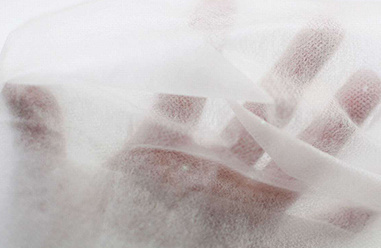
Due to the need for protective COVID-19, the global demand for personal protective equipment (PPE) has increased dramatically, and the non-woven industry is undergoing tremendous changes. It is predicted that the purchase rate of masks and related personal protective equipment will continue to rise in the next five to seven years. However, the growth in demand for non-woven products is not limited to PPE. Market drivers also include expanding the supply of hygiene products to meet the needs of the global aging population, controlling the spread of infectious diseases, and continuing to promote non-woven production And processing technology. In addition to PPE, non-woven fabrics are increasingly used in a variety of medical and non-medical applications, including: surgical sheets and surgical gowns; X-ray protective clothing and hospital gowns; disinfection bags, paper/films; linen substitutes for bed sheets, pillowcases, absorbent pads and curtains; diapers and incontinence products; automotive filters, sound insulation and thermal insulation cotton.
Due to the need for protective COVID-19, the global demand for personal protective equipment (PPE) has increased dramatically, and the non-woven industry is undergoing tremendous changes. It is predicted that the purchase rate of masks and related personal protective equipment will continue to rise in the next five to seven years. However, the growth in demand for non-woven products is not limited to PPE. Market drivers also include expanding the supply of hygiene products to meet the needs of the global aging population, controlling the spread of infectious diseases, and continuing to promote non-woven production And processing technology. In addition to PPE, non-woven fabrics are increasingly used in a variety of medical and non-medical applications, including: surgical sheets and surgical gowns; X-ray protective clothing and hospital gowns; disinfection bags, paper/films; linen substitutes for bed sheets, pillowcases, absorbent pads and curtains; diapers and incontinence products; automotive filters, sound insulation and thermal insulation cotton.

Many countries in the world are aware of the necessity of increasing the output of non-woven products, and have introduced policies to promote the development of the industry and encourage more enterprises to join the field. At the same time, non-woven fabric manufacturers, especially those who have just set foot in this industry, are facing a variety of processing and technical challenges:
● In some areas, environmental factors can affect productivity, so manufacturers need to have welding technology that can meet environmental challenges.
● If excessive heat is applied during the welding of non-woven materials, excessive melting of plastic components will lead to deterioration and hardening, resulting in unqualified products.
● Manufacturers are under pressure to increase production without compromising quality or production efficiency, and they want to minimize the time and cost spent on consumables (such as glue or needles and threads), which can become contaminants and reduce production efficiency.
In the face of increasing quality standards, manufacturers need safe and clean welding processes to reliably bond high quality non-woven products for repetitive production.
Ultrasonic welding: an effective solution
Ultrasonic welding is a material joining technology that can maximize the quality and efficiency of non-woven processing, while also overcoming the challenges of other bonding processes, such:
• Ultrasonic welding does not require heating to join the fabric layers. Heating is the main cause of plastic resinification, hardening and fabric scorching.
● Ultrasonic energy consumption is less, only in the implementation of each moment of welding needs electricity, and hot melt process in preheating, production and standby need to consume a lot of electricity.
Compared with hot melt and adhesive processes, ultrasonic welding technology does not require any consumables.
Working principle of ultrasonic technology
Ultrasonic welding equipment converts electrical energy into high-frequency mechanical vibration, and then transmits the high-frequency vibration to the thermoplastic material through ultrasonic components. High-frequency vibration produces frictional heat to change the plastic structure from the molecular level, and then the multi-layer material is instantly connected together by mechanical pressure. This technique can be used:
● Cut the large roll of non-woven fabric into narrow strips (sew/seal the edges while cutting);
The multi-layer non-woven material "laminated" into laminated products, such as multi-layer masks;
● Bonding multi-layer non-woven fabrics into the weld of the product (the edge of the mask), or connecting non-woven straps or elastic non-woven earbands to the edge of the mask.
● Punching single-layer or multi-layer materials (ultrasonic can also be used for punching some special materials, such as sandwich materials, punching the middle material without damaging the outer material).
Ultrasonic equipment for welding non-woven fabrics, the basic structure of which in many respects is similar to a sewing machine. Ultrasound provides two basic methods for welding non-woven fabrics: flat or rotating wheels. In either case, the material layer is continuously pulled from between the welding unit (horn) on one side and a flat or rotating wheel (anvil) on the other side. The components of the welding unit (transducer, amplitude modulator, welding head) are installed on a movable frame. The frame provides suitable pressure to continuously press the non-woven fabric onto the anvil. When the anvil and the welding head are stressed at the joint of the product, the ultrasonic energy quickly welds the materials of each layer together instantly.
Automatic control of the welding process-the ultrasonic generator supplies power to the welding unit and provides welding energy and programmable control-is connected to the welding assembly through cables. In addition to the anvil (flat or rotating wheel), other key welding system components are welding "triplets", including:
● The transducer converts the electrical energy output by the generator into high-frequency mechanical vibration suitable for welding.
● Amplitude modulator can enhance or weaken the amplitude according to the need of welding.
●Welding head, shape and structure designed for non-woven fabric cutting or bonding tasks.

Ultrasonic welding technology applied to non-woven fabrics usually uses a programmable controlled ultrasonic generator with a frequency of 20KHz - 40 kHz. The generator provides closed-loop amplitude control and has advanced diagnostic functions and easy-to-operate configurable functions. The generator can be programmed via a human machine interface (HMI) or a computer connection.
For example, in the production of masks, a typical mask requires two welds (top and bottom) in each of its width and length-as well as two adhesive points on each side to secure the straps or elastic ear straps. A fully automatic mask machine combines multiple ultrasonic welding stations. In the first station of welding, the ultrasonic welding machine continuously sews the top and bottom areas of the mask, then laminates and cuts the material into the shape of the mask, and then turns to move and pass through the next parallel welding station. As the material passes through the rotating anvil, the product is stitched from both sides again using continuous welding. Finally, pre-cut straps are positioned on the top and bottom (this time on the flat anvil) for insertion or "spot welding", completing the entire construction of the mask.
Advantages of ultrasonic technology
Compared with other bonding processes, the advantages of ultrasound make it a necessary technology for processing non-woven materials. These advantages include:
● Superior speed and productivity. Ultrasonic non-woven fabric welding technology cuts, seams and bonds on a continuous production line, which can be completed in an instant. At present, the automatic production line of ultrasonic welding diaper pants and female menstrual pants has reached 1000-1200 pieces/minute.
● Zero consumption, eliminate pollutants and no external heat source. Compared to adhesives and hot melt processes, the ultrasonic process eliminates the additional cost, effort and time required to purchase and use consumables, and does not create the additional risk of exposure to heat sources or chemical contaminants.
● High energy efficiency. Ultrasonic waves can instantly generate frictional heat required for welding through high-frequency vibration, so there is no need to preheat and maintain heating knife rollers or heating tooling, and no energy consumption or waste will be generated.
● Precision welding control. The operator can program the ultrasonic generator to trigger the ultrasound, ensuring that each individual solder joint is provided with accurate amplitude, duration and position-all based on specific application requirements.
● No pollution. For example, in contrast to traditional sewing processes, ultrasonic welding has no threads and mechanical holes in the fabric and does not harbor microorganisms or contaminants.
● Permeable/Permeable: For some special applications, ultrasonic waves can penetrate the middle layer without causing damage to the material of the outer layer, and can achieve the effect of non-destructive welding or punching. In addition, the ultrasonic wave can also penetrate the molecules of the non-woven fabric to other materials that do not have phase fusion, such as leather, cotton, elastic materials, etc.
High-speed flexible rotary welding technology
When high-speed production becomes critical, spin welding technology has obvious advantages. In the case of vertical vibration, the ultrasonic horn is fixed, creating a slight resistance to material transport. In the case of a rotary system, the horn and the anvil rotate in the same direction at a constant speed, which allows the material to pass freely through the machine. This free flow of material makes it possible to perform continuous or intermittent welding at speeds that cannot be achieved using vertical vibration welding techniques. The speed of spin welding is significantly higher than other technologies and can be used for laminating, slicing or sealing non-woven fabrics. In addition, since the width of the rotary welding machine is usually narrow, the welding head and the anvil can be installed side by side to weld the wide non-woven fabric material. In addition, the rotation technique has no limit on the number of layers that can be bonded, it is only limited by the grammage of the fabric per square meter.
Facts have proved that the rotary welding technology is more efficient and productive in the following situations: adapting to various welding modes and designs; laminating two-layer, three-layer or multi-layer non-woven materials; complex angles and shapes.
Another great advantage of rotary technology is flexibility. For example, in applications requiring thicker, multi-layered, or high speed processing (e. g., masks), rotating wheels may be used for the welding head and anvil. It is also possible to combine multiple sets of welding units into one large rotating wheel. In this configuration, the welder provides clean, stable, continuous welding without pulling, wrinkling or twisting. It rotates up and down to adapt to the type, thickness, softness or number of layers of the material, while also providing the fastest processing speed.
Summary
The recent dramatic changes in the non-woven fabric market have driven non-woven product manufacturers to continuously improve their production efficiency. As non-woven fabrics are used in new and different applications, the demand for PPE for masks and other personal protective equipment, as well as sanitary products, sterile packaging, lightweight insulation materials, etc. will continue to expand.
Ultrasonic welding technology is a mature technology for processing non-woven fabrics, which meets the manufacturer's demand for increased output, especially through rotation technology to achieve high-speed output. Compared with other chemical bonding processes, ultrasonic welding technology not only produces a stronger and more reliable mechanical bond, but also saves time, reduces energy consumption, eliminates the need for consumables, and provides more reliable personnel safety.
However, the most important thing is that it is a welding technology that can provide high-quality non-woven welding technology and can keep up with the rapid growth of the industry.
Source: Tang Xiongzhao, an expert in ultrasonic plastic welding applications, Emerson
Source: Jung-International Nonwovens Industry
Previous article
More information

Follow us
Hello, what can we do for you?
Copyright © Xiantao Dexing Plastic Products Co., Ltd / Xiantao Dexing Health Technology Co., Ltd | Powered by:300.cn
SAF Coolest v1.3.1.2 设置面板 FZUSD-ZSNG-OSSQE-ZWE
无数据提示
Sorry, the current column is being updated, please look forward to it!
You can view other columns or returnHome Page