


News Center
News Center
Kobang non-woven fabrics can be used in a variety of masks around the world
Release time:
2020-12-12
Today, the entire world is at war with the new coronavirus, and there is a growing global demand for masks suitable for use in the medical environment or for conventional use. Over the past few months, governments and industries around the world have sought to increase local production to meet the needs of health facilities and the general public.
Today, the entire world is at war with the new coronavirus, and there is a growing global demand for masks suitable for use in the medical environment or for conventional use. Over the past few months, governments and industries around the world have sought to increase local production to meet the needs of health facilities and the general public.
Kobang non-woven fabrics work closely with well-known companies in the industry around the world. In the past few months, the performance of Kobang non-woven fabrics for masks has been tested and passed a series of authoritative tests. Domestically, Kobang cooperates with well-known medical companies to provide a support layer for about 80 million masks that supply the world. In the Netherlands, Kobang's corresponding government has called for AFPROFilters production with Dutch enterprises to supply masks to the Dutch people. Kobang can maintain the shape of the mask while providing a more comfortable breathing and wearing experience.

Kebang non-woven fabrics are suitable for folding, fish, duckbill, cup and other types of masks
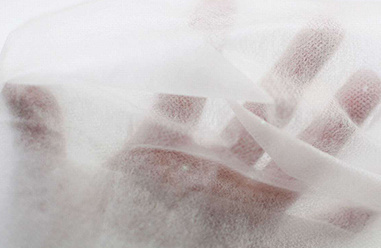
Kobang is a high-performance polymer spunbond non-woven fabric. The unique Kobang technology has a high degree of versatility and can optimize and design non-woven fabrics for specific process parameters and application requirements. In today's special period, Kobang non-woven fabrics respond to the government's call and actively explore the application in the field of masks.
After extensive testing, we found that Kobang non-woven fabrics can maintain stability, good ventilation, comfortable wearing and avoid dead space for respiratory masks and (non-medical) masks. At the same time, the Kobang product range includes a variety of products that can meet the needs of different types of masks.
As the middle layer of the multi-layer mask, the Kobang non-woven fabric can provide the necessary firm stability for the mask to maintain its shape and position during wearing. At the same time, Kobang non-woven fabrics are lightweight, thin and highly breathable, allowing the wearer to breathe easily and improve comfort. In addition, Kobang non-woven fabric is also very suitable for ultrasonic welding, and will not produce loose mouth or curl during cutting.
In the Netherlands, Kobang non-woven fabrics are helping to solve the shortage of personal protective equipment in Dutch medical institutions. At the request of the Dutch Minister of Health and Sports, the Netherlands established a special alliance and invited selected companies to join them to work together for one goal-to achieve large-scale, non-profit production of health protection products. Help protect Dutch health care workers nationwide.
Product interest points:
• High breathability
• Superior stiffness and dimensional stability
• Lightweight
Processing advantages:
Kobang is extremely suitable for various processing methods, such as: ultrasonic welding and sewing, pleating, cutting and punching (no debris), molding, laminating and laminating.
Lobona's Kobang production site in the Netherlands provided support after receiving an appeal from the Dutch government. Today, Kobang non-woven fabrics are used as reinforcement layers in FFP2-certified medical masks. The masks themselves are produced by another company in the Netherlands, AFPROFilters. Although both companies are new to the mask industry, they have achieved the coordinated production of masks in a very short period of time, and both companies are responsible for delivering at cost.
In China, with the outbreak of the epidemic, meltblown cloth, hot-air cotton and even PP raw materials and a series of mask production-related materials prices continue to surge. Maximizing mask production capacity while finding reasonably priced applicable raw materials has become the main topic of domestic mask production.
In such a situation, Kobang, at the request of customers and partners, has also invested in the wave of application exploration in the field of masks. After understanding the relevant qualifications required for masks, we conducted extensive testing on Kobang products and finally passed authoritative tests such as biocompatibility testing and mobility testing.
At present, Kobang has cooperated with well-known domestic medical product enterprises to provide Kobang non-woven fabrics, which can be used as a reinforcing layer for about 80 million masks. As a company with production strength and responsibility, we can ensure a stable supply without product shortages, price surges, and unstable quality. The quality of each volume of each batch of Kobang is consistent and is your trusted partner.
"Our main mission is to bring value to our customers. What we have to do is to tailor our product, to adjust all its technical details to the exact needs of the mask, to add value to it. This way, we can contribute to the current urgent needs of society in a non-profit-making way." The EdgarBerkhout of the Business Development Manager of Kobang concludes.
Distinctive advantage
The manufacture of non-woven fabrics began in the late 1960 s. For 50 years, Kobang has always served customers in all walks of life. Kobang's product range includes many different product types. In close cooperation with customers, the product portfolio is constantly expanding. We develop products based on specific production and processing requirements and end-use needs.

Kobang non-woven fabrics are produced through a proprietary highly flexible two-step technology-first spinning bicomponent filaments, and then making the final fabric through a special laying process and thermal bonding technology. It is this unique technology and our in-depth application experience that enable us to design Kobang nonwovens that can be used in the vast majority of different industries.
Cobang support reinforcement layer for multi-layer masks
Multi-layered masks require a supportive inlay that increases stability and minimally sacrifices breathability. Cobang spunbond non-woven fabric, light weight at the same time also has an open structure and high stiffness. The reinforced mask maintains its original shape when worn and helps to breathe comfortably. Kobang non-woven fabrics have unique bicomponent filaments. Its polyester core layer can improve strength, and the polypropylene skin layer can be firmly connected by ultrasonic welding and other layers.
Non-medical masks
Filtration effectiveness and breathability are key indicators of masks. Kobang Plus product is a support material with filtering ability, which has up to 50% filtering ability for 0.3 micron particles and has a hydrophobic surface layer. Its high air permeability properties improve breathability and comfort.

Kobang Plus products can be stitched or laminated into a three-layer disposable mask, or can be used as a separate inner layer of the mask.
Molded breathing mask
The molded mask cup of the respiratory mask constitutes the base layer, supporting the upper functional layer and the breathing valve. It is important that Kobang can achieve stable and efficient deep drawing at low temperatures and ensure dimensional stability after molding. Kobang fabric will not produce chips and loose holes when punching.
Compared with traditional non-woven fabrics, Kobang spunbond non-woven fabrics are lighter in weight and thinner in thickness, which is very suitable for forming mask cups. This improves both the comfort and breathability of the finished mask.
More information

Follow us
Hello, what can we do for you?
Copyright © Xiantao Dexing Plastic Products Co., Ltd / Xiantao Dexing Health Technology Co., Ltd | Powered by:300.cn
SAF Coolest v1.3.1.2 设置面板 FZUSD-ZSNG-OSSQE-ZWE
无数据提示
Sorry, the current column is being updated, please look forward to it!
You can view other columns or returnHome Page