


News Center
News Center
How to solve the environmental pollution problem of mask protective clothing? Biomass materials make environmental protection and comfort possible.
Release time:
2020-08-17
Since the outbreak of the new coronary pneumonia epidemic, the consumption of medical supplies has entered a period of high outbreak, and with many enterprises in China expanding production and switching to epidemic prevention materials, the shortage of supplies of masks, protective clothing and other items has been effectively alleviated. However, with the increase in production, the disposal of medical waste of epidemic prevention materials has also attracted the attention of all parties.
Since the outbreak of the new coronary pneumonia epidemic, the consumption of medical supplies has entered a period of high outbreak, and with many enterprises in China expanding production and switching to epidemic prevention materials, the shortage of supplies of masks, protective clothing and other items has been effectively alleviated. However, with the increase of production, the disposal of medical waste of epidemic prevention materials has also attracted the attention of all parties.

In the post-epidemic era, we need some "cold" thinking: how to properly dispose of masks that are discarded after use and protective clothing after use? How to reduce the pollution and impact of epidemic prevention articles on the environment on the basis of taking into account the functionality? Environmental protection and comfort will become the focus of attention of relevant production enterprises.
Environmental pressure from medical waste
Medical waste has the characteristics of strong toxicity, strong corrosion and high pathogenicity, which has a serious impact on the production environment and the living environment of animals and plants. In this outbreak of new crown pneumonia, a series of medical waste represented by masks, protective clothing, etc. is infectious waste.
It is predicted that 162000 tons of new waste masks will be added nationwide in 2020, and 17000 tons of new medical waste will be added to medical institutions. The surge in epidemic prevention items has brought a greater burden on the disposal of medical waste, in order to ensure that the epidemic-related medical waste is properly disposed of, all parts of the country have launched various effective response measures to achieve "daily collection and clearing". In addition, the classified disposal process also provides technical support for the rational disposal of epidemic-related medical wastes.
Not only that, the materials of medical supplies such as protective clothing also increase the difficulty of subsequent disposal. The outermost isolation layer of protective clothing is made of polyester or nylon fabric combined with coating material, which is difficult to degrade. At present, the main treatment method of medical waste is high-temperature incineration, and toxic gases are released during the incineration process. Taking polyester as an example, this type of chemical synthetic fiber will produce dioxins, carbon monoxide, and particulate matter after combustion. Smoke. Higher requirements are put forward for the hardware facilities of the processing organization, which will have an impact on the environment if it is not handled properly.
Disposable protective clothing with poor comfort
During the neo-coronary pneumonia epidemic, the hair and trousers of frontline health care workers soaked in protective clothing, and the cheeks strangled by masks still reverberate in people's minds from time to time. This is because the disposable protective clothing because of the short wearing time, low utilization rate, in the production of manufacturing did not consider the comfort of the problem.
"The original intention of the design is short-term use, generally no more than two hours. However, due to the shortage of materials, medical staff have to wear 4-6 hours or more, and they have to carry out high-intensity work. This reflects the professional emergency protection in my country. The technical level and material reserves are insufficient." Donghua University Research Institute researcher Wang Huaping said.
According to introduction, medical protective clothing widely used at present generally has three layers: the outermost layer is an isolation layer, which is made of polyester or nylon fabric combined with coating material, which can be hydrophobic and oleophobic, and block larger particles, blood and mucus, etc. The second layer is a filter layer, which uses non-woven fabric or film (such as polytetrafluoroethylene composite film) material to filter out fine particles and viruses while ensuring the passage of some water vapor molecules; the third layer is a skin-friendly layer, which uses moisture-wicking and natural fiber materials to ensure a certain degree of softness and comfort.
Composite materials made of polyester fiber can block harmful substances, but comfort and breathability are difficult to guarantee. Since the outbreak of the epidemic, after long hours of work, medical staff wrapped in protective clothing are exhausted and sweating. A front-line nurse once told the media that there are nine steps in the process of wearing protective equipment before entering the isolation zone, and the whole process is nearly 30 minutes, while protective clothing is often airtight and uncomfortable to wear.
A better choice for protection, comfort and environmental protection
So, is there a fiber material that can take into account comfort and environmental protection while ensuring the safety of protective clothing, even if it is discarded, it will not pollute the environment?
LYOCELL (lyocell) fiber, a regenerated cellulose fiber made by spinning cellulose dissolved in NMMO aqueous solution, is known as the "green fiber" of the 21st century ". It has strong moisture absorption, good air permeability, affinity and comfort, and has natural antibacterial properties, high fabric fastness, and is not easy to deform. Based on the above characteristics, protective clothing made of LYOCELL fibers will have environmentally friendly and comfortable attributes.
In response to the epidemic, the Chinese Textile Institute of Green Fiber Co., Ltd. the first time to act, combined with the epidemic prevention and control needs to develop and produce can be used for medical protective clothing, medical masks and other fields of special LYOCELL fiber-Weisel, by its production of green fiber.®-Weisaier reinforced isolation clothing, with breathable water repellent, skin-friendly comfort, green environmental protection three advantages, its product material for green fiber®-Weisel non-woven fabric and PE breathable membrane.
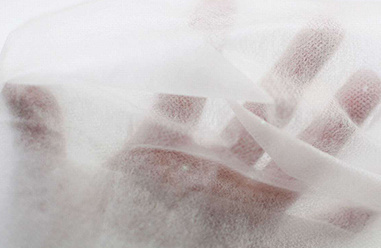
Wessel non-woven fabric is made of Wessel fiber by spunlace process. Wessel non-woven fabric has excellent toughness, antibacterial and moisture permeability, green environmental protection and can be biodegradable. Zhongfang Green Fiber has three main product lines: pure spinning, polyester blending and cotton blending.
It is understood that the green fiber®-Weisel's raw material comes from the cellulose produced by photosynthesis in nature, which is widely present in plants; the production process is a green physical dissolution process, which does not produce any pollution, and the final product can achieve complete natural degradation.
green fiber®As a new type of green environmental protection fiber material, its unique physical and chemical structure makes it have natural antibacterial properties, especially suitable for the production of medical protective equipment. Its skin-friendly characteristics can effectively solve the problem of skin redness and swelling caused by long-term wearing of ordinary masks, and its excellent moisture absorption performance can make the wearer more comfortable for medical protective clothing.
Some people in the industry have calculated an account. At present, the price difference between polyester fiber and LYOCELL fiber is about 10000 yuan/ton, and the gram weight of a piece of protective clothing is about 40g/㎡. If LYOCELL fiber is used instead of polyester fiber, the cost of each piece of protective clothing is expected to increase by only 1.2 yuan. A small increase in production costs brings higher added value to the product, but also makes health care workers more comfortable to work, and from a far-reaching point of view, the sustainability and environmental protection of the entire industry will also have a positive significance, which may be the "post-epidemic era" protective clothing manufacturers better choice.
New trend of epidemic prevention materials
At present, although China's new crown pneumonia epidemic has been effectively controlled, but the epidemic in the global scope is still showing a continuous trend of climbing. According to the latest statistics on the new coronary pneumonia epidemic released by Johns Hopkins University on April 28, there have been more than 3 million confirmed cases worldwide. For some time to come, epidemic prevention and control will remain a major global issue. Therefore, the demand for medical protective articles will remain high for some time to come.

It is understood that according to the service life, protective clothing is divided into three categories: disposable, reusable, and reusable. Among them, multiple use generally refers to about 5 times, can be reused is generally about 20 times. From the perspective of environmental protection and comfort of medical personnel, the use of biomass fibers such as LYOCELL fibers as raw materials to replace polyester fibers may become a trend. In addition, the research and development of reusable masks and protective clothing has been accelerated, and the textile and garment industry is starting from many aspects to solve the problems of "functionality" and "environmental protection and comfort" of epidemic prevention materials.
More information

Follow us
Hello, what can we do for you?
Copyright © Xiantao Dexing Plastic Products Co., Ltd / Xiantao Dexing Health Technology Co., Ltd | Powered by:300.cn
SAF Coolest v1.3.1.2 设置面板 FZUSD-ZSNG-OSSQE-ZWE
无数据提示
Sorry, the current column is being updated, please look forward to it!
You can view other columns or returnHome Page