


News Center
News Center
The decline in production continued to narrow from January to May, and the industrial textile industry accelerated significantly.
Release time:
2020-07-17
Since 2020, in the face of the new coronary pneumonia virus epidemic, China's textile industry has steadily pushed forward the resumption of work, production supply capacity and industrial chain operation coordination has returned to normal. Into the second quarter, in the epidemic prevention materials production and sales increased significantly and the domestic demand market slowly recovered, driven by the economic operation of the textile industry under pressure to pick up, January to May, although the main operating indicators are still in the negative growth range, but the decline continued to narrow.
Time: July 15, 2020 Author: Niu Shuangxin Source: China Textile Union Industrial Economic Research Institute.
Analysis on Economic Operation of Textile Industry from January to May 2020
Since 2020, in the face of the new coronary pneumonia virus epidemic, China's textile industry has steadily pushed forward the resumption of work, production supply capacity and industrial chain operation coordination has returned to normal. Into the second quarter, in the epidemic prevention materials production and sales increased significantly and the domestic demand market slowly recovered, driven by the economic operation of the textile industry under pressure to pick up, January to May, although the main operating indicators are still in the negative growth range, but the decline continued to narrow.
The decline in production continued to narrow, and the industrial textile industry accelerated significantly.
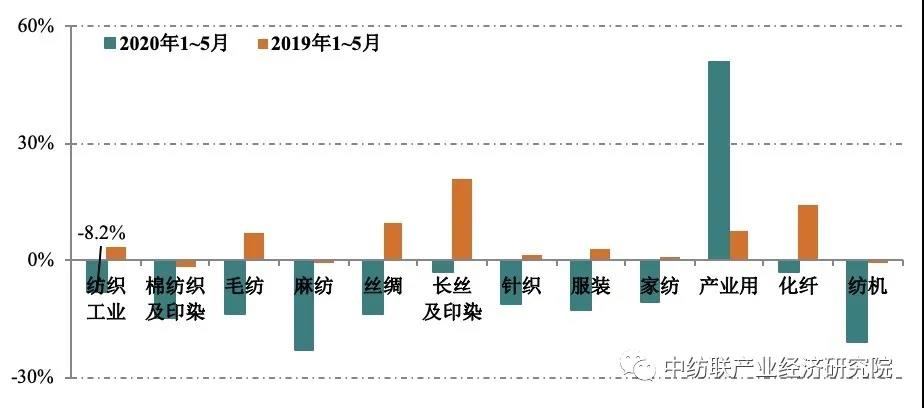
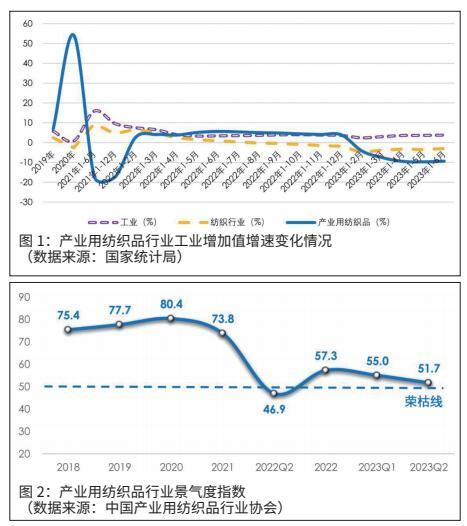
With the steady progress of the normalization of the epidemic prevention and control, the textile industry production gradually resumed, the decline continued to narrow. According to data from the National Bureau of Statistics, from January to May, the industrial added value of the textile industry above designated size decreased by 8.2 year-on-year, and the growth rate was 11.8 percentage points lower than the same period last year, but it rose 3.1 percentage points from January to April this year. The monthly growth rate turned negative to positive for the first time. In all links of the industrial chain, the industrial textile industry maintained a high-speed leading trend, and the industrial added value increased by 50.7 from January to May compared with the same period last year, 58.9 percentage points higher than the growth rate of the whole industry. The garment and home textile industries were affected by the shrinking end demand, and the industrial added value decreased by 12.8 and 10.6 respectively year-on-year. The industrial added value of the textile machinery industry from January to May decreased by 20.8 year-on-year, reflecting that the industry's investment confidence is still sluggish.
Among the major categories of products, only the output of non-woven fabrics achieved a positive year-on-year growth of 2.5, and the output of the remaining products declined. From January to May, the output of chemical fiber, yarn, cloth and clothing of enterprises above designated size decreased by 3.2, 18.1, 27.6 and 17.9 respectively year-on-year, and the growth rate was 16.2, 19.7, 27.4 and 17.5 percentage points lower than the same period last year.
Figure 1: Growth rate of value added of textile industry by sector from January to May 2020
Source: National Bureau of Statistics
The domestic demand market is recovering moderately, and the export situation is still grim.
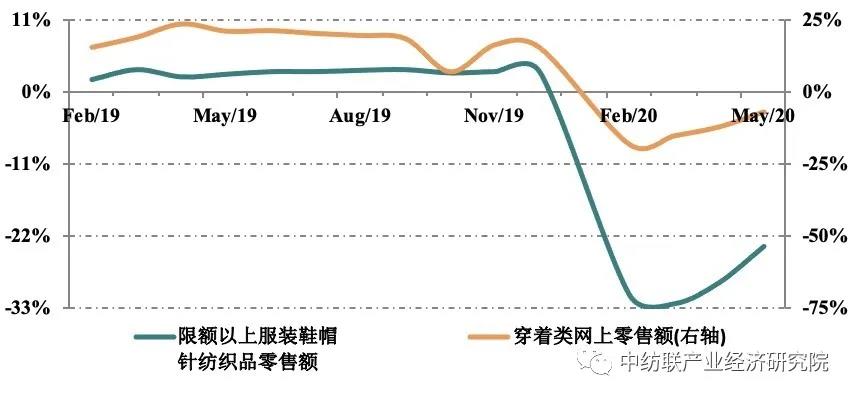
Entering the second quarter, China's epidemic prevention and control situation continued to improve, consumer activities increased, textile and clothing domestic consumption moderate recovery. According to data from the National Bureau of Statistics, from January to May, the retail sales of clothing, shoes, hats, and knitwear of units above the national quota fell by 23.5 year-on-year, and the rate of decline was 5.5 percentage points higher than that from January to April this year. Online consumption continued to improve, with retail sales of online clothing goods nationwide falling 6.8 percent year-on-year, 5.2 percentage points lower than in January-April.
Masks and other epidemic prevention materials export scale increased significantly, supporting the textile industry export decline gradually narrowed. According to China's customs data, from January to May, China's textile and clothing exports amounted to 100.62 billion billion US dollars, down 2.3 percent from the same period last year, 8.2 percentage points lower than the previous four months. Among them, the mask-driven textile exports expanded to 60.36 billion U.S. dollars, a significant increase of 18.5 percent year-on-year; clothing exports continued to show an expanding trend, 1 to May exports decreased by 22.7 percent year-on-year, indicating that the international terminal market demand is still sluggish. The export market of the textile industry has diverged. From January to May, my country's exports of textiles and clothing to the United States and countries along the "Belt and Road" decreased by 1.5 and 15% year-on-year, respectively, and the amount of textiles and clothing exported to Japan and the European Union increased by 18.8 and 38 year-on-year.%.
Figure 2: Cumulative year-on-year growth rate of textile and clothing domestic sales indicators
Source: National Bureau of Statistics
Business pressure is prominent, industrial industry profitability is good.
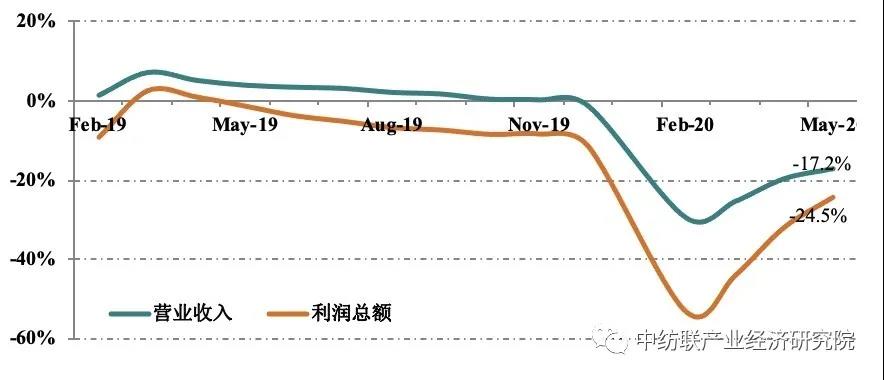
According to data from the National Bureau of Statistics, from January to May, 33000 textile enterprises above designated size across the country achieved operating income of 1552.11 billion billion yuan, a year-on-year decrease of 17.2 percent; realized total profits of 54.6 billion billion yuan, a year-on-year decrease of 24.5 percent; operating income profit margin was 3.5 percent, lower than 0.4 percentage points in the same period last year. Profits in more than 80% of the industrial chain fell by more than 10%, and profits in more than half of the links still fell by more than 30%. Industrial textiles industry in the epidemic prevention materials driven by the level of profitability increased significantly, January to May total profit increased by 189.1 percent year-on-year, operating income profit margin reached 12.2 percent.
The quality of textile enterprises has declined. From January to May, the loss of textile enterprises above designated size reached 32%; the total asset turnover rate and the turnover rate of finished products were only 0.9 times per year and 10.4 times per year, respectively, slowing down by 20.6 and 24.7 percent year-on-year; the proportion of three fees was 7.3 percent, 0.3 percentage points higher than the same period last year.
Figure 3: Efficiency indicators of textile enterprises above the scale from January to May 2020
Source: National Bureau of Statistics
The scale of investment has declined significantly, and development confidence is still insufficient.
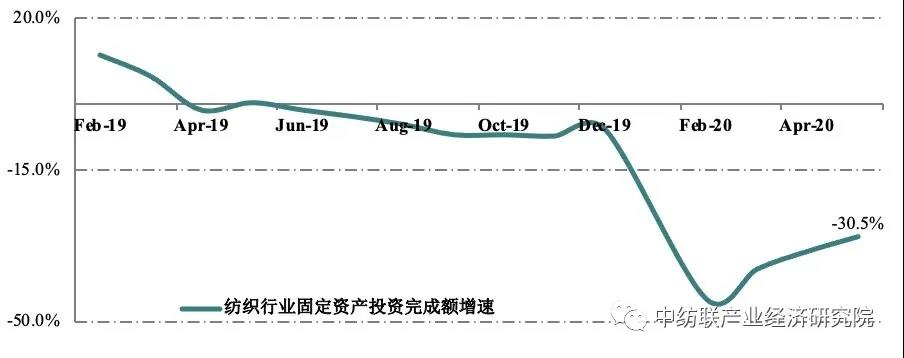
According to the National Bureau of Statistics data projection, from January to May 2020, the textile industry fixed asset investment completed by 30.5 year-on-year, the growth rate slowed significantly by 30.9 percentage points compared with the same period last year. The investment scale of the whole industry chain showed a downward trend, and the investment of textile industry, chemical fiber industry and garment industry decreased by 26.2, 23.2 and 39.2 respectively from January to May.
Figure 4: Growth rate of fixed asset investment in the textile industry
Source: National Bureau of Statistics
Looking forward to the whole year, the domestic and foreign development environment facing China's textile industry is still complex and severe, and the risk and challenge factors have increased significantly. The new crown pneumonia epidemic led to the global economy into recession, the international market demand is still the norm in the second half of the year, the export situation of the textile industry is still grim. However, the situation of domestic epidemic prevention and control is gradually improving, the order of residents' life and production is accelerated to restore, the national "six stability" and "six protection" policy will help residents to ensure employment and stable income, and the accumulation of various positive factors will provide more favorable domestic demand support conditions for the textile industry, and provide an important guarantee for enterprises to resolve various risks and challenges.
More information

Follow us
Hello, what can we do for you?
Copyright © Xiantao Dexing Plastic Products Co., Ltd / Xiantao Dexing Health Technology Co., Ltd | Powered by:300.cn
SAF Coolest v1.3.1.2 设置面板 FZUSD-ZSNG-OSSQE-ZWE
无数据提示
Sorry, the current column is being updated, please look forward to it!
You can view other columns or returnHome Page