


News Center
News Center
China and the United States to restart consultations! Will the textile industry's golden nine peak season be affected?
Release time:
2019-09-07
On the morning of September 5, Liu He, member of the Political Bureau of the CPC Central Committee, Vice Premier of the State Council, and Chinese leader of the China-US Comprehensive Economic Dialogue, spoke with US Trade Representative Lighthizer and Secretary of the Treasury Mnuchin.
On the morning of September 5, Liu He, member of the Political Bureau of the CPC Central Committee, Vice Premier of the State Council, and Chinese leader of the China-US Comprehensive Economic Dialogue, spoke with US Trade Representative Lighthizer and Secretary of the Treasury Mnuchin.
The two sides agreed to hold the thirteenth round of high-level U. S.-China economic and trade consultations in Washington in early October,Prior to this, the two sides will maintain close communication, and the working level will conduct serious consultations in mid-September to make full preparations for substantive progress in high-level consultations. The two sides agreed that joint efforts should be made and practical actions should be taken to create good conditions for the consultations. Minister of Commerce Zhong Shan, Governor of the People's Bank of China Yi Gang, and Deputy Director of the National Development and Reform Commission Ning Jizhe attended the call.
At 3 pm on September 5, the Ministry of Commerce held a regular press conference. Ministry of Commerce spokesman Gao Feng answered questions from Chinese and foreign reporters on recent hot topics. Gao Feng said at a press conference that the working levels of the two sides will discuss the specific arrangements for the 13th round of high-level Sino-US economic and trade consultations. On the basis of full preparation at the working level of both sides, the 13th round of high-level Sino-US economic and trade consultations will strive to make substantial progress.
He said,China firmly opposes the escalation of the trade war, which is not conducive to China, the United States and the whole world.
The People's Daily also published an article saying that on September 5, the leaders of the two sides in the high-level Sino-US economic and trade consultations released a positive message. The two sides reached a consensus, pointing out that "joint efforts should be made and practical actions should be taken to create good conditions for consultations". The two sides have made clear the timetable for action. The 13th round of high-level Sino-US economic and trade consultations will be held in Washington in early October. Prior to this, the two sides will maintain close communication; the working level will conduct serious consultations in mid-September to make substantial progress in the high-level consultations. Fully prepared.This is a rational choice shared by both China and the United States and deserves the expectation and welcome of the international community.
For a period of time, the dark clouds of the escalation of Sino-US economic and trade frictions have not only affected the economies of the two countries, but also frequently brought negative effects to the world economy with various uncertainties. How to look at it and how to do it is a practical issue that cannot be avoided or treated rashly in front of both China and the United States. China's position of "resolutely opposing trade wars" is consistent and firm. China has repeatedly expressed the hope that the two sides will deepen mutual understanding, seek common ground while reserving differences, and properly resolve issues on the basis of equality and mutual respect.
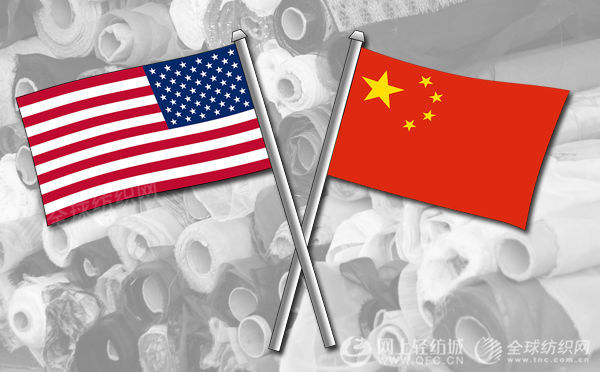
Sino-US trade relations have always been a topic of great concern to textile people. In addition to the direct impact of tariffs, Sino-US relations also affect the macroeconomic aspects at all times. Whether it is the international crude oil price or the exchange rate of RMB against the US dollar, it is closely related to the textile industry chain. In this regard, the resumption of consultations between China and the United States, what is the impact on the market?
Now it is the alternating period of the off-peak season, and textile foreign trade enterprises have been affected to varying degrees due to trade frictions. Some cloth bosses who do foreign trade also said that since the beginning of this year, in addition to the US market, the number of orders in higher-end markets such as Europe has also decreased. On the contrary, the number of imports from Southeast Asian countries has increased sharply due to the rapid development of the clothing industry. This is also evident.
Repeated changes in Sino-US news have made traders more cautious about the performance of the consultation.
According to the latest monthly report updated by the International Cotton Advisory Committee (Cotton Advisory Council, ICAC), the cotton price of Cotlook A index has dropped from 99.5 cents per pound in August 2018 to 74 cents in July 2019. Uncertainties around the US-China trade war have pushed cotton prices from seasonal highs in August last year (2018) to new lows in July this year (2019).
Tensions between the United States and China escalated further in early May, including a 25 percent tariff on cotton imports from mainland China-plus punitive tariffs of up to 25 percent on the remaining $300 billion of Chinese imports (including all textiles, clothing and footwear)-and the tone seems to have eased as new trade talks unfold between the two sides.
The latest data show that due to the escalation of the Sino-US trade war, the prices of more than 400 kinds of imported chemicals have risen!
Since the U.S. government announced that it will impose a 10% tariff on about $300 billion of goods imported from China, it will be implemented in two batches from September 1 and December 15, 2019. The US measures have led to the continuous escalation of Sino-US economic and trade frictions, greatly harming the interests of China, the United States and other countries, and seriously threatening the multilateral trading system and free trade principles.
Among them, there are more than 400 tax items involving chemicals and raw materials, with a tax increase of 5%. These include barium sulfate, calcium carbonate, polyacrylamide, black printing inks, polyurethane paints and varnishes dispersed or dissolved in non-aqueous media.
Due to the continuous escalation of trade frictions between China and the United States, from now on, tariffs will be imposed on some imported chemical raw materials and other commodities imported from the United States. According to the analysis of industry insiders, the supply of chemical raw materials in the United States may decrease in the later period, which is likely to affect the prices of imported raw materials and promote the price rise of some imported raw materials and chemical products. Looking at the current situation, it may also lead other chemical raw materials.
Recently, the starting rate of looms in Shengze area has gradually increased, and the stock of gray cloth has dropped to about 41 days. It can be seen that the market is slowly moving.
At the same time, the market situation has eased in recent years, with some dyeing factories experiencing warehouse explosion and some dyeing factories in Zhejiang region experiencing an increase in dyeing fees. Generally speaking, only when the market situation improves can dyeing factories have the confidence to raise prices. The fabric market also has the phenomenon of local heat, especially the elastic fabric transaction is obviously enlarged, and the hot-selling products are mainly T400 and T800.
At the end of last month, all weaving manufacturers made up their positions, and at present, the starting rate of weaving machines has rebounded, and the market situation has shown signs of improvement. The purchase of raw materials will be greater than that in the off-season. In its current form, a single message may not have much impact on weaving manufacturers.
This year's textile market was described as "the worst year" because of overcapacity ",I don't knowIs the repetition of Sino-US trade adding expectation or sorrow to the peak season in September?
More information

Follow us
Hello, what can we do for you?
Copyright © Xiantao Dexing Plastic Products Co., Ltd / Xiantao Dexing Health Technology Co., Ltd | Powered by:300.cn
SAF Coolest v1.3.1.2 设置面板 FZUSD-ZSNG-OSSQE-ZWE
无数据提示
Sorry, the current column is being updated, please look forward to it!
You can view other columns or returnHome Page