


News Center
News Center
Vietnam, the belt and road initiative of the China Industry Association Line Belt Branch
Release time:
2019-08-24
In the six years since the Belt and Road Initiative was put forward, China has adhered to the principle of "consultation, co-building and sharing" and has signed 173 "Belt and Road Initiative" cooperation documents with 125 countries and 29 international organizations.
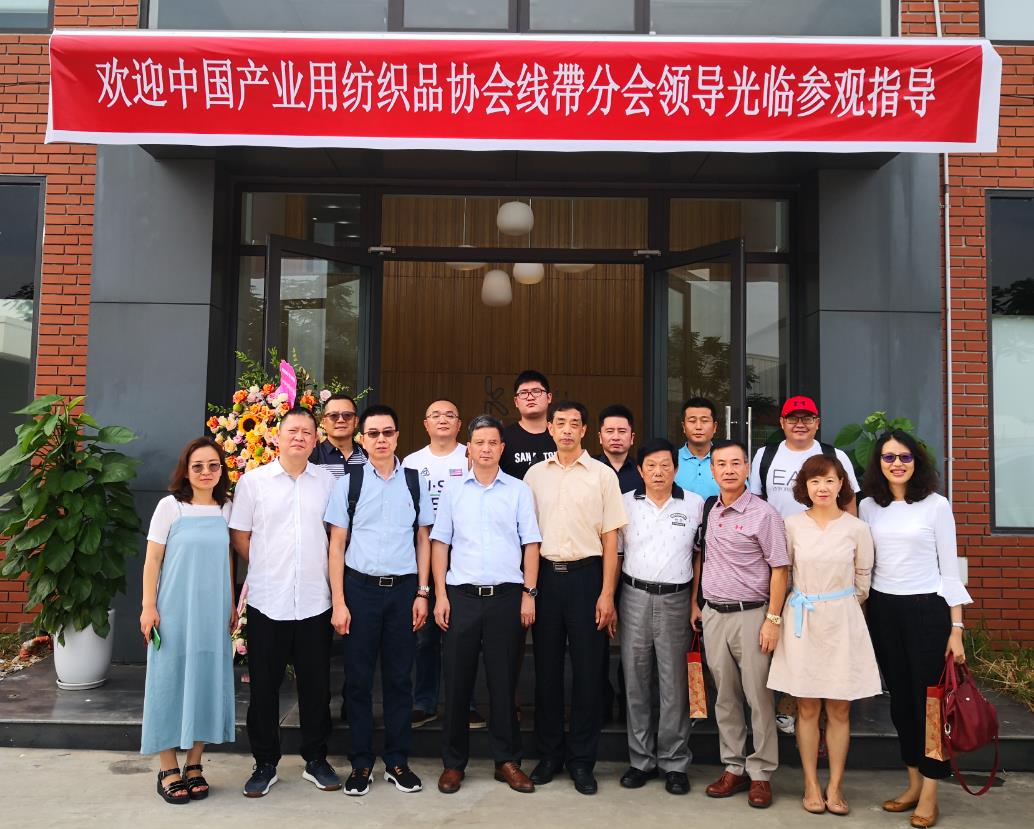
In the six years since the "Belt and Road" initiative was put forward, China has adhered to the principle of "extensive consultation, joint construction, and sharing" and has signed 173 "Belt and Road" cooperation documents with 125 countries and 29 international organizations. Statistics from the Ministry of Commerce show that from 2003 to 2018, China's textile industry's foreign direct investment totaled 9.796 billion billion US dollars, with an average annual growth rate of 15.6 percent, accounting for 5.2 percent of the total manufacturing foreign direct investment. The textile industry is a leading industry for my country to actively promote the construction of the "Belt and Road", and it is also the preferred industry for countries and regions along the "Belt and Road" to promote industrialization, create national wealth, and provide a large number of jobs. Myanmar and Vietnam are important nodes of the "Belt and Road" and important members of the Lancang-Mekong cooperation. They have broad development prospects in deepening cooperation and complementing each other's advantages. In order to better help enterprises in my country's line belt industry understand the "Belt and Road". The development status, investment prospects, economic and trade cooperation and future trends along the route, the China Industrial Textile Industry Association, together with the China Textile International production capacity Cooperation Enterprise Alliance and the Textile Industry Branch of the China Council for the Promotion of International Trade, led by Zheng Junlin, vice president of the China Industrial Textile Industry Association, went to Vietnam on August 15-17, 2019. Ding Junmin, chairman of the thread belt branch of the China Industrial Textile Industry Association and chairman of Zhejiang Sanding Weaving Co., Ltd, as well as Fujian Rongshu, Dongguan Yongheng, Hujiang Line Industry, Xiamen Yao Ming, Zhejiang Aoya, Kaiping Qifan, Dongguan Jiayi, Xiamen Lude, Zhongshan Yonglilai and other key enterprises of the Line Belt Branch visited together.
Vietnam began to reform and open up in 1986, built the first export processing zone in 1991, and established the first park 100% invested by foreign enterprises in 2008. Up to now, Vietnam has 321 industrial parks, 16 coastal economic zones and 3 high-tech industrial parks. The main industrial park revolves around the city of Hanoi radiating the Red River Delta and the southeast area of Ho Chi Minh City radiating. Compared with China's government-led park model, Vietnamese have handed over more parks to enterprises. Among them, there are both local Vietnamese companies and foreign investors from Singapore, Japan, Taiwan and mainland China. Vietnam's industrial parks are divided into 1-4 categories according to the poverty level of the region. The poorer the area, the more preferential conditions they enjoy.
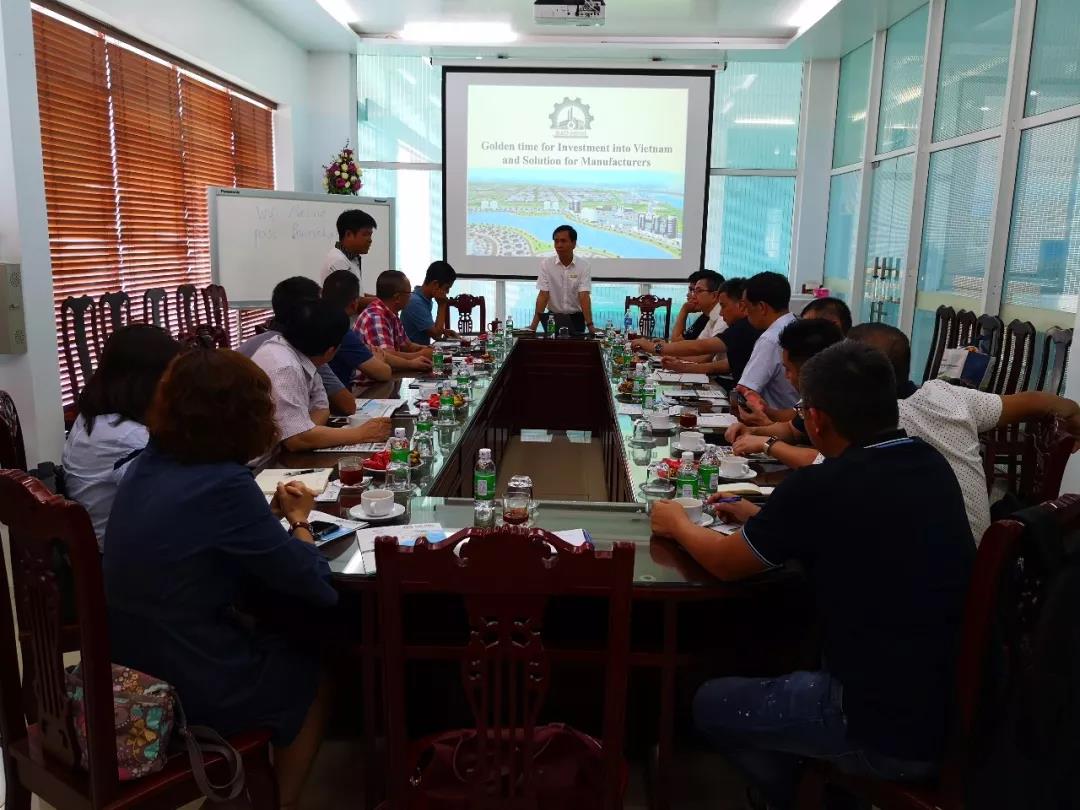
This time, we have a deep understanding of the current investment environment in Vietnam from the perspective of investigating industrial parks. the delegation visited industrial parks and enterprises in nanding, beining and haiyang near hanoi.
Overview of Vietnam
The Socialist Republic of Vietnam (hereinafter referred to as Vietnam) is located in the eastern part of the Indochina Peninsula, with a land area of 329000 square kilometers. The total population of Vietnam is 93.7 million (2017), and the working population is the 54.8 million, accounting for 58.5 percent of the total population. There are 54 ethnic groups, of which the Jing nationality (also known as the Yue nationality) is the main ethnic group, accounting for more than 80% of the total population, with about 900000 Chinese. Vietnam has 5 municipalities and 58 provinces, which are divided into 8 regions by region. Hanoi, the capital, is the political and cultural center of the country, with the largest area and the second largest population in the country. Ho Chi Minh is the largest port city and economic center of Vietnam.
Vietnam is a developing country. Reform and opening up began in 1986. Textile and clothing is a pillar industry in Vietnam. At present, Vietnam has about 7000 textile and garment enterprises, employing 2.8 million people, solving 25% of the country's employment. 70% of the whole industry is garment enterprises, 17% is knitting/weaving enterprises, 6% is yarn enterprises, 4% is dyeing and finishing enterprises. Private and joint-stock enterprises accounted for 84%, foreign-invested enterprises accounted for 15%, and state-owned enterprises accounted for 1%. According to the data provided by the Vietnam Textile and Garment Association (VITAS), the revenue of Vietnam's textile and garment industry in 2018 was 42 billion US dollars, an increase of 14% compared with 2017. Domestic sales were $5 billion and exports were $37 billion, up 16% from 2017. By product category, clothing exports were $30.53 billion, or 82.52 per cent, while yarn and man-made fibers were $4.03 billion, or 10.89 per cent, fabric exports were $0.53 billion, or 1.44 per cent, and apparel exports were $1.905 billion, or 5.15 per cent.
Nading Baoming Industrial Park
Baoming Industrial Park Facilities Investment Company was established in 2007. It is a private enterprise that started with textiles. The company's main business is industrial park development, residential real estate and textiles and clothing. The first phase of the industrial park began to be built in 2010. Youngor and Jiangsu Yulun entered the park in 2013 and 2014 respectively. Among them, Youngor is the first Chinese textile enterprise to enter the park, and it is also the largest textile enterprise in the park. The company is building the second phase of the industrial park, which is located in the special economic zone of Taiping Province, with a total area of 400 hectares, and 1/3 of the area is invested by textile and garment enterprises. The park is 50 kilometers away from the Haiphong port and has convenient transportation.
Its attraction is:
- Excellent geographical location, convenient external transportation
- Industrial land with complete infrastructure
- The park provides a full range of services
- Can provide accommodation for workers, experts, managers
- There is a network of universities, technical schools and professional training institutions around.
- Provide tax incentives: 4 years of corporate income tax exemption, 9 years of 50% relief. (Corporate income tax is 10%)
- The available power generation is 1800 MW, the water supply is 50000 m3/day, and there is a wastewater treatment plant in the park.
Beining Singapore Industrial Park
Since 1996, Sembcorp has been working with the Vietnamese government to create integrated towns and industrial parks with a work-life-entertainment environment. Today, there are seven Vietnam-Singapore industrial parks in Vietnam's southern, northern and central economic zones. These projects integrate industrial, commercial and residential solutions to meet the needs of Vietnam's rapid urbanization and industrialization. The Singapore Industrial Park in Vietnam has won the "Best Industrial Developer" award from the British "Euromoney.
Beining Singapore Industrial Park features:
- It has the advantage of geographical location, only 20 kilometers away from Hanoi and only 140 kilometers to China through Friendship New Town checkpoint.
- Park logistics center with bonded and non-bonded storage equipment
Baoming Textile Company
Baoming Textile Company is the largest textile enterprise in Nanding Province and is located in Baoming Industrial Park. The company has weaving, dyeing and finishing processes, 144 looms, with a capacity of 1300000 meters per month for weaving, 300000 meters per month for yarn-dyed and 300 tons per month for dyed yarn.
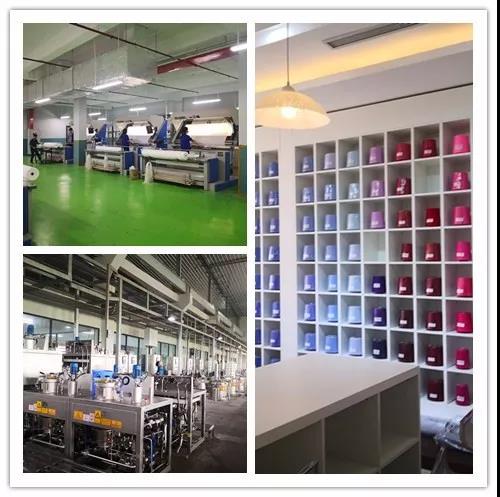
Yulun (Vietnam) Textile Co., Ltd.
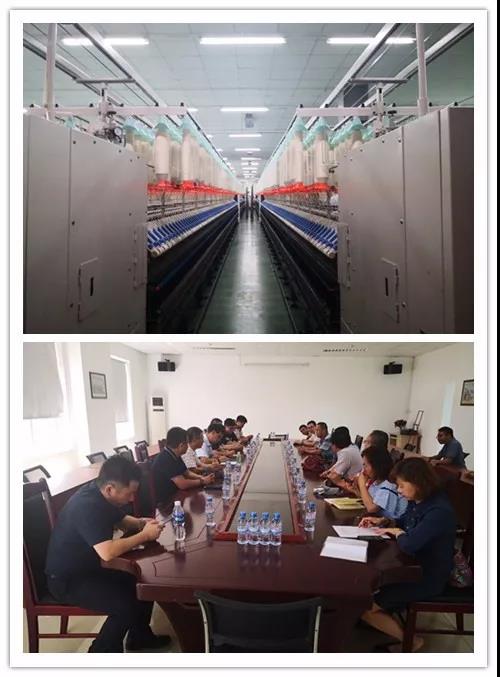
In 2014, Jiangsu Yulun Company invested in Baoming Industrial Park, Nanding Province, Vietnam, with a total investment of US $39 million and rented 120 mu of land (lease period of 50 years) to carry out textile fabric projects. The first phase of the spinning project started construction in March 2014. At the end of that year, some equipment was put into trial production, and the product quality reached the excellent level. In 2015, all 35000 ingots were put into production and operated normally, and the production and operation entered a virtuous circle. Cotton yarn was mainly sold to Vietnam, Hong Kong, China and the mainland. In view of the success of the first phase of the project, the company implemented the second phase of the spinning project and started construction in May 2017, including spinning 35000 spindles and 1200 head air spinning. After one year of construction, it was fully completed and put into production in May 2018. So far, Yulun Vietnam Company has formed the production capacity of 70000 spindles and 1200 air spinning, attracting 650 local employees and 20 Chinese management personnel. At present, Yulun Vietnam Company produces 12000 tons of cotton yarn annually, with annual sales of nearly 40 million US dollars and annual income of more than 400 million US dollars.
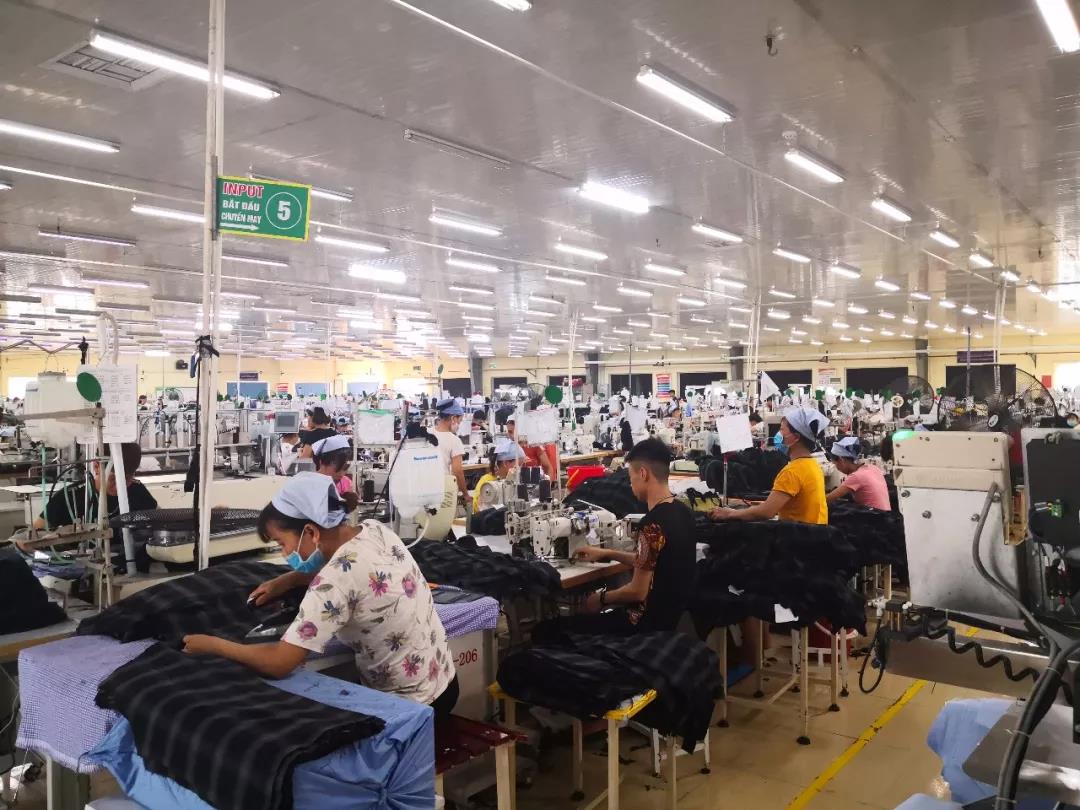
Shengtai Group Vietnam Garment Factory
Shengtai Group has invested in a yarn-weaving-dyeing-garment factory in Baoming Industrial Park. The delegation only visited its garment factory. The factory has been built since 2015, covering an area of 6 hectares and employing 2000 people, mainly OEM of well-known brand-name products such as Uniqlo.
The KINTEX Company
Hong Kong Jiali Elastic Fabric Co., Ltd., established in 2004, invested KINTEX ELASTIC Company in Fuchun Industrial Park, Haiyang, Vietnam, at the request and drive of customers. Fuchun Industrial Park is located along Highway 5 in Haiyang Province, 27km from Haiphong Port and 99km from Hanoi International Airport. The company began construction in 2018, with a plant area of 6000 square meters. It will be put into production in early 2019 with 100 employees. The factory is equipped with advanced computer jacquard machines, spandex coating machines, warping machines, setting machines and packaging machines. It mainly produces elastic jacquard webbing with an annual output of 25,000,000 meters.

According to the latest data released by the Foreign Investment Bureau of the Ministry of Planning and Investment of Vietnam, Vietnam attracted foreign investment of US $10.8 billion billion in the first quarter of 2019, a sharp increase of 86.2 percent over the same period last year, a three-year high for the same period. In 2018, Vietnam's total foreign direct investment reached 35.4 billion billion U.S. dollars, reaching the highest level since the promulgation of Vietnam's investment law in 1987, with a year-on-year increase of 9.1 percent, which also set a historical record for the largest increase. Behind the boring numbers is the amazing investment heat. In addition to the continuous establishment of new enterprises, the existing Vietnamese investment enterprises are also increasing the scale of production capacity, especially the textile industry is the most prominent, Vietnam is generally considered to usher in the "golden decade of the textile industry". Through understanding, at present, Vietnam's textile and garment industry is mainly based on production and processing, and its industrial chain extension is insufficient. As a supporting industry of textile and garment, the investment in Vietnam is affected by factors such as environment, labor and policy.
More information

Follow us
Hello, what can we do for you?
Copyright © Xiantao Dexing Plastic Products Co., Ltd / Xiantao Dexing Health Technology Co., Ltd | Powered by:300.cn
SAF Coolest v1.3.1.2 设置面板 FZUSD-ZSNG-OSSQE-ZWE
无数据提示
Sorry, the current column is being updated, please look forward to it!
You can view other columns or returnHome Page