


News Center
News Center
Development Status and Future Trend Analysis of Non-woven Manufacturing Industry in 2018
Release time:
2018-06-19
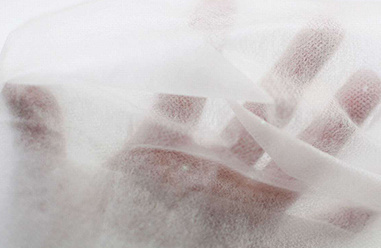
Non-woven fabric manufacturing industry development status of non-woven fabric production technology is different from the traditional textile technology, in the textile process does not need to be spinning process, its textile technology is similar to papermaking technology, also known as nonwovens. Its raw materials are mainly from the by-products of refining oil-polyethylene and polypropylene plastic particles, which are melted at high temperature and spun to obtain short fibers or filaments, which are oriented or randomly arranged and bonded to make sheets, webs or mats. They are called non-woven fabrics because they do not need to be woven but have the appearance and certain properties of cloth. Non-woven fabrics can not draw thread ends when in use, and are environmentally friendly, breathable, lightweight, moisture-proof, durable and so on.
Development status of non-woven manufacturing industry
Non-woven fabric production technology is different from the traditional textile technology, in the textile process does not need to carry out the spinning process, its textile technology is similar to papermaking technology, also known as nonwovens. Its raw materials come mainly from by-products produced when refining oil.-- Polyethylene and polypropylene plastic particles, after high-temperature melting, spinning to obtain short fibers or filaments, by orientation or random arrangement, bonding made of sheet, fiber web or batt, because do not need to textile but with the appearance of the cloth and some properties known as non-woven.
Non-woven fabrics can not draw thread ends when in use, and have many modern characteristics such as environmental protection, breathability, light weight, moisture-proof, durability, etc. Therefore, they are widely used in disposable products, non-woven puzzles, hardcover flour bags, etc.
Non-woven manufacturing technology was first applied in Europe and America,In the 1980 s, it spread to China's Guangdong, Jiangsu and Zhejiang areas. In China, it was initially used to make disposable masks, shoe covers, work caps, etc. The products are mainly exported overseas for the labor insurance market. It was not until the mid-to-late 1990 s that the non-woven manufacturing industry set off a climax of development. Since then, after years of exploration and development, the non-woven fabric industry has rapidly developed into medical, engineering and other fields. The overall operation of the industry is stable, and the growth rate of production and sales has steadily increased. Some Chinese non-woven fabric companies and products have strong international competition. force.
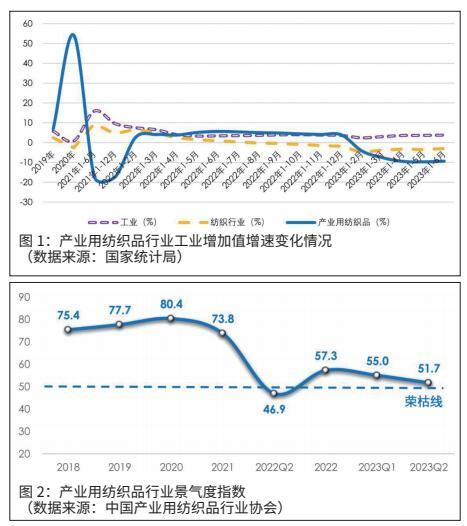
According to the National Bureau of Statistics,From 2010 to 2016, the total industrial output value of China's non-woven industry showed a sustained growth trend, but the growth rate has slowed down in the past two years. In 2016, the non-woven industry achieved a total industrial output value of 146.365 billion billion yuan, an increase of 0.41.
In terms of production,From 2010 to 2016, the output of non-woven fabrics in China also maintained an upward trend. In 2016, the output of non-woven fabrics in China was about 4.11 million tons.
At the same time, in the development process, the non-woven fabric manufacturing industry has also formed five major characteristics: from a regional perspective, regional development imbalance; from the perspective of technological advancement, the level of various construction methods varies; from the product variety, variety Single, serious duplication of construction; from the quality of the product, the quality needs to be improved; from the product processing capacity, the overall level is weak.
The future trend of non-woven manufacturing industry
First of all, the industry has a large space for development. On the one hand, with the rapid development of China's economy and the continuous improvement of residents' income, the demand for non-woven fabric industry has not been fully released. For example, the market for sanitary napkins and baby diapers is very broad, with an annual demand of hundreds of thousands of tons,The market for SMS cloth and air mesh cloth, filter material, insulation cloth, geotextile and medical cloth is large and will grow.
On the other hand, China's per capita possession of nonwovens is only2.97kg, while the national per capita possession of textile fibers is 26.89kg, it can be seen that nonwovens still have a lot of room for development.
Secondly, it is expected that the concentration of the non-woven industry will be more obvious in the future. The new capacity is more likely to be concentrated in the existing capacity areas, such as Shandong, Zhejiang, Guangdong, Jiangsu and other places. These areas have begun to take shape, and enterprises can basically consciously abide by the national pollutant discharge regulations, saving the cost of national supervision and governance, so the strong in the industryThe "Matthew effect" will be more pronounced.
Third, the transformation of the nonwoven industry is imperative. With the continuous emergence of new technologies, the functions of non-woven fabrics have been continuously improved. The future development of non-woven fabrics comes from the continuous penetration of other fields such as new industries and automobiles; at the same time, backward and old equipment will be eliminated to produce functional, Differentiated, diversified world-class non-woven products, and march into the depth of production, deep processing of products, forming product diversification, and adapting to market needs.
On the whole, non-woven fabrics have gradually become an emerging industry in the domestic market. Although China's non-woven production has been rapid development, but the economy is still growing, people's demand is increasing, non-woven manufacturing enterprises should open up a broader market, develop technology and equipment first-class equipment, produce more high-quality, high-specification, high-grade products, so that the non-woven industry further development.
Prospective Industry Research Institute expects that the futureIn 5 years, the annual output of non-woven fabrics will still maintain a growth rate of 6%-10%, and the annual output of non-woven fabrics will exceed 6.8 million tons by 2023.
Previous article
More information

Follow us
Hello, what can we do for you?
Copyright © Xiantao Dexing Plastic Products Co., Ltd / Xiantao Dexing Health Technology Co., Ltd | Powered by:300.cn
SAF Coolest v1.3.1.2 设置面板 FZUSD-ZSNG-OSSQE-ZWE
无数据提示
Sorry, the current column is being updated, please look forward to it!
You can view other columns or returnHome Page