


News Center
News Center
A 456 percent tariff! What is the impact of the United States on Vietnam's "knife" on China's textile enterprises?
Release time:
2019-07-24
Since the tightening of Sino US trade relations, many textile and garment enterprises have turned to Cambodia, Vietnam, Pakistan and other foreign markets. After the United States imposed tariffs on Chinese textiles, overseas orders began to flow out of China to Southeast Asia, with Vietnam the most. Thanks to this, Vietnam has become one of the three major textile and garment exporters.
Since the tightening of Sino US trade relations, many textile and garment enterprises have turned to Cambodia, Vietnam, Pakistan and other foreign markets. After the United States imposed tariffs on Chinese textiles, overseas orders began to flow out of China to Southeast Asia, with Vietnam the most. Thanks to this, Vietnam has become one of the three major textile and garment exporters.
In 2018, Vietnam's textile and garment exports increased by 16.01. Among them, textile and clothing exports reached 28.78 billion billion US dollars, an increase of 14.45 percent over the same period last year; cloth exports reached 1.66 billion billion US dollars, an increase of 25.5 percent over the same period last year; and textile and clothing raw materials exports reached 1.23 billion billion US dollars, an increase of 14.59 percent over the same period last year. In the first quarter of 2019, Vietnam's textile and garment exports amounted to US $7.3 billion billion, an increase of 13.3.
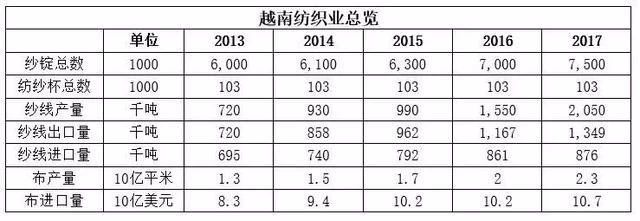
Recently, the United States announced a 456 percent tariff on Vietnam! As soon as the news came out, many people were worried about whether the United States was going to start a trade war with Vietnam. In fact, the United States has already imposed tariffs on China, the European Union, Canada, Mexico and Turkey. So if the United States starts a trade war and the United States imposes tariffs on Vietnamese textiles, how much impact will it have on Chinese textile and garment enterprises?
If the U. S.-Vietnam Trade War Brings Impact on Chinese Textile Enterprises
1 Lost Order Return
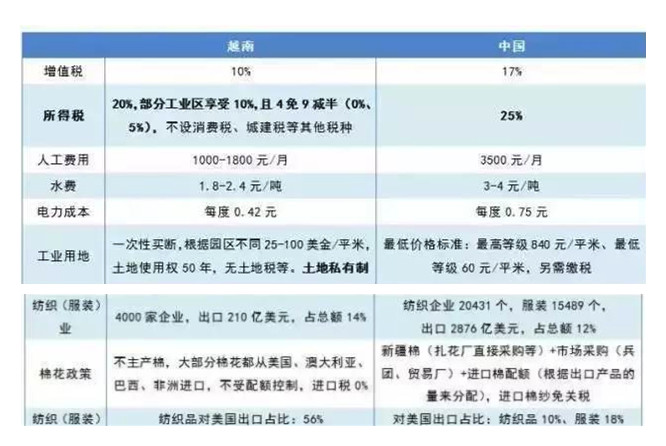
Vietnam is now more and more textile enterprises, coupled with Vietnam's low cost, fabric quotation is also lower than China, so many international terminal clothing manufacturers have transferred orders from China to Vietnam. If the United States increases tariffs on Vietnam, then Vietnam's fabric and clothing prices will no longer be dominant. In contrast, the quality of fabrics and clothing in China is better than that in Vietnam, and it is believed that many terminal clothing chambers will re-order to China.
2 Ease gray cloth overcapacity
On the other hand, the textile industry in Vietnam mainly produces conventional low-end fabrics, and the price is lower than that in China, so it has an impact on the domestic conventional low-end products. If the United States increases tariffs on Vietnam, then Vietnam's fabric and clothing prices will no longer be dominant, and this demand for conventional low-end products is bound to flow back to the country, thus alleviating the problem of overcapacity of domestic gray cloth.
3 Accelerate international textile industry competition
The transfer of textile and garment enterprises is the norm. China's domestic textile enterprises are mainly transferred from Jiangsu and Zhejiang regions to the central and western regions. At the same time, the textile and garment industry has been internationalized, with the transfer of production capacity to Southeast Asia, South Asia, Central Asia and Africa, as well as in developed countries and regions such as Europe, America and Japan. through mergers and acquisitions and investment to control the raw materials, design and development, brand and market channel resources at both ends of the textile industry chain. If the United States increases tariffs on Vietnam's textile imports, it will eventually affect Vietnam's textile and apparel orders. Therefore, it will accelerate the development of textile and apparel companies in Southeast Asia, South Asia, Central Asia, and Africa. China has formed fierce competition.
4 Accelerate the relocation of textile enterprises to invest in Vietnam
In the past two years, under the situation of environmental protection, many textile enterprises in China have moved their factories to Vietnam. Early because of the factory rent, workers' wages, dyeing fees and other costs are lower than the domestic, attracted a lot of domestic textile enterprises. However, those domestic factories that go to Southeast Asia to set up factories are facing too many problems. The soaring cost of workers, frequent rights protection activities, imperfect infrastructure and other factors restrict the development of enterprises. If the United States increases tariffs on Vietnam, another factor will affect enterprises that go to Vietnam to set up factories. When labor costs and policy advantages are no longer available, they may face closure or relocate their businesses back home.
The impact of U.S. tariffs on Vietnam on China's textile industry will be great, so textile people are very concerned about whether the U.S. will impose tariffs on Vietnam, and if so, whether it involves textiles. Take a look at the current situation of China's textile enterprises, do a good job in the domestic market, in order to do a good job in the foreign market.
Current situation of domestic textile enterprises
Since July, the off-season has deepened, and fabric manufacturers in Wujiang area lack large orders in batches, mostly small orders. Weaving manufacturers take goods slowly, gray cloth inventory is still at a high level. A person in charge of a textile enterprise in Wujiang revealed that since the beginning of this year, domestic sales orders have been fair, while foreign trade orders have been few, reducing the order volume by 80% compared with previous years. The Guangzhou area is a gathering place for spot finished products companies, but the situation of those companies is not optimistic. It is understood that since the off-season in summer, many spot finished products have been closed for holidays. At present, it is difficult for textile enterprises to receive foreign trade orders, and the inventory pressure is high. At the same time, it is restricted by many factors such as rising labor costs, fluctuations in raw material prices, and increase in loan interest rates.
Upstream polyester manufacturers, mainstream production and sales from time to time to break a hundred boost, but the good times are not long. Recently, the downstream polyester market mainstream production and sales straight down, three consecutive transactions daily sales basically maintained at only 1-20% level. Weaving enterprises to stop replenishment, traders are also cautious to start. From the Chinese silk net statistics, now polyester market overall inventory slightly increased to 10-19 days. Polyester raw material manufacturers by the downstream to take the impact of goods, has been one after another polyester manufacturers began to stop production maintenance, the follow-up polyester market production reduction operation or further increase.
THE END
Whether the United States and Vietnam open a trade war or not, it may bring China a reduction in demand for clothing fabric orders. However, China, as the world's largest and most complete industrial system from raw material supply, design and research to textile dyeing and processing, will still be the world's largest textile and garment exporter, and the basic demand is still there. Therefore, regardless of the international trade situation, China's textile enterprises need to do a good job of transformation and upgrading, to do their own products, enhance competitiveness, in order to better long-term development.
More information


Follow us
Hello, what can we do for you?
Copyright © Xiantao Dexing Plastic Products Co., Ltd / Xiantao Dexing Health Technology Co., Ltd | Powered by:300.cn
SAF Coolest v1.3.1.2 设置面板 FZUSD-ZSNG-OSSQE-ZWE
无数据提示
Sorry, the current column is being updated, please look forward to it!
You can view other columns or returnHome Page