


News Center
News Center
Nonwovens Reshaping the Future of the Construction Market
Release time:
2019-07-01
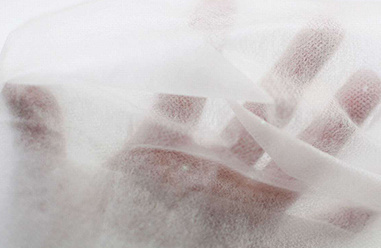
Non-woven fabrics are the "eternal star" of the construction market ". Although you usually can't see them, non-woven fabrics play a huge role in the new construction of houses and the renovation of old buildings-they can be building covering materials, roofing materials, window waterproofing, heat insulation and sound insulation and appear in many areas. Non-woven and composite manufacturers are optimistic about the future development of non-woven fabrics in the construction market.
Non-woven fabrics are the "eternal star" of the construction market ". Although you usually can't see them, non-woven fabrics play a huge role in the new construction of houses and the renovation of old buildings-they can be building covering materials, roofing materials, window waterproofing, heat insulation and sound insulation and appear in many areas. Non-woven and composite manufacturers are optimistic about the future development of non-woven fabrics in the construction market.
Nico Del Monaco, European vice president of Owens Corning Nonwovens and Glass Fiber Reinforcement, said that the non-woven construction market is growing in all regions, mainly benefiting from the development of the residential and commercial construction market and the transformation of these fields to composite materials. "Composites are reshaping the construction market. With glass fiber reinforcement and specialty nonwovens, we will transform standard building materials into high-performance products and systems. We expect this trend to continue."
Owens Corning is developing new solutions to support the penetration of composite materials into more new markets in the future. "The continuous transformation of the construction market from paper and felt mats to non-woven solutions is an excellent example." Del Monaco added.
Freudenberg focuses on sustainability
Freudenberg High Performance Materials (Freudenberg Performance Materials) said they have a 40% market share in the roofing materials industry, but also see the use of non-woven fabrics in construction continues to grow, the market continues to develop for the end user to bring more value products. The company also believes that composites are making progress in the construction market. "The new generation of'composite technology' is opening up new application areas to strengthen the protection of buildings and bring a higher quality of life to people in living areas." Dr. Frank Heislitz, Chief Executive Officer of Freudenberg Performance Materials, said, "The strong development of 'green' buildings provides further impetus to the construction materials market. End users are increasingly demanding sustainable products and are clearly favoring environmentally friendly alternatives and recycled materials."
In the face of such a market environment, Codberg has been prepared for this task. The company's production process begins with the post-consumer recycling of PET bottles, which are its main raw material. They select them, clean them, and press them into plastic bottles. These plastic bottle sheets are converted into staple fibers or directly used in spunbond production to make recycled polyester non-woven fabrics. "Recycling PET bottles means that we can replace the original material with recycled polyester of the same quality, which saves natural resources." Heislitz explained.
Polyester nonwovens are the most commonly used substrates due to their ability to combine good mechanical strength with high elongation at break. In the reinforced products produced by Freudenberg with glass fibers, the elasticity of polyester combined with the stability of glass gives non-woven fabrics excellent running performance. Heislitz added: "Therefore, when it is used in high-temperature and high-speed asphalt production lines, the asphalt membrane will have excellent dimensional stability and long durability."
According to Heislitz, Freudenberg's leadership in the roofing materials market is due to the company's long-term positioning and strong customer relationships, which are based on the company's deep understanding of customer needs and expectations. Leading-edge technology, high flexibility and a broad product portfolio enable Cordborough to meet the most stringent requirements of its customers. "Although they cannot be seen, once our polyester substrate is embedded in the asphalt membrane, it will play a vital role for customers to achieve their product target performance." He said.
Freudenberg currently holds positive expectations for the construction market and is expected to grow further in the medium term. In terms of specific growth areas, the company believes that developing countries have great potential in the construction application of non-woven fabrics.
Owens Corning Continues Expansion
Owens Corning provides fiberglass products, from fiberglass to glass mats for residential roofing materials, to coated and uncoated specialty non-woven fabrics for residential and commercial buildings. The company's continuous research has allowed them to master Advanced technology for manufacturing fiberglass, glass-coated and non-woven felt composites.
According to Del Monaco, Owens Corning's non-woven glass fiber mats are usually wet-laid, impregnated with a synthetic water-based binder, and the impregnated web is dried and cured in a belt dryer. After passing the inspection, it is cut and wound in the winding machine.
Owens Corning uses its patented Advantex formula, which is corrosion resistant and does not contain boron. Commonly used binders include acrylic, urea-formaldehyde and renewable organic binders.
"Ongoing urbanisation trends and greater demand for homes are driving increased demand for composite solutions," says Del Monaco. "People want to improve indoor air quality, save energy more broadly and improve sustainability, and our range of organic adhesives is replacing products that use formaldehyde adhesives."
According to the company, composite products not only have advantages in appearance, but also show significant performance advantages, because special nonwoven solutions have flame resistance, mold and mildew resistance, better sound insulation, impact resistance, corrosion resistance, etc.
"Owens Corning's products usually provide unique functions," Del Monaco said. "The use of glass fiber non-woven fabrics instead of paper clothing on exterior gypsum linings is a good example. Paper clothing has moisture and mold problems, so Owens Corning worked with gypsum manufacturers to develop a specially coated glass fiber non-woven fabric to solve this pain point problem and improve the overall performance of the system. In addition, our gypsum panels allow the building to be used normally during construction."
Owens Corning has been expanding in recent years. In April 2018, Owens Corning completed the acquisition of China's Guangde Shike Rock Wool Manufacturing Co., Ltd., which mainly manufactures various types of construction and other special application rock wool products, with sales of approximately RMB 60 million in 2017. In China, rock wool has become one of the main thermal insulation materials because of its own specific life protection and fire protection performance.
Julian Francis, President of Owens Corning's Insulation Division, said: "We are optimistic about the company's future business growth potential and market influence in the medium temperature construction sector and high temperature industrial applications in China. This successful acquisition further advances our sustainability strategy in the three major insulation markets worldwide."
Mr. Wei Zhiyuan, Vice President and Managing Director of Asia Pacific, Guangde Shikeda, said: "We are very pleased that this acquisition will promote our further expansion of rock wool products production capacity in China.
Owens Corning has leading building science knowledge and capabilities. In the future, the company will continue to promote the maximum development of rock wool in the Chinese market, create the greatest value for the growing needs of customers, and always provide them with excellent thermal insulation solutions and quality service."
Owens Corning is committed to investing in and developing the Chinese market. After the acquisition of Guangdeshike, Owens Corning will increase its production base of thermal insulation products in China to seven, which can provide customers with thermal insulation materials covering the whole temperature range, including glass wool, extruded foam board, rubber and plastic, foam glass and rock wool. Owens Corning's other investments include a specialty fiberglass nonwoven production facility in North Carolina in 2016 and the acquisition of a glass-based coating production facility in South Carolina in 2017.
Fibertex focus on roofing materials
Fibertex Nonwovens works closely with several of the largest manufacturers of industrial roofing materials and is constantly expanding its product range to include solutions that make job site installation as simple as possible. One of the unique innovative solutions uses a self-adhesive non-woven fabric dedicated to flat roof membranes. Fibertex laminating the non-woven fabric on the back of the waterproof membrane for flat roofs, it is suitable for industrial or commercial buildings. The non-woven fabric can protect the waterproof membrane and can act as a barrier between the roof and the membrane. In addition, the nonwoven material imparts superior tensile strength and elongation to the film.
In terms of roof lining materials, Fibertex non-woven fabrics and films are laminated together. These products are fixed on the roof and can be used as breathable materials under the wall tiles. Fibertex nonwovens are advantageous in this field due to their high tensile strength and tear resistance.
At the same time, the Fibertex Absorex non-woven fabric can be laminated on the back of a single metal plate before molding to prevent condensation. "Fibertex Nonwovens strike a perfect balance between softness and high tensile strength,"
Thomas Boudailliez, business manager of Fibertex Nonwovens Building Flooring, said, "Our non-woven products combine the advantages of lightweight and strong materials and can perfectly match the new installation technology."
According to Fibertex, the market for construction roofing materials has been expanding in recent years and is expected to continue. "The demand for roofing materials that are faster and easier to install in Europe and the United States is driving the growth of this market." Boudailliez said.
DuPont Expands Tyvek Portfolio
DuPont's (now merged with Dow) Tyvek products are synonymous with building cladding materials that the company invented decades ago, but they are still developing new products and improving their existing portfolio.
In the field of roofing materials, the company recently developed Tyvek Protec roofing lining materials for the residential construction market. The product was launched in 2016 and has a unique embossed pattern, which can provide better traction and grip for roof walking. At the same time, it also has excellent light weight, durability, secondary moisture protection and wrinkle-free surface. Installation is also easier. Rupa Kibbe, head of DuPont's roofing business for high-performance building solutions, said: "One of the characteristics of Tyvek Protec products is the flatness of the use, which is essential to improve work efficiency and ensure that the lining is evenly installed on the roof."
Among other new products released, the DuPont Tyvek DrainVent Rainscreen was launched late last year to provide advanced moisture protection for exterior wall systems. This product is the first coil product launched by DuPontSafety & Construction. It can create a 6mm (0.25 inches) gap for drainage and ventilation for drying after covering.
Tyvek DrainVent can be installed behind plaster, stone veneer, brick, wood, fiber reinforced cement and metal plate, further extending the life of exterior cladding by creating gaps that help prevent rot, cracking and peeling problems. The product replaces the intermediate layer required for plaster and stone, while the additional heavy-duty filter fabric prevents the infiltration of plaster and plaster.
Tyvek DrainVent are easy to cut and install, can be laid flat, and can be rolled around the corner, helping to prevent improper installation and wrong details. The heavy-duty filter fabric prevents the mortar from entering, helps to form a flat surface, so that the coating layer can be flattened, and has a high water vapor transmission rate, so it is very breathable. Due to its unique three-dimensional honeycomb texture design and durability, it can also provide uniform non-structural support for various coatings.
Kibbe said that if it has a good design, non-woven fabrics can enhance the performance of the product. "The product does not necessarily have the desired effect or excellent performance just because it is a non-woven fabric. DuPont chose to combine non-woven technology with textile technology to provide the desired physical properties."
According to Kibbe, growth in new construction has been slow as macroeconomic factors such as mortgage rates and student loan debt continue to hinder potential first-time homebuyers. "However, the retrofit market has grown by 50 percent since 2010, and as homes continue to age, we will see growth in the roofing redevelopment business. DuPont is seizing this growth opportunity by providing homeowners with innovative roofing material solutions."
Texel acupuncture product success
Texel has been involved in the building materials industry for nearly five years Technical Materials, and it has made gains in different market segments, including acoustic flooring materials, roofing fleece, acoustic ceiling and wall applications. According to Texel business unit manager Alex Alexis, the company's sales growth was driven primarily by demand for sound insulation solutions and technologies that replace asphalt roofs.
"Needle-punched non-woven fabrics have proven to be an efficient sound insulation solution," Alexis said. "Previously, needled materials used in floors and walls were rare, but now the market trend is more inclined to use acupuncture technology to achieve beautiful appearance and sound insulation performance."
In the field of roofing materials, Texel's needle punched non-woven fabrics are used to further enhance liquid applications, waterproof systems and roofing bottom tile technology, replacing some stitched materials and glass fiber non-woven fabrics. "Needling has a high cost performance and can provide good elongation performance." He added.
In 2016, Texel was acquired by Lydall, a leader in specialty engineered products and materials, and is now owned by LydallTechnical Nonwovens. Lydall is combining the technology and expertise of Texel and Gutsche, the previously acquired German needle-punched nonwoven company.
Gutsche Audiovel sound insulation non-woven fabrics in Europe and North America market share is growing. At the same time, Texel's new product line, Feltkütur, will make a big splash in North America. Alexis explained: "This new synergy will provide a stronger global impact and accelerate the development of new sound insulation materials technology."
Texel's Feltkütur is a series of acoustic panels made with a 100%PET blend. These acoustic panels are rigid and are used for ceiling and wall partitions. For the roofing materials business, Texel has developed a 100%PET fleece for liquid applications, which has strong absorption and capillary action. "We have adjusted our production line to produce this product." Alexis said.
Texel is optimistic about the development of needle-punched non-woven fabrics in the construction market. "Texel's building materials business has grown rapidly over the past three years," Alexis said. "We want to maintain that growth. Needle technology has gained more market share in the roofing materials market, and we are also seeing more government investment in infrastructure, which will affect our industry in the coming years."
(Source: China Textile News)
More information

Follow us
Hello, what can we do for you?
Copyright © Xiantao Dexing Plastic Products Co., Ltd / Xiantao Dexing Health Technology Co., Ltd | Powered by:300.cn
SAF Coolest v1.3.1.2 设置面板 FZUSD-ZSNG-OSSQE-ZWE
无数据提示
Sorry, the current column is being updated, please look forward to it!
You can view other columns or returnHome Page