


News Center
News Center
Trade war "cotton change": Brazil cotton or become a big winner!
Release time:
2019-05-27
Impact of Trade War on Upstream Cotton Brazil Cotton Imports Increase
Impact of Trade War on Upstream Cotton
Brazil Cotton Imports Increase
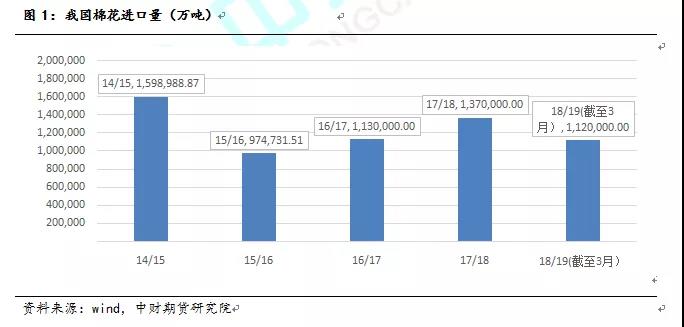
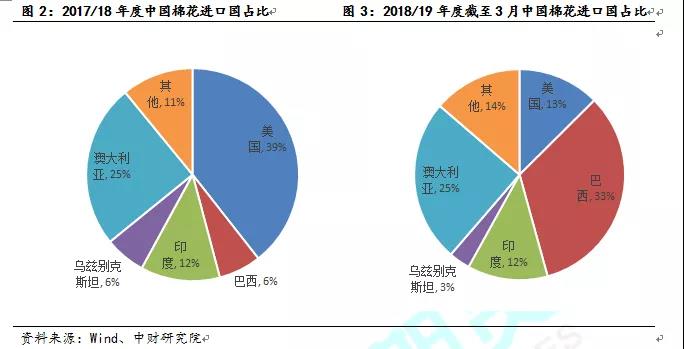
Once China imposes a 25% tariff on US cotton imports, the trade flow will shift to Brazil, India and Australia, and the share of US cotton imports in China's cotton imports will drop significantly. In 2017/18, China imported 1.37 million tons of cotton, of which 540000 tons were imported by the United States, accounting for 39% of the total imports. Australia imported 340000 tons, accounting for 25% of the total imports. India imported 165000 tons, accounting for 12% of the total imports. Brazil imported 88000 tons, accounting for 6% of the total.
Brazil cotton is replacing the United States cotton as China's largest cotton imports. Affected by the trade war, the import share of US cotton dropped rapidly from 39% in 17/18 to 13%, while Brazil's share rose sharply from 6% to 33%.
US cotton exports expand to Southeast Asia
At present, the main exporters of US cotton are Vietnam, China, Indonesia and Turkey, with export shares of 23.83 per cent, 16.24 per cent, 8.52 per cent and 7.99 per cent respectively, of which Vietnam is the largest export market for US cotton. Due to the trade war, the number of contracts signed by China has been greatly reduced recently, and the contract has been broken continuously. It is expected that the export of US cotton will continue to shift to Vietnam, Turkey, Pakistan and Indonesia.
The impact of trade war on textile and garment industry
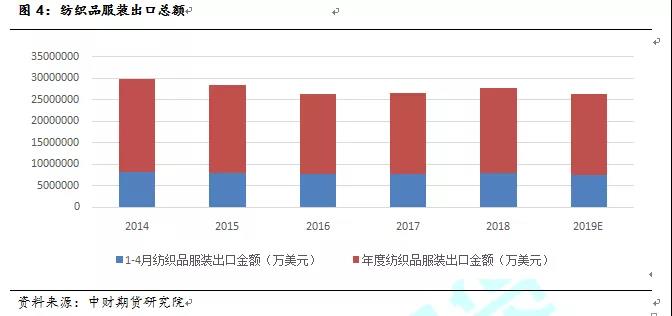
China is the world's largest producer and exporter of textiles and clothing. According to customs statistics, in 2018, my country's total exports of textiles and clothing totaled US $276.731 billion, of which the cumulative exports of textiles were US $119.098 billion and the cumulative exports of clothing were US $157.633 billion. From January to April 2019, China's total exports of textiles and clothing totaled US $75.764 billion billion, down 3.86 percent from the same period last year. Among them, textile exports were 36.672 billion US dollars, up 0.91 per cent year-on-year, while clothing exports were 39.092 billion US dollars, down 8.63 per cent year-on-year.
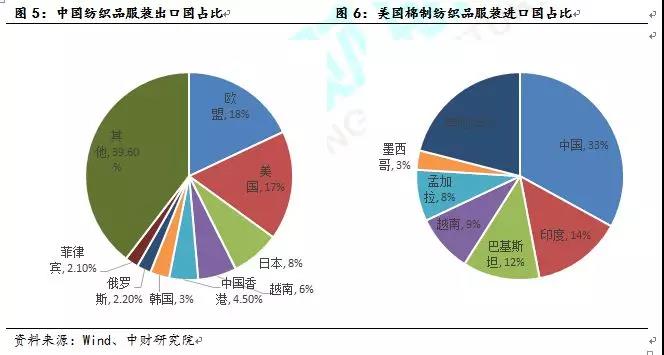
If the trade war continues to escalate, it will have a direct impact on China's textile and garment exports. China's textile and clothing exporting countries are mainly the European Union, the United States, Japan, Vietnam and so on, of which the United States is the largest country in China's textile and clothing exports, accounting for 17.2 of China's total textile and clothing exports in 2018.
$200 billion export tax hike has less impact
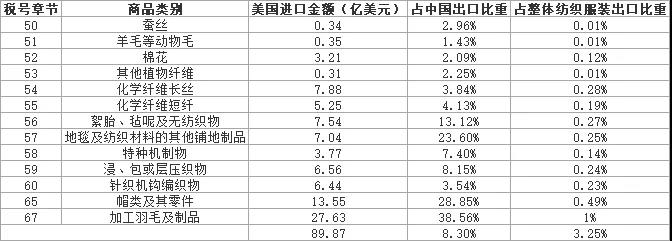
The $200 billion involved cotton, knitted hook fabrics, hats, leather products, etc., and the total amount of products involved in the list exported to the United States in 2018 was $9 billion, accounting for 21.2 percent of China's textile and apparel exports to the United States and 3.3 percent of China's total textile and apparel exports. Therefore, the United States will increase taxes on China's 200 billion-dollar exports by 25%, which has little impact on the domestic textile industry, and the impact on cotton demand is about 100000 tons.
Table 1:2018 China's $200 billion List Involving Textiles and Apparel Categories
Source: China Finance Futures Research Institute.
The impact of the 300 billion dollar export tax increase has increased.
If the US $300 billion of Chinese exports are taxed, it will cover all textiles and clothing exported to the United States, with a total amount of US $47.6 billion, accounting for 17% of China's total textile and clothing exports, and the impact on cotton demand is about 1 million tons, accounting for about 11.7 per cent of China's cotton consumption. Therefore, if taxes are raised on $300 billion of exports, downstream demand for textiles will continue to weaken.
Once taxes are imposed on $300 billion of Chinese exports, Southeast Asian countries will gradually replace China's share of U.S. textile and apparel supplies. For the United States, China is the largest supplier of textiles and clothing to the United States, accounting for 50% of US textile and clothing imports and 30% of cotton textile and clothing. The main importers of cotton textiles in the United States include India, Pakistan, Vietnam, etc. The Sino-US trade war makes the textile industry exports of Southeast Asian countries have a greater competitive advantage.
summary and outlook
The impact of the trade war includes changes in the trade flow of raw materials and downstream textile and clothing. For China, Brazil will squeeze the share of US cotton imports and become my country's main cotton supplier; due to China's reduced demand, US cotton exports will expand to Southeast Asian countries.
The increase in 200 billion tariffs has little impact on domestic cotton, while 300 billion tariffs involving all textiles and clothing have a greater impact on domestic textile downstream, and the impact on domestic cotton demand is about 1 million tons.
Under the influence of the trade war, Brazil's cotton exports are better, and it is expected that cotton production will continue to grow significantly in the later period. However, US cotton exports will remain weak. Under the expectation of 20% increase in US cotton production in 19/20, the pressure on later sales will be increased. China's cotton demand side will continue to weaken, while the Southeast Asian textile industry will have greater competitiveness.
More information


Follow us
Hello, what can we do for you?
Copyright © Xiantao Dexing Plastic Products Co., Ltd / Xiantao Dexing Health Technology Co., Ltd | Powered by:300.cn
SAF Coolest v1.3.1.2 设置面板 FZUSD-ZSNG-OSSQE-ZWE
无数据提示
Sorry, the current column is being updated, please look forward to it!
You can view other columns or returnHome Page