


News Center
News Center
Investigation Report on Nonwovens and Related Industries in Hubei Province
Release time:
2019-04-15
Hubei Province is an important gathering place of non-woven fabric and related products industry in China. There are a number of key leading enterprises in the industry, such as Hengtian Jiahua, Hubei Jinlong, Robust Medical, Ogilvy Medical, Xiantao Xinfa and two non-woven fabric industry clusters, which have important influence in spunbonded nonwovens, cotton spunlace nonwovens, non-woven protective clothing, medical dressings and other products. It is an important pillar industry of the local economy.
Hubei Province is an important gathering place of non-woven fabric and related products industry in China. There are a number of key leading enterprises in the industry, such as Hengtian Jiahua, Hubei Jinlong, Robust Medical, Ogilvy Medical, Xiantao Xinfa and two non-woven fabric industry clusters, which have important influence in spunbonded nonwovens, cotton spunlace nonwovens, non-woven protective clothing, medical dressings and other products. It is an important pillar industry of the local economy.
In recent years, the production capacity of Hubei Province has expanded rapidly, and the development momentum of leading enterprises is particularly rapid, and the export proportion of some products is high. With the rapid development of the industry, it is faced with problems such as labor shortage, slow upgrading of traditional industries, difficulties in ensuring high-end raw materials, and excessive dependence on overseas markets in some industries, which bring certain risks and challenges to the sustainable development of the industry.
In order to grasp the latest situation of the development of nonwovens and related industries in Hubei Province, understand the suggestions and requirements of enterprises and local governments for industrial development, and help the high-quality development of nonwovens industry in Hubei Province, from February 25 to March 1, the research group of China Industrial Textile Industry Association led by Secretary General Zhang Chuanxiong of China Industry Association, eleven non-woven fabric production enterprises in Wuhan, Xiaogan, Huanggang, Xiantao, Jingmen, Zhijiang and other places in Hubei Province were investigated, and a seminar on industrial cluster development was held in Xiantao, and relevant leaders of Jingmen High-tech Zone and Zhijiang City were visited. The survey is summarized below.
I. Characteristics of Nonwovens and Related Industries in Hubei Province
(1) The scale of the industry is expanding and the industrial chain is becoming more and more perfect.
Hubei Province is the largest non-woven fabric production in central China, mainly by spunbond method. In recent years, the production capacity of spunlaced nonwovens has increased very fast. Judging from the enterprises surveyed, key enterprises such as Steady Medical, Xinrou, Ogilvy Medical and Hengtian Jiahua all have non-woven fabric projects under construction, and there are plans for new production capacity in 2019. In 2018, Xiantao City added 10 non-woven fabric production lines, and the total number of various production lines reached 85, of which 37 were spun-melt composite production lines, with a total output of more than 400000 tons. The output of nonwovens in Hubei province is about 600000 tons, accounting for more than 10% of the country's total.
In terms of supporting the industrial chain, Xinrou will invest 40000 tons of absorbent cotton production capacity. The polypropylene and ES fibers of Botao Chemical Fiber have good applications in automobiles and sanitary materials. Ogilvy Medical actively expand the application of cotton spunlace nonwovens. As a key province in the central region, Hubei Province has also attracted a lot of investment from sanitary products companies, providing a market for the sales of non-woven fabrics in the province.
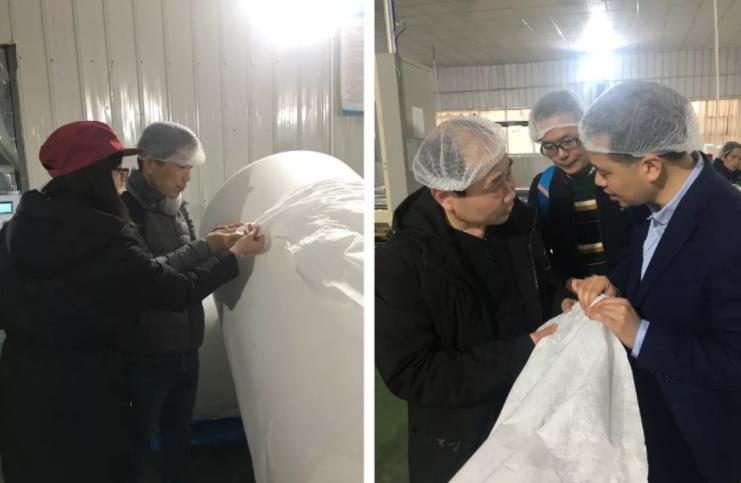
(2) Cotton Spunlace Nonwovens Industry Rises
The domestic cotton spunlace nonwoven technology is mainly promoted by Robust Medical. Its factories are all in Hubei. The two production bases of Huanggang and Tianmen have 16 production lines. Hengtian Jiahua, Xinrou, Xinlong and Ogilvy have 13 production lines. Xinrou, Ogilvy and Robust also plan to invest in new production lines, including the Trutzler production line with a production capacity of 10000 tons. At present, the output of all-cotton spunlace nonwovens in Hubei Province has accounted for more than 70% of the country. Backbone enterprises are actively developing and expanding the application range of all-cotton spunlace nonwovens. In addition to traditional soft towels, they have made breakthroughs in sanitary material surface materials and medical dressings, and will partially replace traditional spunbonded, hot air non-woven fabrics and woven gauze.
(3) Key enterprises lead the development of the industry
There are a number of influential backbone enterprises of nonwovens and products in Hubei Province, which lead the technological innovation and market application of the industry in different fields. Hubei Jinlong is the first enterprise to introduce SMS production line in China. Hengtian Jiahua has introduced two more advanced Leffen production lines, which play an important exemplary role in the upgrading of the nonwoven industry in the whole Xiantao region. Xinfa, as the leader of nonwoven products enterprises in Xiantao region, has played a certain exemplary role in personnel training, market development, enterprise management and other aspects. Robust Medical and Ogilvy Medical have led the development in the field of domestic medical dressings. Robust Medical has market and technical advantages in cotton spunlaced nonwovens, and its application scope continues to expand. Ogilvy Medical has a strong advantage in traditional gauze, and its new investment project in Jingmen will focus on the production of cotton nonwovens and products.
(4) The practical effect of intelligent manufacturing and the integration of the two is remarkable.
Ogilvy Medical has initially established a new production mode of intelligent spunlaced nonwoven. Its Jingmen production base is located in an intelligent factory, sending employees to Germany and Japan to learn advanced experience and build the factory according to the standard of industrial 4.0. The information system carries out unified scheduling of the data in the whole process of production and operation, and realizes data coordination with MES and ERP to realize data interconnection and interoperability in the whole factory. In 2018, Ogilvy Medical's medical dressing project was awarded the Ministry of Industry and Information Technology Intelligent Manufacturing Pilot Demonstration Project. Steady new investment factories are also being built to high standards in accordance with the smart factory model.
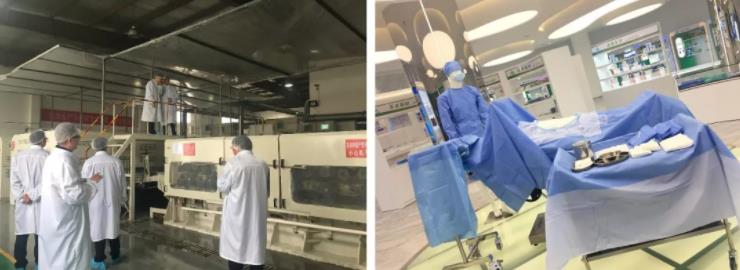
Hengtian Jiahua is building a digital workshop for the production of all-cotton spunlaced nonwovens. Its latest Leffen production line has strong intelligent control capability and uses advanced winding, slitting, packaging and logistics systems to realize the automatic production of the whole process.
(5) Scientific and technological innovation and fine management fully tap the potential
The enterprises surveyed in this survey generally attach importance to technological innovation and new product development, improve the added value of products through innovation, and reduce the impact of demand changes on enterprises. Wuhan Hansen Weaving is a joint venture between Yu Dahua and American Sen Weaving. It mainly produces textiles for automotive interiors. The company strengthens research and development and new product development, carries out deep processing of automotive interior parts, and carries out functional design and pattern design to overcome the decline in automotive production and sales. The adverse effects.
Robust Medical has a number of patents for cotton spunlace nonwovens, and has done a lot of work in the improvement of production equipment. The production capacity of the production line has been fully utilized, and the energy consumption is at an advanced level among peers, which effectively reduces production costs.
In 2018, enterprises in Pengchang Town invested 0.12 billion yuan in R & D, introduced 17 professionals with graduate degrees or above, applied for 42 new invention patents, and increased the number of high-tech enterprises to 8.
The companies visited are basically engaged in the production of medical and health textiles. The on-site management capabilities of each company have been significantly improved, and each company has established a clean production plant that meets the medical level.
(vi) Continued amplification of industrial agglomeration effects
The development of the non-woven industry cluster in Pengchang Town has shown a good momentum of growth against the trend, and the total scale, industrial level, and economic benefits have all achieved continuous and steady improvement. There are more than 300 non-woven enterprises in the town, of which 54 are above designated size. In 2018, the output value will reach 15.6 billion billion yuan, a year-on-year increase of 19.1, with an annual output of 300000 tons of various non-woven fabrics and an annual processing of 550000 tons of various non-woven products. In 2018, the new fixed asset investment in the non-woven industry was 3.2 billion billion yuan, up 15.6 year on year.
The research team held discussions with government leaders in Xiantao City, Pengchang Town, Jingmen High-tech Zone, Zhijiang City and other places. Local governments have done a lot of work in supporting industrial services, reducing taxes and fees, alleviating corporate financing difficulties and expensive financing, supporting corporate export-oriented development, brand cultivation, technological innovation and transformation and upgrading, and talent introduction, focusing on creating a good environment for corporate development. In terms of attracting investment, all localities also pay more attention to practical results and accurate investment in the industrial chain, hoping that the project can fit the local industrial and regional advantages.
Problems and Challenges of Nonwovens and Related Industries in Hubei Province
With the rapid development of nonwovens industry in Hubei Province, there are also some problems, which basically exist for a long time and are more prominent in the current environment.
(I) Relatively single industrial structure and serious homogenization competition
Nonwovens in Hubei Province are mainly spunbonded nonwovens, and their products are mainly disposable protective clothing developed around them. The industrial structure is relatively single, and the development of the industry is also facing factor resources and market space from the current situation. Restriction. The single product structure makes the homogenization competition of enterprises in the region serious, which restricts the pace of industrial upgrading of enterprises.
The rapid development of cotton spunlaced nonwovens is also facing the problem that the production capacity increases too fast and the market is difficult to digest and absorb. At present, the production lines that have been put into production are basically not at full capacity, and there will be 5 imported large-capacity production lines in the country that are about to be put into production; there are still some technical bottlenecks in the application of all-cotton spunlace nonwovens in the surface layer of baby diapers and medical dressings. It is difficult to form large-scale applications in the short term. Therefore, the successive production of new production capacity will have an impact on the industry supply system and prices.
(II) Outstanding labor employment problems
The processing of non-woven disposable protective clothing and medical dressings in other areas in Xiantao City is a labor-intensive industry that requires a large number of skilled workers. Although Hubei Province is a populous province in the central region with sufficient labor supply, the attractiveness of the manufacturing industry is not high, and the industry is facing serious recruitment difficulties. The age structure of workers tends to be aging, and there are only a handful of young people under the age of 40 in factories, making it difficult for the industry to attract young people to join.
At present, due to cost advantages in Southeast Asian countries and regions, some product industries have begun to transfer to these regions. Although the share of Chinese products in developed countries in Europe, America and Japan is still in the first place, the growth of non-woven protective clothing from Vietnam, Cambodia and Indonesia is very fast in these markets. The global transfer trend of industry needs to be paid attention to and dealt with as soon as possible.
(three) cotton spunlace nonwoven raw material guarantee
The degreasing process of cotton spunlace nonwovens has two kinds of pre-degreasing and post-degreasing. In order to ensure the product quality, the quality requirements of cotton are relatively high. At present, the quality of domestic cotton is difficult to meet the requirements of enterprises, enterprises are generally purchasing American cotton and Australian cotton. On the one hand, cotton spunlaced nonwovens enterprises are not included in the declaration system of imported cotton quotas and cannot apply for relatively cheap raw materials; on the other hand, Sino-US trade frictions, China imposes a 25% tariff on imported American cotton, and enterprises switch to Australian cotton, but the total amount of Australian cotton is limited. The cotton problem has become an important factor restricting the development of cotton spunlaced nonwovens. In 2018, some key enterprises consciously reduced production to cope with the rising cost.
(IV) high-end talent training and innovation resources are not enough
Hubei Province is located in the central part of the country, which is not attractive to high-end talents. The industry is mainly an extensive growth driven by quantity. Although enterprises and industrial clusters in the region have set up R & D centers and public service platforms of different sizes, they are mainly focused on some simple product testing, and their ability in new product development is not enough to support the industrial structure adjustment and upgrading of the industry.
The lack of high-end talents and innovative resources makes the non-woven fabric and products industry in Hubei Province open up the market around traditional products, and the major innovation based on new materials is insufficient. Medical dressings are mainly based on gauze and cotton nonwovens, while functional dressings developed based on new textile materials and biomass materials are still basically blank, and the proportion of medical protective clothing with high barrier properties is still very low in Xiantao area. Hubei Province has very few science and technology awards in the field of nonwovens and products every year, and the importance of science and technology from the government to the enterprise level is not enough.
High proportion of (V) products exports, domestic market to be developed
The export proportion of medical dressing industry and disposable protective clothing in Hubei Province is very large, basically in the form of OEM, and its customers are mainly medical product brands in developed countries such as Europe, America and Japan, which are at the low end of the global value chain.
Large companies are willing to do the export market because the export market is relatively mature and standardized in product standards and business models, and it is relatively simple and a very stable business. On the other hand, there are more domestic suppliers, the competition is fierce, the bargaining power of enterprises for overseas customers is relatively weak, and the risk of a single market is also relatively large.
Sino-US trade friction brings greater risks to the development of the industry. The United States has increased tariffs on non-woven fabrics by 10%, which has a greater impact on exports to the United States; medical dressings and protective clothing are not within the scope of tax increases, but uncertainty has brought greater pressure on the operation of enterprises.
In terms of medical dressings, some enterprises in the industry are trying to use their own brands to expand the international market, but the actual effect is not ideal. In the domestic market, enterprises are actively exploring mainly through pharmacies and hospital channels; enterprises generally reflect that due to the lack of standardization of the domestic medical procurement market, excessive competition among small enterprises will disrupt the order of the industry.
III. Development countermeasures and suggestions
(I) Emphasis on technological innovation and product development
First of all, the government should pay attention to technological innovation in the field of nonwovens, introduce advanced equipment, and encourage enterprises to introduce high-level innovative talents through various ways, establish innovation centers with domestic high-level universities and research institutions, and support enterprises to carry out long-term new product development. The government has established a science and technology innovation fund to support the development of new products by enterprises. Key enterprises in the industry should gradually change their growth mode, benchmark global advanced enterprises, increase the intensity of R & D investment, and form the core competitiveness of enterprises. In the process of developing new products, enterprises should pay attention to the application of new fiber materials, develop differentiated and functional products, and improve the added value of products.
(2) Various ways to deal with employment difficulties
Local governments and enterprises should pay attention to the difficult employment problem faced by the protective clothing industry, which will only aggravate and difficult to solve in the future. It is suggested that the local government, together with the backbone enterprises of the industry, jointly invest and cooperate with intelligent manufacturing equipment enterprises to implement automation transformation of some processes in the manufacturing process, so as to reduce labor intensity and the number of workers, and improve the working environment.
By promoting the upgrading of the non-woven fabric industry, through independent brand building and domestic market development, we will gradually occupy the middle and high-end market of the industry, improve the position of Hubei's industry in the global value chain system, and reduce the impact of labor shortage and industrial transfer on the industry.
(III) Improving the Industrial Structure of Nonwovens
On the basis of vigorously developing existing industries, according to the location advantages and related industrial foundations of Hubei Province, we will focus on the development of key products such as non-woven fabrics for transportation, non-woven fabrics for high-temperature filtration, and non-woven fabrics for geotechnical and construction. Make up for the shortcomings of industrial development, cultivate future growth points of the industry, and improve the anti-risk ability of the industry on the basis of expanding the non-woven industry in Hubei Province.
(iv) Attaching importance to the development of the domestic market
The domestic demand market is an important force point for the industry in the future, and it is also the fundamental grasp to solve the external risks faced by the industry. Hubei Province has strong production capacity and market experience in medical dressings and protective clothing. It is suggested that local governments and industry organizations should jointly call for the reform of the current procurement mode of domestic medical devices, establish strict product standards and market access mechanism, support the development of domestic influential brand enterprises of medical dressings and protective clothing, and let more high-quality products serve doctors and patients, Change the current chaotic and scattered situation in the domestic market. Through the full development of the domestic market, we will explore foreign mid-to-high-end markets, and export Chinese standards and Chinese products to countries and regions along the Belt and Road, so as to achieve a breakthrough in the global value chain for Chinese industries.
(V) Will Include All Cotton Spunlace Nonwovens Enterprises in the Scope of Imported Cotton Quota Application
Cotton spunlace nonwovens is a product with Chinese characteristics. After the technical development and marketing of key enterprises, its products have become high-end products that consumers like very much, and its application scope is also expanding. The problem of raw materials has become a bottleneck restricting the development of the industry. Therefore, it is suggested that the relevant departments of the state should include the cotton spunlaced nonwovens enterprises into the scope of the application for the quota of imported cotton, and give a certain proportion of the quota according to the actual fabrics used by the enterprises, so as to reduce the cotton cost of the enterprises and ensure the product quality.
In the long run, it is recommended that the state support biodegradable fiber agricultural nonwovens instead of plastic film for cotton cultivation, reduce impurities in cotton, improve the quality of domestic cotton, so as to fundamentally solve the problem of cotton use in enterprises.
More information

Follow us
Hello, what can we do for you?
Copyright © Xiantao Dexing Plastic Products Co., Ltd / Xiantao Dexing Health Technology Co., Ltd | Powered by:300.cn
SAF Coolest v1.3.1.2 设置面板 FZUSD-ZSNG-OSSQE-ZWE
无数据提示
Sorry, the current column is being updated, please look forward to it!
You can view other columns or returnHome Page