


News Center
News Center
Development achievements of textile industry in 40 years of reform and opening up
Release time:
2018-12-20
Looking back on the 40 years of reform and opening up, it is the 40 years in which the textile industry bravely stands at the forefront and dares to be a pioneer; it is the 40 years in which the textile industry breaks its wrists and self-revolutionizes; it is the 40 years in which the textile industry seizes opportunities, innovates and enterprising; it is the textile industry 40 years of rapid progress and brilliant achievements. The following set of data from the Industrial Economic Research Institute of the China Textile Industry Federation actually illustrates this point.
Looking back on the 40 years of reform and opening up, it is the 40 years in which the textile industry bravely stands at the forefront and dares to be a pioneer; it is the 40 years in which the textile industry breaks its wrists and self-revolutionizes; it is the 40 years in which the textile industry seizes opportunities, innovates and enterprising; it is the textile industry 40 years of rapid progress and brilliant achievements. The following set of data from the Industrial Economic Research Institute of the China Textile Industry Federation actually illustrates this point.
From 1978 to 2018, after 40 years of development, China has become the world's largest textile producer, consumer and exporter. In the past 40 years of reform and opening up, the manufacturing capacity of China's textile industry has been improved by leaps and bounds, the industrial system has been increasingly improved, the vitality of the main body of enterprises has been stimulated, and it has been integrated into the wave of globalization in an all-round way. The textile industry has maintained a stable and healthy development track in the past 40 years, and its position as a pillar industry in China has never been shaken. It has become the core force supporting the smooth operation of the world textile industry system and an important industrial platform for promoting global economic and cultural coordination and cooperation.
leapfrog upgrading of manufacturing capacity
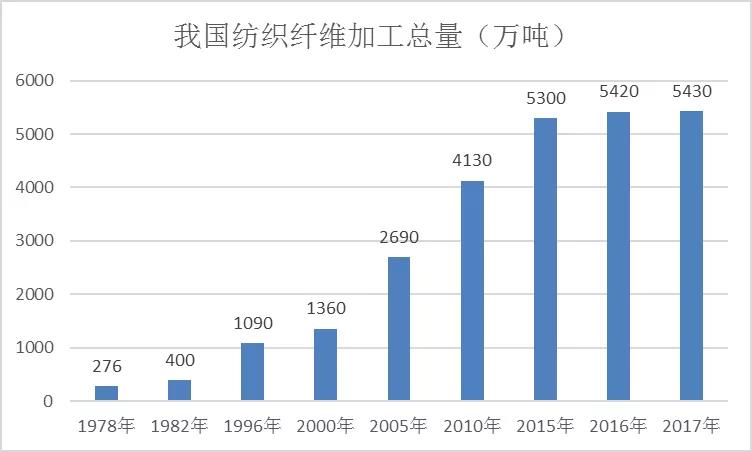
In the past 40 years, the textile industry has experienced the process of great liberation and development of productivity, and the processing and manufacturing capacity has achieved rapid development. In 1978, China's total fiber processing volume was 2.76 million tons, accounting for less than 10% of the world's total. In 1982, China's fiber processing capacity reached 4 million tons, and the output of cotton cloth reached 15.35 billion meters, an increase of 39.2 percent over 1978, which has been able to better meet the basic needs of people across the country for clothing and quilts. In 1983, the limited supply of cotton cloth was officially abolished, which has become an important milestone in the history of China's textile industry, announcing the official end of the era of shortage economy. In 1996, China's fiber processing capacity increased to 10.9 million tons, breaking through the 10 million ton mark for the first time, accounting for 22% of the world's total, realizing the textile processing capacity and the proportion of the total population in the world. In 2010, China's fiber processing capacity exceeded 40 million tons, reaching 41.3 million tons, accounting for 50% of the global share. In 2017, China's fiber processing capacity has reached 54.3 million tons, nearly 20 times that of 1978, and the output of yarn, cloth and chemical fiber is 17, 8 and 173 times that of 1978, respectively. China has become the largest textile country in the world, which not only effectively meets the fiber consumption demand of China, which accounts for nearly 1/3 of the world's 1/5 population, but also provides more than 2000 million tons of high-quality fiber products for other countries.
Data source: China Textile Industry Federation Industrial Economic Research Institute.
The industrial system is becoming more and more perfect
With the expansion of manufacturing scale, China's textile industry chain continues to extend, and gradually form the world's most perfect modern textile manufacturing industry system, the manufacturing capacity and level of each link of the industrial chain are in the forefront of the world.
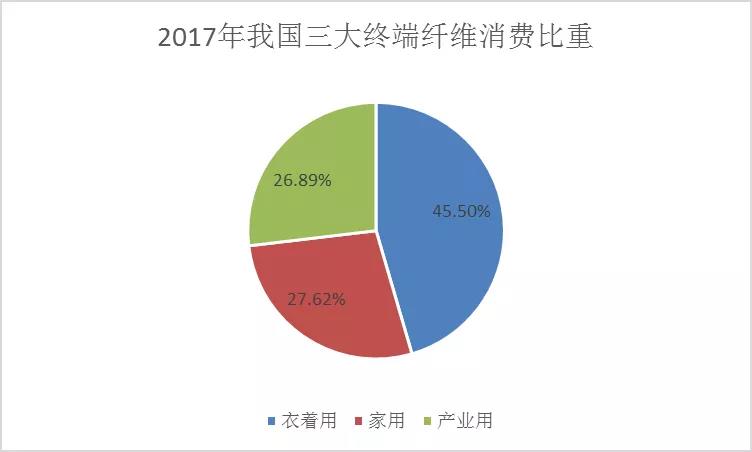
At the beginning of reform and opening up, cotton textile and printing and dyeing processing was the main body of China's textile industry. In 1978, the total industrial output value of cotton textile and printing and dyeing industries accounted for 46.3 and 20.7 respectively, while knitting, silk, chemical fiber and wool textile industries accounted for 8.7, 7.6, 6 and 5.7 respectively. Cotton accounted for 81% of the fiber processing volume, while chemical fiber accounted for only 15%. In 1980, the proportion of fiber consumption in the three major terminal industries of clothing, home textiles and industrial use was 84:11:5. In 1984, the textile industry formally proposed to focus on the development of clothing, decorative textiles, industrial textiles "three pillars" products, and vigorously develop deep processing products. Since the new century, the chemical fiber industry has developed strongly, with its output increasing from 6 million tons to nearly 50 million tons, providing sufficient raw materials for the textile industry to meet domestic demand and go international. The two major categories of household and industrial use have made rapid progress, and their ability to meet the needs of consumption and industry has been comprehensively improved. In 2007, the proportion of fiber consumption in the three major terminal industries was adjusted to 52:33:15, and the proportion of home textiles reached a historical high, industrial textiles are still in an upward cycle. In 2017, in my country's total fiber processing, cotton accounted for only 13.9, and chemical fiber accounted for 83.5; the proportion of fiber consumption of the three major end products was adjusted to 45.5:27.6:26.9, with complete categories, rich varieties, and excellent quality. The advantages of the modern textile industry system with optimized structure are fully apparent.
Data source: China Textile Industry Federation Industrial Economic Research Institute.
Stimulate the vitality of the main body of the enterprise
The textile industry is the pioneer and firm practitioner of market-oriented reform. Over the past 40 years of reform and opening up, China's socialist market economic system has been gradually established and improved, becoming the most important source of vitality for the textile industry. Before the reform and opening up, the textile industry was in a planned economic management mode, and the main products were purchased and sold. In 1984, the state began to reduce mandatory plan products. In 1985, the country gradually liberalized self-export. Due to the comprehensive start of economic system reform, the mid-1980s became an important landmark stage in the leapfrog development of the textile industry.
The capital structure of textile enterprises has gradually changed, and diversified capital is bursting with vitality in the industry, reflecting the basic role of the market in the allocation of resources. In 1978, 93.2 percent of the total industrial output value of the textile industry came from enterprises owned by the whole people. In the middle and late 1980 s, township enterprises flourished and became an effective force for the textile industry to meet domestic demand and promote rural economic development. In the 1990 s, the reform of state-owned textile enterprises opened. State-owned enterprises began to change their operating mechanisms, establish the current enterprise system, and become the main body of market competition; the development of multiple economic components was encouraged, and the vitality of the non-state-owned economy was stimulated. In 1996, state-owned enterprises, collective enterprises and foreign-funded enterprises accounted for 29.6 per cent, 44.8 per cent and 25.4 per cent of the total industrial output value of the textile industry, basically forming a three-part world pattern. In the middle and late 1990 s, the 10 million of cotton spinning production capacity pressing has become an important turning point for the textile industry to seek new development with market orientation. The national retreat and the people's advance have further released the vitality of the industry. In 2000, state-owned enterprises still accounted for 28.7 per cent of the total output value of the textile industry. By 2015, state-controlled enterprises accounted for only 2.3 per cent of the industry's main business income, while foreign-funded enterprises accounted for 16.2 per cent and private enterprises accounted for 76.5 per cent.
All-round integration into globalization
The reform and opening up has opened the door to the world for the textile industry. The industry actively conforms to and takes advantage of the development opportunities of economic globalization, promotes the free flow of domestic and foreign factors, deeply integrates the market, and improves the efficiency of resource allocation.
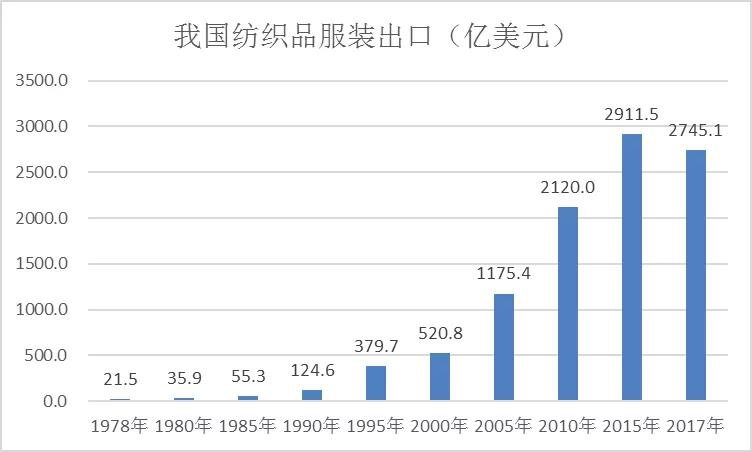
In 1978, China's textile and clothing exports were only 2.15 billion US dollars. After the reform and opening up, the export-oriented economic development of "three to one supplement" officially pushed the textile industry to the international market. After 1985, the country gradually liberalized self-export, textile and clothing foreign trade into a rapid development cycle. In 1994, China's textile and clothing exports reached 35.55 billion billion US dollars, accounting for 8.6 percent of the world's total, ranking first in the world. China's accession to the World Trade Organization in 2001 and the full liberalization of global textile and clothing trade in 2005 have become a major historical opportunity for the full release of the competitiveness of China's textile industry. In 2000, China's share of global textile and clothing export trade was 14.6 per cent, and by 2008 it had risen to 26.1 per cent. In 2017, China's textile and clothing exports reached 267.39 billion billion US dollars, 115 times that of 1978, accounting for 36.8 percent of the world's total.
Data source: China Textile Industry Federation Industrial Economic Research Institute.
While developing foreign trade, China's textile industry actively uses foreign raw materials, capital, technology, talents and other advantageous resources to learn from others and make up for their own shortcomings. In 1978, the textile industry imported 1.12 billion U.S. dollars in foreign exchange. At its peak in 2011, my country's textile industry imported a total of 73.75 billion U.S. dollars in various raw materials, equipment, dye auxiliaries, etc., 66 times that of 1978. With the enhancement of self-supporting capacity and the improvement of the competitiveness of private capital, the textile industry has further increased the pace of using international resources. Since the "Twelfth Five-Year Plan", my country's backbone textile enterprises have established overseas raw material bases, processing factories, brands and channels, R & D centers, etc. through various channels such as greenfield investment and capital operation, and actively built a transnational industrial chain and value chain system. According to incomplete statistics from the Ministry of Commerce, as of the end of 2016, there were 1082 overseas investment companies in the textile industry, with an investment stock of US $6.86 billion, and an operating income of US $7.3 billion in 2016.
Meet the needs of the people for a better life
Since the reform and opening up, the textile industry has been continuously improving and developing, which has made great changes in people's clothing, which is not only a major development achievement of the textile industry, but also the most intuitive embodiment of China's economic and social development.
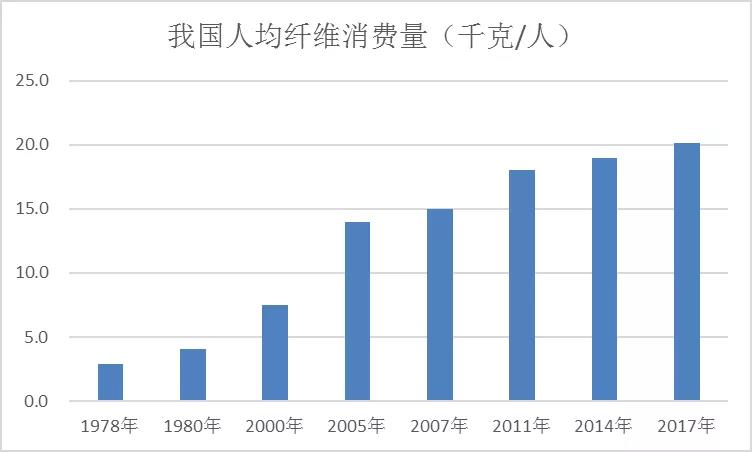
At the beginning of reform and opening up, the textile industry is still in the stage of trying to solve the needs of the people across the country to wear clothes and cover food and clothing. The level of clothing consumption is still low, and the variety of raw materials, clothing styles, and colors are relatively monotonous. In 1978, China's per capita fiber consumption was only 2.9kg, 38% of the world average. In 1990, when my country basically solved the problem of food and clothing for the people, the per capita fiber consumption increased to 4kg; in 2000, when the country entered a well-off society as a whole, it reached 7.5kg, which was 46.5 and 80% of the world average at that time. Since the new century, the rapid development of China's national economy has led to a continuous increase in the income of urban and rural residents, and the development of the domestic demand market has entered a golden cycle, providing a strong driving force for the development of the textile industry. In 2005, China's per capita fiber consumption reached 13kg, exceeding the world average of 11.1kg in that year. In 2008, my country's per capita fiber consumption exceeded 15kg, and in 2015 it exceeded 20kg. Among them, the consumption of industrial fibers increased significantly, and the quantity and structure of my country's fiber consumption gradually approached the level of moderately developed countries. In 2016, the per capita clothing consumption expenditure of urban and rural residents in China reached 1739 yuan and 575.4 yuan respectively, 16.7 times and 17.4 times higher than that in 1985. With China's sprint towards the goal of building a moderately prosperous society in an all-round way, people's demand for a better life is increasing day by day. Functionality, fashion and ecology replace the simple requirements of high quality and low price, and become the new trend of domestic demand upgrading. Technology, fashion and green have also become the new self positioning of textile industry to meet the market demand.
Data source: China Textile Industry Federation Industrial Economic Research Institute.
To shoulder the important task of employment and enriching the people
The textile industry is an important livelihood sector. The industry not only creates a large number of jobs and provides rich salary income, but also directly benefits "agriculture, rural areas and farmers". It has played an important role in economic prosperity, poverty alleviation and enrichment.
In 1978, the number of employees in the textile industry was 3.212 million, accounting for 10.6 of the country's industrial enterprises; the total wages paid to employees that year were 2.1 billion yuan. With the expansion of scale and the rise of private economy, the ability of textile industry to absorb employment has been rapidly improved. In 1990, the number of employees in the whole industry reached 12.43 million, 2.9 times more than that in 1978; in 2005, the number of employees in the whole industry reached 19.6 million, 5.1 times more than that in 1978, and the total salary reached about 260 billion yuan, 123 times more than that in 1978. At present, the employed population of the whole industry exceeds 20 million, and the proportion of the employment of enterprises above designated size in the national industries above designated size remains at about 10%.
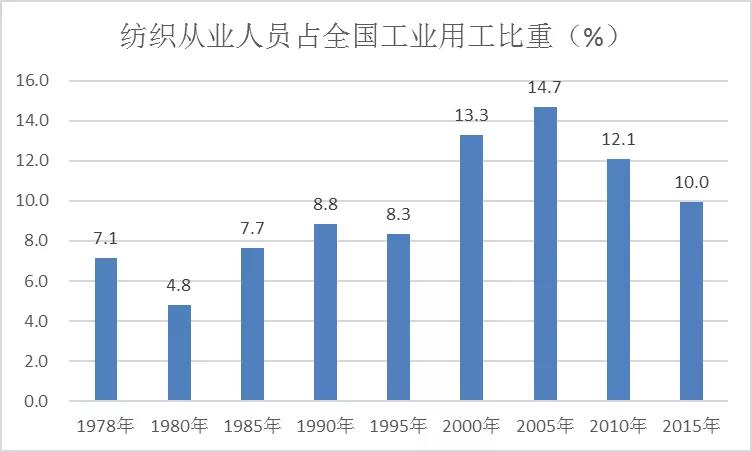
Data source: China Textile Industry Federation Industrial Economic Research Institute.
Play the role of pillar industry
The textile industry established its status as a pillar industry when New China was founded. In the past 40 years of reform and opening up, my country's economic development level has been continuously improved, the industrial structure has been continuously optimized, and it has maintained a stable and healthy development track. The status of the pillar industry in the national economic system has never been shaken.
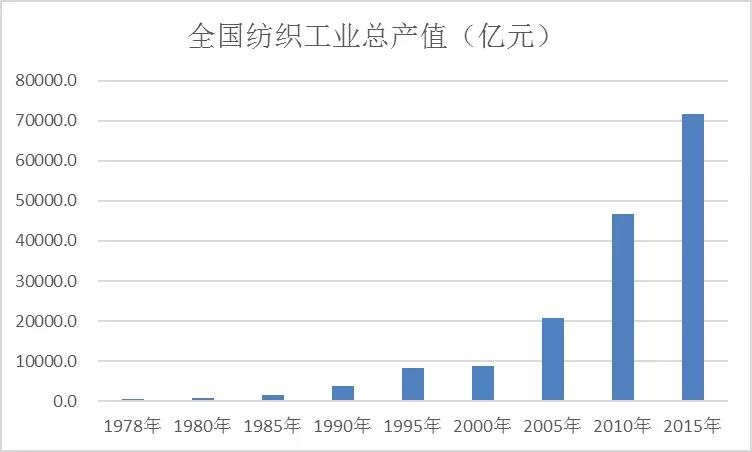
In 1978, the textile industry achieved a total industrial output value (constant price) of 47.32 billion yuan, accounting for 12.5 percent of the national industry; the total profit and tax was 10.96 billion yuan, accounting for 12 percent of the national industry; the export volume was 2.15 billion billion US dollars, accounting for 22.1 percent of the country; that year, the national trade deficit in goods was 1.13 billion US dollars, and the textile industry earned a net foreign exchange of 1.03 billion US dollars after deducting imports. Since the reform and opening up, with the market economy and opening up to the outside world to stimulate vitality, the contribution of the textile industry to the national economy has increased. In 1985 and 1990, the total industrial output value of the textile industry accounted for 17.9 percent and 16.2 percent of the national industry, respectively. Total exports accounted for 20.2 percent and 20.1 percent of the country. In 1992, my country's trade in goods reversed the continuous deficit for 13 consecutive years, achieving a surplus of US $4.39 billion. The textile industry contributed a trade surplus of US $18.24 billion that year; until 2012, the textile industry's trade surplus was greater than the national total trade surplus in goods. In the 21st century, the textile industry has seized the favorable opportunity of China's rapid economic development and full integration into globalization, and has entered a golden stage of development. From 2002 to 2008, the main business income of enterprises above designated size increased by 21.7 per cent annually, and the total amount of profits and taxes increased by 25.1 per cent annually. In recent years, with the changes in the international environment and China's entry into the new normal of development, the industrial economy has fluctuated greatly, and the textile industry has always maintained a steady development trend. In 2017, the main business income of textile enterprises above designated size reached 6893.56 billion billion yuan, accounting for 5.9 percent of the country's industries above designated size; the industry's net foreign exchange earnings were US $241.9 billion billion, accounting for 57.3 percent of the country's total.
More information

Follow us
Hello, what can we do for you?
Copyright © Xiantao Dexing Plastic Products Co., Ltd / Xiantao Dexing Health Technology Co., Ltd | Powered by:300.cn
SAF Coolest v1.3.1.2 设置面板 FZUSD-ZSNG-OSSQE-ZWE
无数据提示
Sorry, the current column is being updated, please look forward to it!
You can view other columns or returnHome Page