


News Center
News Center
Nonwoven Fiber Market
Release time:
2018-08-13
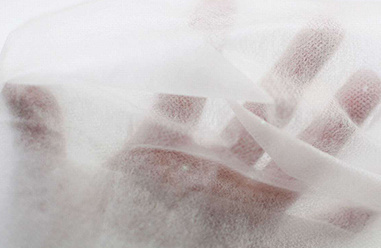
Nonwovens can be made from a variety of fibers and polymers, from natural cotton fibers to synthetic materials such as polyester and polypropylene. The choice of which material to make nonwovens depends not only on the end use of the product, but also on the manufacturing process.
Nonwovens can be made from a variety of fibers and polymers, from natural cotton fibers to synthetic materials such as polyester and polypropylene. The choice of which material to make nonwovens depends not only on the end use of the product, but also on the manufacturing process.
The most commonly used material in nonwovens, particularly for disposable products, is probably polypropylene. Such synthetic petroleum-based materials can provide desired softness and protection to diapers, feminine hygiene products, medical products, and the like for the production of spunbond and spunmelt nonwovens.
At the same time, polyester (another synthetic material) is also a popular choice for nonwovens manufacturers, but is more commonly used in durable applications such as household goods, automobiles and carpet materials, where softness is not as important as strength.
Nonwovens producers and users are also showing increasing interest in the application of natural fibers such as cotton and cellulose fibers. These materials not only increase the environmental protection of the end product, but also meet the consumer demand for simpler products.
The Age of Cotton
The role of cotton fibers in the nonwovens industry has fluctuated over the past year, a trend that is largely related to crop yields, pricing and costs to major competitors.
"Consumers think cotton is the most environmentally friendly fabric," said Janet O' Regan, director of strategic planning at Cotton Incorporated. She says the personal care and hygiene market is moving towards simpler ingredients, and in the past year she has seen an openness in the market-publishing ingredient lists, which has benefited cotton fibers. "It is soft, natural and skin-friendly, and consumers trust it very much." She said.
Obviously, these characteristics are one of the reasons P & G chose to include cotton fiber in its recently launched natural baby care products Pampers Pure diapers and baby wipes.
This spring, P & G's Pampers, in order to attract new parents of millennials, announced the launch of an all-natural and additive-free product line, including "Pure Protection" diapers and "Aqua Pure" wipes with reduced additives. This series is called Pampers's first product made of high-quality cotton and other carefully selected materials, and has a fashionable print.
Pure Protection diapers are free of chlorine bleach, fragrances, lotions, parabens and EU26 allergens, and are made more environmentally friendly and are made of high-quality cotton grown in the United States. Better materials bring more comfort, especially for babies with sensitive skin, which is especially important. The diapers have been clinically proven to be hypoallergenic, better close to and protect the delicate skin of newborns.
At the same time, this series of diapers also maintains the consistent quality of the Pampers brand and can provide reliable leak-proof protection for up to 12 hours. Diapers are designed with lovely printed patterns and humidity indicators. According to the experience of the American Academy of Pediatrics, diapers are hygroscopic and can prevent diaper rash while keeping your baby's skin dry.
Pampers Aqua Pure wipes are designed to provide parents with the highest moisture content of Pampers wipes while also providing excellent skin protection. The wipes are made of carefully selected ingredients, containing 99% pure water and high-quality cotton, which can ensure safety and softness even on delicate newborn faces, hands and buttocks.
George Hargrove, marketing director of the Cotton Supplier Barnhardt Manufacturing, said the Pampers move is significant for the cotton market, "P & G has been an innovator, and they now realize that adding cotton to the baby care market can provide a 'natural' choice, which is very important to consumers. As a leader in this market, P & G's actions will be of concern to consumers as well as other producers."
Johnson & Johnson (Johnson & Johnson) has also hinted at plans to include cotton in its line of recycled baby care products, which will feature a simpler ingredient list and more natural ingredients.
"Consumers are becoming more and more aware of what the products they use are made of," Hargrove added. "A few years ago, consumers began to have more demand for natural products, and in recent years due to social media This demand from consumers has increased dramatically."
Barnhardt company's latest products meet the demand for cleaner cotton, comparable to the cleanliness of synthetic fibers, thus giving consumers a clean white appearance. This high-clarity cotton includes High Q UltraClean, Organic High Q UltraClean, HyDri UltraClean and Organic HyDri UltraClean, all of which can be used in the most sensitive hygiene and wiping products. In these applications, the performance and purity of the raw materials are critical.
Barnhardt Purified Cotton complies with USP, EP and JP standards for consumer and medical grade purity requirements. Its cotton is purified with safe hydrogen peroxide, called TCF. Barnhardt can provide high-purity Purified Cotton, suitable for applications that require absorption, and can also provide Purified Cotton for hydrophobic applications.
"Our Purified Cotton products are also recognized for their softness and elasticity to nonwovens," Hargrove said. "The long-term use of cotton in products such as clothing, bath towels and bed sheets confirms that cotton is synonymous with softness, nature and comfort. The fact that cotton is naturally hypoallergenic also makes it a perfect choice for sensitive skin. Consumers are now more concerned about environmental issues around the world and recognize the benefits of cotton as a biodegradable and compostable feedstock."
Lawson Gary, CEO of TJ Beall, says their TrueCotton unbleached (natural) cotton can be used in bedding, mattresses and hygiene products. This spring, Staple Cotton Cooperative Association(Staplcotn) acquired a 50% stake in TJ Beall, and Lawson Gary became CEO of the company.
"Staplcotn are thrilled to be partnering with TJ Beall," said Meredith Allen, President and Chief Executive Officer of the Staplcotn. "This partnership will benefit TJ Beall and support Staplcotn core mission of improving revenue for our members. TJ Beall has extensive expertise and ingenuity in the processing of cotton into nonwovens, paper and quality products for the traditional textile industry. As the demand for industrial use of cotton increases in the global market, TJ Beall's professional background and Staplcotn role as a major cotton supplier will create significant synergies. The timing of this partnership is perfect."
Kelheim Fibre Aim Disinfectant Wipes
Germany's Kelheim Fibres has developed a new viscose fiber-Danufil QR, which can be used to make disinfectant wipes. To date, conventional viscose fibers, despite their excellent liquid handling properties, have been bound to positively charged "quaternary ammonium compounds", a class of widely used disinfecting ingredients, due to their negative charge, and therefore do not perform their original disinfecting effect, possibly losing up to 80% of the disinfecting effect. Now, Danufil QR reduces this undesirable effect to less than 10%, thus solving the problem.
With the launch of Danufil QR, Kelheim Fibres has expanded its product range to several areas, particularly in the areas of wipes and hygiene products.
Another member of the Kelheim Fibres family of sanitary products is the flat specialty fiber-Viloft, whose importance is also highlighted with the release of INDA/EDANA's latest Flushable Guide (GD 4). Viloft chopped fiber can be used to produce flushable wipes, which can be quickly decomposed in the sewage system and can safely meet the strict requirements of GD 4.
Like all specialty fibers Kelheim Fibres, Viloft is made entirely of cellulose and can therefore be completely biodegraded in a short time. This also meets other requirements of the guidelines and makes an important contribution to environmental protection.
Bring the best fiber solutions
FiberVisions the production of polyolefin staple fibers for nonwovens applications, its subsidiary ES FiberVisions is a leading supplier of bicomponent fibers. With expertise and state-of-the-art production facilities, FiberVisions offer innovative products to customers in the sanitary, textile, filtration, automotive and construction industries. The company has an extremely wide range of products in the field of single-component and two-component polyolefin staple fibers, and has 5 own production sites and multiple cooperative production sites worldwide, so FiberVisions can provide customers with the products they need.
The company's fibers can be used to produce non-woven fabrics made by carding, wet-laid and air-laid processes, and are reinforced by thermal bonding, hot air, needling and spunlace.
The new products introduced to the market by FiberVisions and ES FiberVisions include a variety of specialty fibers that have a variety of different properties in nonwovens. Each function is very powerful and can be combined to bring huge advantages to customers-combining the characteristics of various fibers can design the best solution.
Each ES FiberVisions and FiberVisions fiber platform is carefully designed to enhance specific properties of nonwovens. By using a combination of fibers, it is possible to tailor the design of nonwovens to meet specific requirements. ES FiberVisions has developed the next generation of bicomponent staple fibers that provide superior softness.
The new Soft Bico from ES FiberVisions is a polypropylene/polyethylene bicomponent fiber that provides softness, long-lasting hydrophilicity and wettability.
By combining the physical properties of fibers with advanced finishing technologies, the best fiber properties can be achieved, such as bringing excellent liquid capture capabilities to nonwovens.
FiberVisions and ES FiberVisions are part of Indorama Ventures. Indorama owns fiber companies, including Trevira, and recently acquired a 65.72 percent stake in Israeli nonwovens producer Avgol Industries to increase its presence in the global health and hygiene products market.
Avgol is one of the world's largest manufacturers of non-woven fabrics for hygiene, accounting for 10% of the global market share. Avgol's high-performance nonwovens are used by leading manufacturers of baby diapers, feminine hygiene products and adult incontinence products. Avgol also provides advanced solutions, using its proprietary technology, such as Avspun and Avsoft spunlace non-woven fabrics, to meet consumer needs, including thinner, more close-fitting, softer and higher performance.
The acquisition will allow both companies to offer customers a more comprehensive offering. Indorama Ventures will also be positioned for future growth in adjacent market segments through its strong innovation pipeline and continue to provide compelling value and services to customers worldwide.
"We are pleased to bring Avgol into Indorama Ventures family, which is an important step in expanding our HVA portfolio," said Aloke Lohia, Group CEO. "With this acquisition, we strengthen our unique position in important market segments and strong growth prospects. Avgol is already investing more to expand its business by expanding its production capacity and coverage areas, and we hope to be able to seize these advantages and help the company achieve higher goals."
Avgol's well-established customer base, complementary capabilities and market share in high-growth markets, combined with Indorama Ventures global presence, provide an excellent opportunity to create additional value and best serve all customers.
Previous article
Previous article
More information

Follow us
Hello, what can we do for you?
Copyright © Xiantao Dexing Plastic Products Co., Ltd / Xiantao Dexing Health Technology Co., Ltd | Powered by:300.cn
SAF Coolest v1.3.1.2 设置面板 FZUSD-ZSNG-OSSQE-ZWE
无数据提示
Sorry, the current column is being updated, please look forward to it!
You can view other columns or returnHome Page